Lavender Plant Care: Growing Lavender in Pots That Bloom
Lavender plant care comes down to one idea: this plant wants strong sun, soil that dries fast and very little water.
Most potted lavender that dies at home dies from too much care, not from neglect. With the right pot and one good pruning a year, it blooms for several years in a row and fills a whole balcony with scent.
In this guide, you’ll learn which lavender to choose for your climate, the best pot and soil, how much sun and water it needs, how to prune without killing the plant, how to take cuttings, and how to harvest and dry the flowers.
Why lavender dies so often in pots
Lavender comes from the Mediterranean, from rocky hillsides with strong sun, dry air and little rain. That’s the opposite of a dim room and a pot that stays damp all week.
The University of Illinois Extension puts it simply: it’s dampness, not cold, that kills lavender. Roots that stay wet for too long rot, and the plant dries out from the bottom up even while the soil is soggy.
The other two common mistakes are too little sun and too much fertilizer. In low light, stems get long and weak and barely flower. With heavy feeding, the plant puts out lots of leaves and fewer blooms.
The good news is that once you get those three things right, lavender is an easy plant. It has a lot in common with other Mediterranean herbs, like rosemary in a pot and thyme.
Which lavender to choose for your climate
There are several kinds of lavender, and they don’t handle cold, heat and humidity the same way. Picking the right one matters as much as any care tip.
| Type | How to spot it | Best for |
|---|---|---|
| English lavender (Lavandula angustifolia) | Narrow smooth leaves, long spikes, sweet scent | Cold winters; the hardiest type |
| Lavandin (Lavandula x intermedia) | Larger plant, long and very fragrant spikes | Big pots and sunny beds |
| Spanish lavender (Lavandula stoechas) | Purple “rabbit ears” on top of each spike | Warm, dry climates; pots moved in for winter |
| Fringed or French lavender (Lavandula dentata) | Leaves with toothed edges | Hot climates; indoor winter pots |
The Royal Horticultural Society explains that English lavender and lavandin are the hardiest types. French, Spanish and fringed lavenders are more tender and are best grown in containers that can be kept frost-free over winter.
Utah State University says English lavender is hardy to zone 5 and recommends ‘Munstead’ and ‘Hidcote’. For small pots, choose a compact variety. Illinois Extension suggests ‘Mini Blue’ for containers and edging.
The right pot for lavender
The pot is half the battle. Lavender needs room for its roots and, above all, an easy way out for water.
- Size: the RHS suggests containers 12 to 16 inches (30 to 40 cm) across for a mature plant.
- Drainage: large holes, and plenty of them. A pot without holes won’t work.
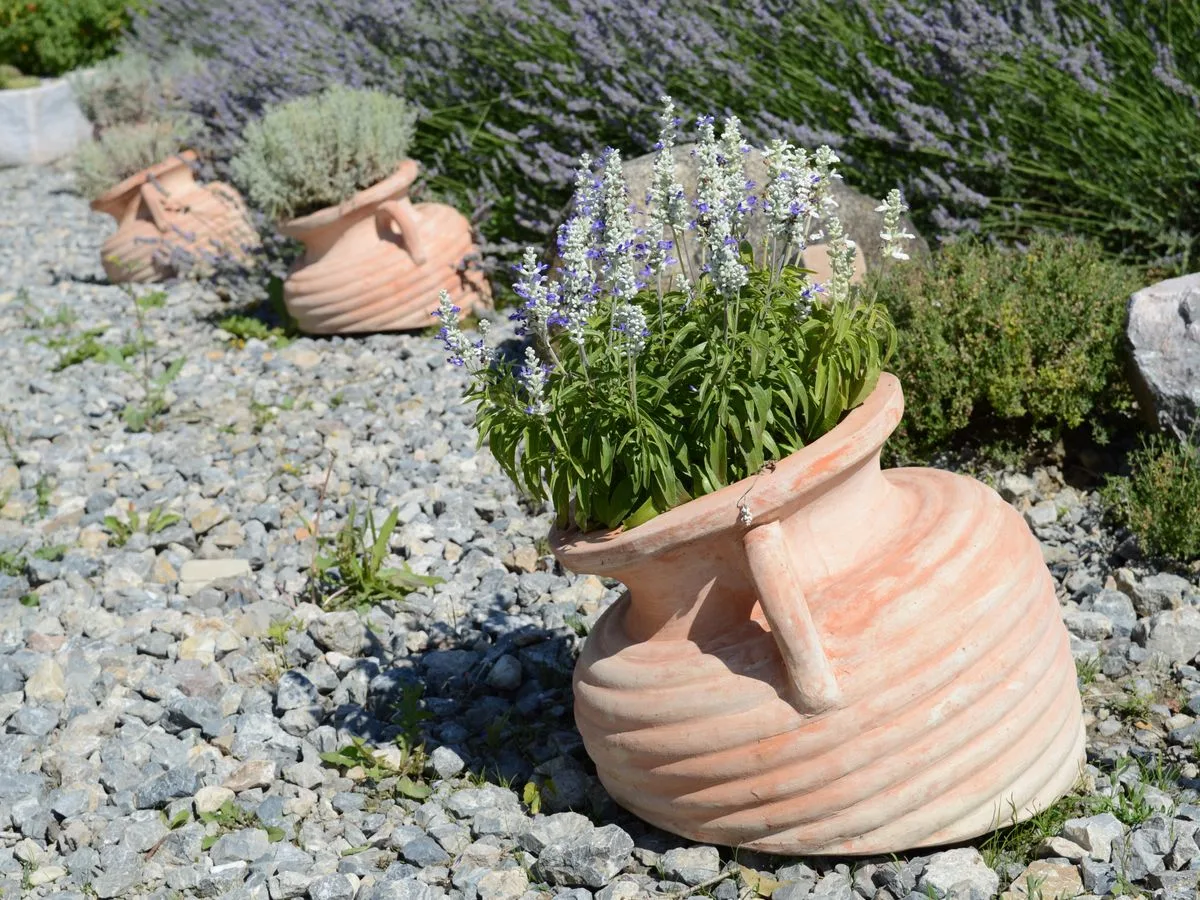
- Material: unglazed terracotta is ideal because it breathes and helps the soil dry faster.
- Saucer: never leave water standing in it. Empty it about 15 minutes after watering.
If your plant is small, don’t jump straight to a huge pot. Lots of soil with no roots in it stays wet for days. It’s better to go up in size gradually. Utah State University suggests repotting each spring into a slightly larger container with fresh coarse potting soil.
The best soil for lavender in pots
Lavender likes lean, light soil that drains fast. Garden soil on its own, or a very rich mix full of compost, holds too much water.
NC State Extension notes that lavender dislikes acid and clay soils and may be easier to grow in a container with added grit or perlite. The RHS suggests mixing in up to 25% coarse grit by volume.
A simple mix that works well:
- 2 parts regular potting mix (with no added fertilizer);
- 1 part coarse sand or perlite;
- 1 part fine gravel or poultry grit.
Utah State University gives a soil pH of 6.5 to 7.5, close to neutral. NC State adds that lavender tolerates alkaline soil and mentions ground oyster shell as a useful amendment. A pinch of garden lime does the same job.
How to plant lavender in a pot
- Pick a healthy plant with gray-green leaves and no black areas at the base.
- Fill the pot with the gritty mix.
- Plant at the same depth it was growing in the nursery pot. Burying the stem deeper keeps the base wet and invites rot.
- Top the soil with gravel. Illinois Extension recommends an inorganic mulch, like rock or pea gravel, to keep the crown dry.
- Water well once, then let the soil dry before watering again.
Spring is the best time to plant. The RHS points to April or May and advises never planting in winter.
Light: lavender needs real sun
There’s no shortcut here. NC State calls for at least 6 hours of direct sun a day, and Illinois Extension goes as far as 8 hours for a full bloom.
- Best spot: a south-facing balcony, patio or window, which gets the most sun in North America.
- Very hot summers: a little shade during the harshest afternoon hours helps. NC State recommends protection from hot afternoon sun in the Southeast.
- Indoors: it only works right next to a very bright window. Away from the glass, lavender stretches and stops flowering.
In winter, a grow light can help an indoor lavender hang on. See how to choose and place one in the guide to grow lights for herbs. If your home gets little light, you may have better luck with the plants on the list of herbs that grow in low light.
How to water lavender in a pot
The rule is simple: let it dry, then water deeply. Never “a little splash every day.”
- Push your finger about an inch into the soil.
- If it feels damp, don’t water. Check again in a day or two.
- If it’s dry, water until it runs out of the drainage holes.
- Empty the saucer after 15 minutes.
The RHS says potted lavender may need water once or twice a week in a hot summer. In winter, keep the soil on the dry side. Young plants need a bit more attention in their first year, until the roots fill the pot.
Yellow lower leaves, soft stems and sour-smelling soil all point to too much water. Learn how to rescue the plant in the guide to overwatered herbs.
Fertilizer: less is more
Lavender is one of the few plants that blooms better with less food. Illinois Extension recommends potting mix with no added fertilizer for containers, because extra feeding leads to more leaves and fewer flowers.
- Once a year is enough: Utah State University suggests a single application of slow-release fertilizer (about 1 tablespoon per plant) for the whole season.
- When you repot: fresh potting mix already carries enough nutrients for months.
- Avoid: high-nitrogen fertilizers, fresh manure and frequent feeding.
If you like homemade options, use them sparingly. The guide to homemade fertilizer for herbs shows what works and what can backfire.
How to prune lavender without killing it
Pruning is what separates a round lavender covered in flowers from a woody plant that’s open in the middle. There’s one golden rule: never cut into the part of the stem that has turned to bare wood with no leaves.
Illinois Extension explains that lavender won’t regrow from leafless wood. Cut there, and that stem dies back.
| When | What to do |
|---|---|
| Right after flowering | Remove the spent flower stalks plus about 1 inch (2.5 cm) of leafy growth, as the RHS suggests. Illinois Extension allows removing 1/3 to 1/2 of the plant, always above the leafy part. |
| Early spring | When new growth appears, cut dead or frost-damaged stems back to the first set of green leaves. |
| Never | Prune hard in fall or cut into bare wood. |
Use clean, sharp shears and shape the plant into a mound. Removing spent flowers also slows down woodiness, as NC State notes. Even with good care, a very old, woody lavender produces less. The RHS suggests replacing it with a young plant at that point.
How to propagate lavender from cuttings
Cuttings are the easiest and most reliable way to multiply lavender. Illinois Extension explains that seed is slow and many varieties don’t come true from seed.
- Choose a young stem without flowers, about 3 to 4 inches long.
- Cut just below a node, the point where leaves grow.
- Strip 3 or 4 lower leaves, as Utah State University recommends.
- Dip the end in rooting hormone, if you have it.
- Stick it in a small pot of light, moist mix and keep it somewhere warm and bright, out of harsh direct sun.
According to Utah State University, roots form in 30 to 40 days with the soil around 70 °F (21 °C). Once the cutting shows new growth, move it to its permanent pot. The step-by-step with photos is in the guide to propagating herbs from cuttings, and it works for lavender too.
If you’d like to try seeds, sow them shallow, about 1/8 inch deep, in a light seed mix. Utah State says germination takes 14 to 21 days at about 70 °F, and the seedlings take months to be ready. See the general tips in the guide to growing herbs from seed.
When and how to harvest lavender flowers
The scent peaks when the first flowers on the spike start to open. If you wait until they’re all open, the color and fragrance fade faster after drying.
- Best time: in the morning, after the dew dries, as Utah State University advises.
- How to cut: take the whole stalk, above the leaves. This doubles as a light pruning.
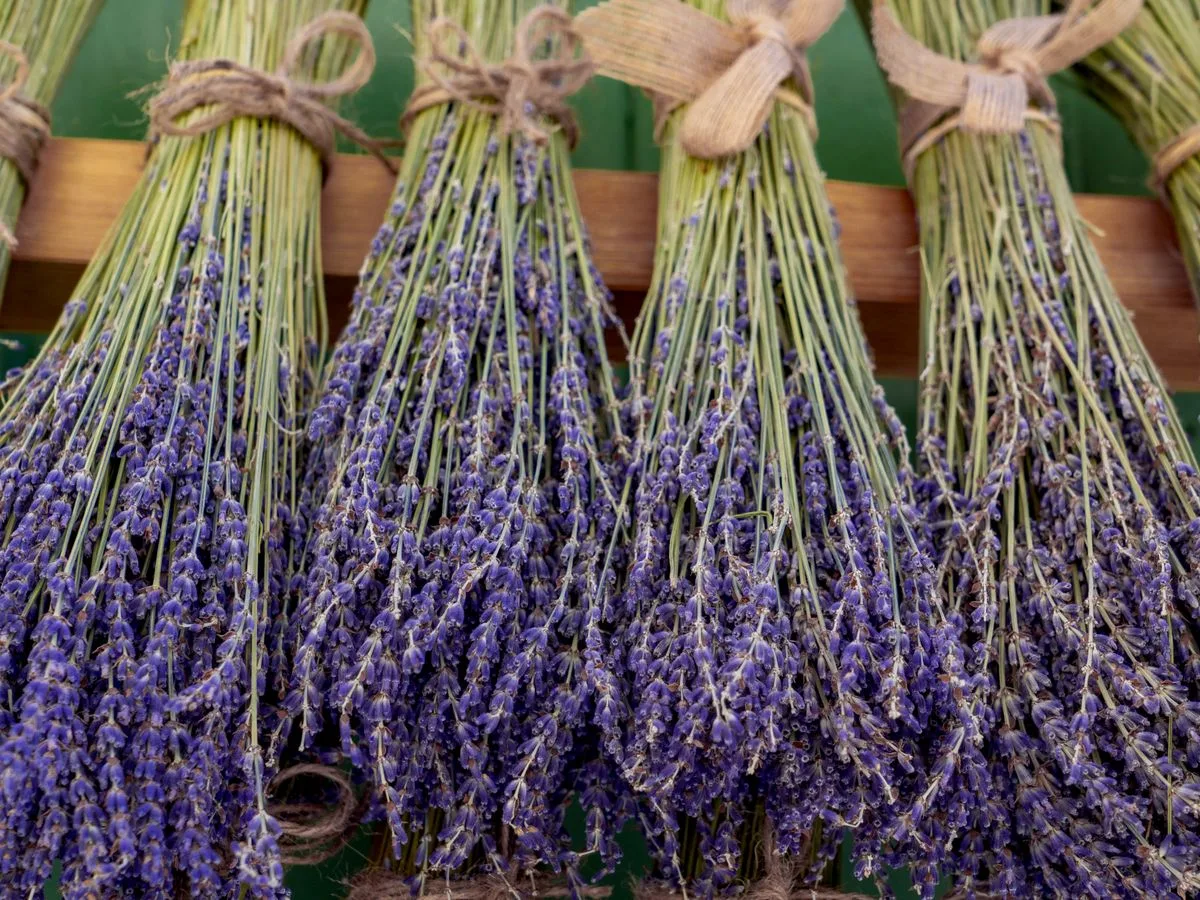
- To dry: make small bundles, secure them with a rubber band and hang them upside down in a dark, dry, airy spot.
- To store: once the buds fall off easily, keep them in a closed, dark glass jar away from light.
Dried lavender is lovely in drawer sachets and arrangements. More drying methods are in the guide on how to dry and freeze herbs. A blooming pot of lavender also makes a great present; find more ideas in gifts for gardeners.
Lavender in humid summers and in winter
Hot, humid summers are the toughest season for lavender. It handles heat fine; the problem is moisture that doesn’t move.
- Keep it out of long rains: if the pot is outdoors, move it under cover during very wet weeks.
- Let the air flow: don’t push the pot against walls or other plants.
- Space out your pots: leaves that never dry invite fungal problems.
In winter, English lavender is the hardiest. Utah State says it survives zone 4 if mulched or in a south-facing spot. French, Spanish and fringed types are tender.
The RHS suggests moving containers to a sheltered spot, against a wall, or into a cold frame or greenhouse, and keeping the soil fairly dry, because cold, wet soil leads to root rot. Bringing tender lavender indoors? See the guide on how to grow herbs in winter.
Common lavender problems and fixes
| Problem | Likely cause | What to do |
|---|---|---|
| Dries from the bottom up, soil still damp | Root rot from overwatering | Water less, improve drainage, replace the soil |
| Long stems and few flowers | Not enough sun | Move it to the sunniest spot you have |
| Lots of leaves, no flowers | Too much fertilizer | Stop feeding for a few months |
| Open, woody center | No yearly pruning | Prune every year after flowering, above the wood |
| Dark spots on the leaves | Fungal leaf spot from moisture | Improve air flow and keep the leaves dry |
Utah State University names Phytophthora root rot as lavender’s main problem, always linked to overwatering or standing water. NC State adds leaf spot in soil that stays too wet. Pests are rare. If you see scale or aphids, check the guide to herb plant pests.
Is lavender safe for pets?
If you have dogs or cats, keep the pot out of reach. The ASPCA lists lavender as toxic to dogs, cats and horses. Eating it can cause nausea, vomiting and loss of appetite. If your pet chews on it, call your vet or the ASPCA Animal Poison Control Center.
What to grow with lavender
Lavender shares its tastes with the Mediterranean herbs: strong sun, lean soil and little water. That makes them good neighbors, each in its own pot or together in a large, well-drained planter.
- Rosemary, which needs exactly the same care.
- Thyme and oregano, which stay low and cover the soil.
- Sage, which also likes drier soil.
Avoid pairing lavender with plants that want constantly moist soil, such as mint and basil. See the pairings that work in the guide to herbs that grow together.
Since it lives for years, lavender also belongs on the list of perennial herbs. And if you’re planning a fragrant corner of tea herbs, the chamomile plant is next on the list.
- English lavender and lavandin handle cold best; French, Spanish and fringed types need winter protection.
- Use a 12 to 16 inch pot with large drainage holes and no water in the saucer.
- Blend coarse grit or perlite into a lean, near-neutral potting mix.
- Give it at least 6 hours of direct sun a day.
- Water only when the soil is dry about an inch down.
- Feed lightly: once a year is usually enough.
- Prune right after flowering, never into bare wood.
- Propagate from cuttings; roots form in 30 to 40 days.
- Keep it away from dogs and cats.
Sun, fast-draining soil and one pruning a year: with that trio, lavender stops being the plant that “always dies” and becomes one of the easiest in a pot.
Lavender plant care FAQ
Can lavender grow indoors?
Only right next to a window that gets several hours of direct sun, or under a grow light. Away from light, it stretches, stops flowering and weakens.
How often should I water lavender in a pot?
When the soil is dry about an inch down. In hot summers that’s often once or twice a week; in winter, much less.
Why is my lavender plant dying?
Most of the time it’s too much water: the roots rot and the plant dries from the bottom up. Check the drainage holes and the saucer.
What size pot does lavender need?
About 12 to 16 inches wide for a mature plant. Small plants can start in a smaller pot and move up a size each spring.
When should I prune lavender?
Right after flowering, removing the stalks and a little foliage. Never cut into bare woody stems, because they won’t regrow.
Which lavender is best for pots?
Compact English varieties, such as ‘Munstead’, ‘Hidcote’ or ‘Mini Blue’. In hot climates, Spanish or fringed lavender also does well in pots.
Does lavender need fertilizer?
Very little. One light feeding a year, or fresh mix when you repot, is enough. Too much fertilizer means fewer flowers.
Is lavender toxic to cats and dogs?
Yes. The ASPCA lists lavender as toxic to dogs and cats. Keep the pot where pets can’t reach it.