Overwatered Herbs: Signs, Root Rot and How to Save Them
You water your basil every day with love, but it ends up droopy, with soft yellow leaves. The soil is always wet, and sometimes a white fuzz appears on top. It sounds strange, but you may have overwatered herbs: the problem is too much care.
In this article, you will learn how to spot the signs of overwatering, how it differs from underwatering, how to save a plant with root rot, what to do about white mold on the soil and how to water each herb the right way.
Why is too much water bad for herbs?
Roots need water, but they also need air. In good soil, there are tiny gaps between the particles that hold both air and water. When you overwater, water fills all those gaps and the air disappears.
Without air, the fine roots, which are the ones that absorb water, start to die. Here is the twist: with dead roots, the plant can no longer drink. It wilts as if it were thirsty, even in soggy soil.
Waterlogged soil also helps fungi that attack roots, such as Pythium. They spread quickly in warm, wet soil and cause what we call root rot.
Signs your herbs are overwatered
- Soft, yellow lower leaves that fall off easily.
- A wilted plant, even though the soil is wet.
- Soil that stays damp and never fully dries.
- A bad smell, sour or rotten.
- White or greenish mold on the soil surface.
- Small black flies hovering near the soil.
- A dark, mushy base of the stem.
- Brown leaf tips with dark spots.
Overwatered or underwatered? How to tell
Both problems make the plant droop and turn yellow, so they are easy to confuse. And if you mix them up, you can make things worse by watering a plant that is already drowning.
| Sign | Too much water | Too little water |
|---|---|---|
| Soil | Wet, heavy, sometimes smelly | Dry, hard, pulling away from the sides of the pot |
| Leaves | Yellow and soft, starting at the bottom | Dry and crispy at the edges |
| Wilting | Does not improve after watering | Improves within a few hours of watering |
| Pot weight | Very heavy | Very light |
| Roots | Dark, mushy, with the outer skin slipping off | Pale but dry |
| Other signs | Mold on the soil and fungus gnats | Water runs straight off the soil |
Iowa State University Extension explains why a potted plant wilts from both too little and too much water.
The finger test: the easiest way to know when to water
Before watering, push your index finger into the soil up to the second knuckle, about 1 to 1.5 inches (3 to 4 cm). Then decide:
- Dry at that depth: go ahead and water.
- Slightly damp and cool: wait another day and test again.
- Wet and sticking to your finger: do not water at all.
Another trick is to feel the weight of the pot. Lift it right after watering and again a few days later. With time, you will know just by the weight whether it still has water.
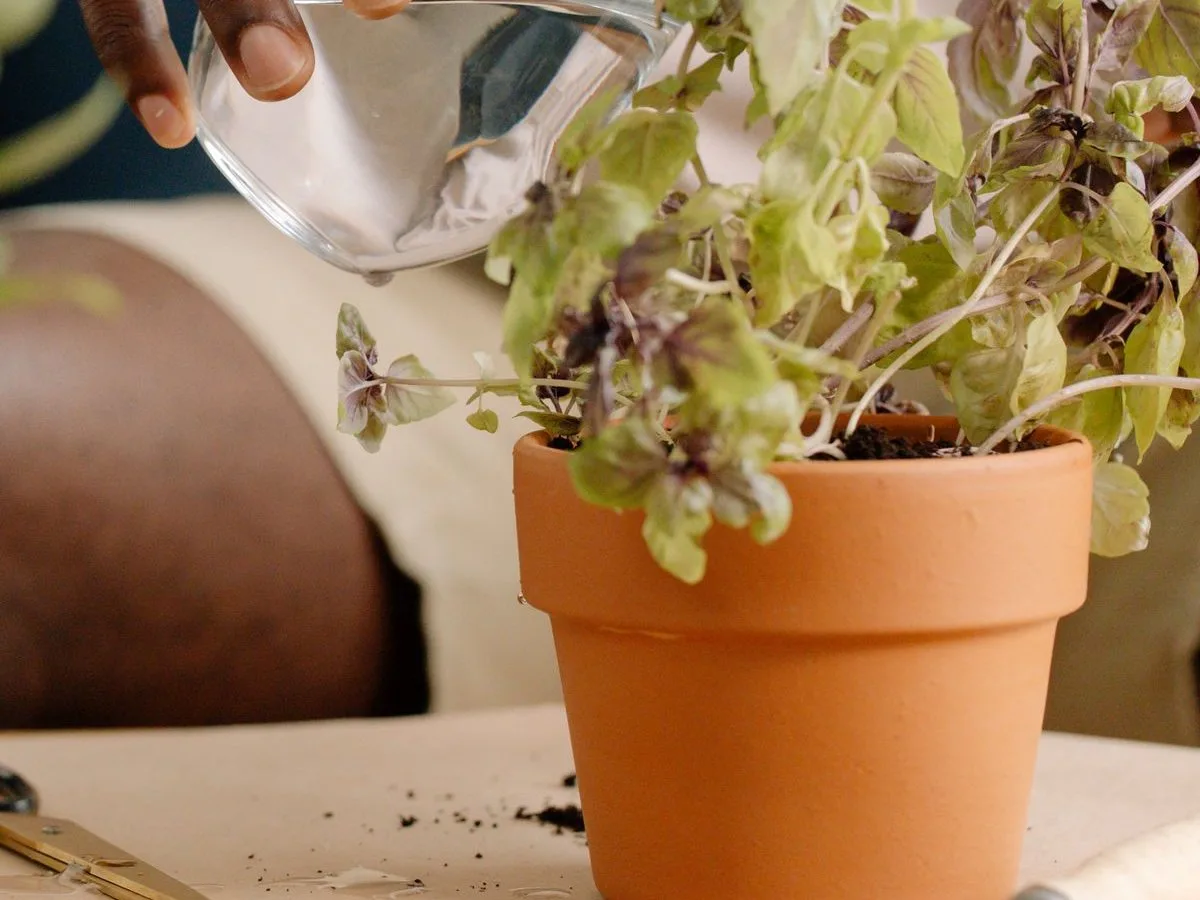
How to save an overwatered herb
If the plant is just starting to turn yellow and the soil does not smell, the case is mild. Here is what to do:
- Stop watering until the top of the soil is dry.
- Empty the saucer and let the pot drain.
- Move the pot to a bright, airy spot, but not into strong sun all at once.
- Remove the soft yellow leaves.
- Check that the drainage holes are not blocked by soil or roots.
If after a week the new leaves are still droopy, or the soil smells bad, it is time to look at the roots.
Root rot: how to spot and treat it
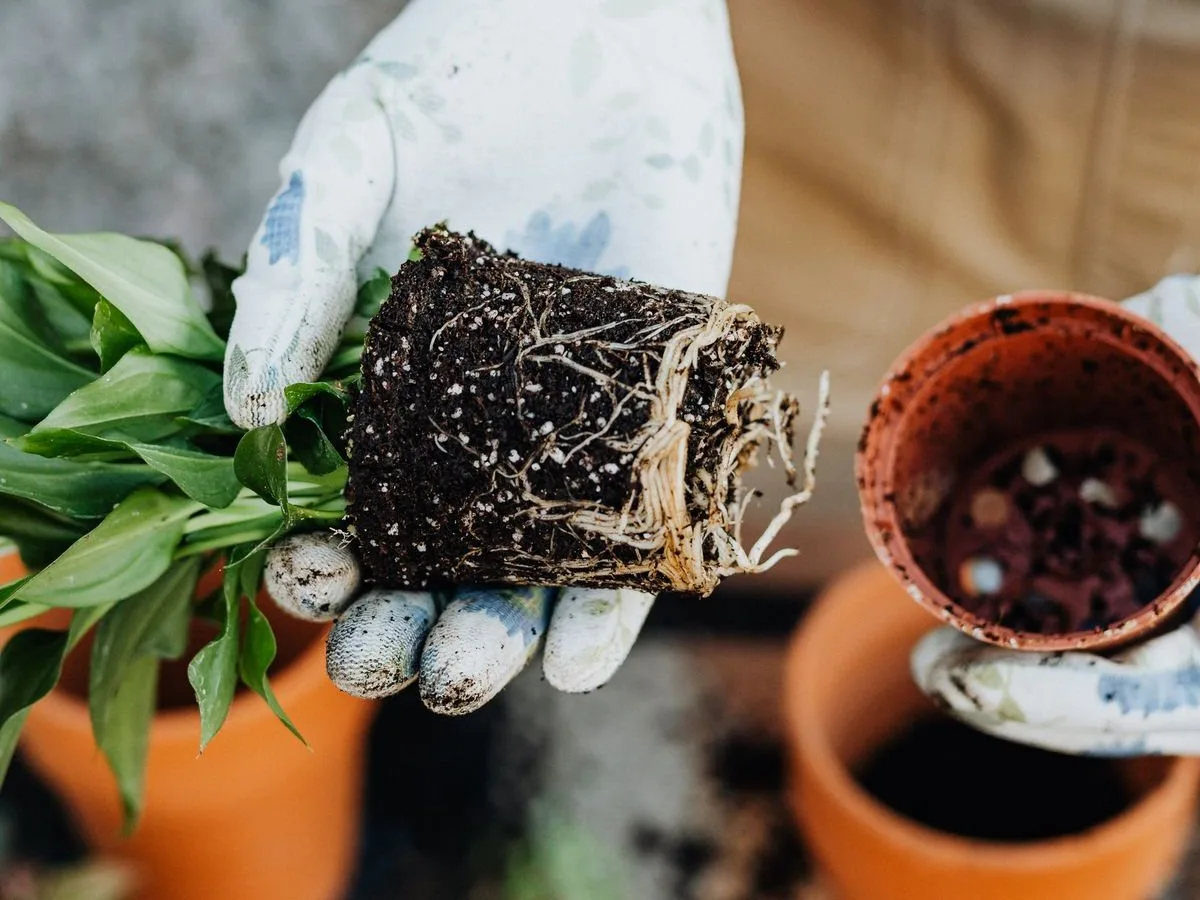
To check the roots, tip the pot on its side, hold the plant at the base and gently pull. If it is stuck, run a blunt knife around the inside edge of the pot.
Healthy roots are white or light tan and firm. Rotten roots are brown or black and mushy, and when you pull, the outer “skin” slides off, leaving just a thin thread. They often smell bad.
Step by step to save the plant
- Remove the old soil from the roots gently, ideally under a soft stream of water.
- Cut off all dark, mushy roots with clean scissors. Keep only the pale, firm ones.
- Trim some of the leaves too, because the plant now has fewer roots to feed them.
- Wash the pot with soap and water or use a new one, always with drainage holes.
- Repot in fresh soil that is light and damp, but not wet.
- Wait two or three days before watering again and keep the pot in bright light, out of strong sun.
If all the roots are rotten and the base of the stem has turned dark, the plant rarely recovers. In that case, try to save a few healthy stems by rooting cuttings in water, which works very well with basil and mint.
White mold on the soil: is it dangerous?
The white, cottony or powdery mold that shows up on the soil surface is almost always a fungus feeding on the organic matter in the soil. In general, it does not attack the plant directly. But it is a clear warning: the soil is too wet and there is too little airflow. To understand the causes and how to get rid of it, see the guide on white mold on soil.
- Scrape off the moldy layer and throw it away.
- Add a little fresh soil or coarse sand on top.
- Water less often and let the surface dry.
- Improve airflow by spacing pots apart.
Note: if the mold is on the leaves or stems, not on the soil, it is a different problem. White powder on leaves is usually powdery mildew, a disease that calls for removing the affected leaves and improving air circulation.
Small black flies in the pot
The tiny black flies that hover near the soil are fungus gnats. Their larvae live in wet soil and can feed on fine roots. They almost always arrive together with overwatering. See the step-by-step guide to getting rid of fungus gnats.
The fix is the same: let the soil dry between waterings. A yellow sticky trap helps catch the adults. Learn more about these and other bugs in our article on herb plant pests.
The right pot and soil
Often, the problem is not how much water you give but the pot and soil, which do not let water drain away.
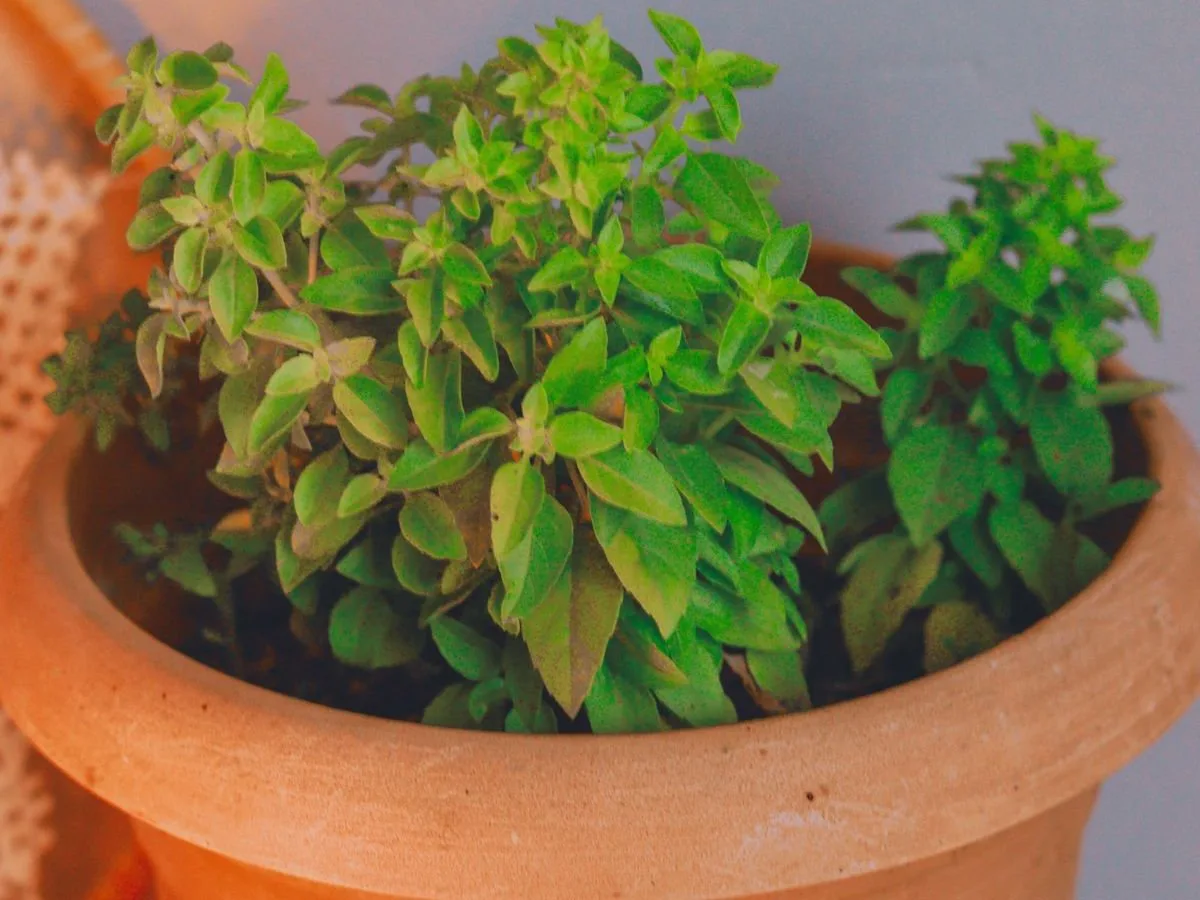
- Always use a pot with drainage holes. A decorative pot without holes should only be a cover pot: plant in a pot with holes and set it inside.
- Keep the saucer empty. Empty it 15 minutes after watering. Standing water gets soaked back up into the soil.
- Use light soil. Plain garden soil packs down in pots. Use a potting mix for herbs and vegetables, or mix soil with compost and some coarse sand or perlite.
- Choose the right pot size. A huge pot for a small plant holds too much water. Pick one only a little bigger than the roots.
- Terracotta for heavy waterers. Clay “breathes” and dries faster than plastic.
Gravel at the bottom of the pot does not help as much as people think. Water stays trapped in the soil just above it. What really works is drainage holes and a light potting mix.
North Carolina State Extension has practical advice on watering without overwatering.
How much to water each herb
- Basil: likes slightly moist soil but rots easily in cold, soggy conditions. Water when the surface is dry. See how to grow basil in a pot.
- Mint: the thirstiest of the group, but it still cannot stand a full saucer. See how to grow mint in a pot.
- Parsley: cool, moist soil without waterlogging. It has a long root and prefers a deeper pot. See how to grow parsley in a pot.
- Green onions: regular watering, letting the surface dry. The base of the clump rots if it stays too wet. See how to grow green onions in a pot.
- Rosemary, thyme and oregano: they suffer the most from overwatering. Water only when the soil is dry a couple of inches down.
- Cilantro: slightly moist soil. When soggy, it yellows and flops over.
Overwatering in winter and summer
In winter, the risk is much higher. Days are short, the plant grows slowly and the soil takes longer to dry. If you keep your summer watering routine, the soil gets waterlogged. In cold months, water less and always in the morning. See more in how to grow herbs in winter.
In summer, the soil dries faster, especially in small pots and hot windows. Even so, do the finger test. Heat plus wet soil is the favorite combination of the fungi that rot roots.
Common watering mistakes
- Watering every day out of habit. The plant needs water when the soil is dry, not on a fixed schedule.
- Giving “just a little” every day. It wets only the surface and keeps the soil constantly damp. It is better to water deeply, until it drains, and then wait for it to dry.
- Watering a droopy plant without checking the soil. If the soil is wet, more water makes it worse.
- Leaving the saucer full. It is like leaving the plant’s feet in a puddle all day.
- Changing the spot and the watering at the same time. Make one change at a time so you can see what works.
How to prevent overwatering
- Do the finger test before every watering.
- Use pots with holes and light soil.
- Empty the saucer after watering.
- Water less in cold and cloudy weather.
- Give them light: a plant with good light uses more water and dries the soil faster. If it is tall and thin, see leggy herbs.
- Group herbs by thirst: mint and parsley together, rosemary and thyme together.
If your leaves are yellow and you are not sure why, use the table in our article on herb leaves turning yellow. To set up a healthy herb garden from the start, see our complete kitchen herb garden guide.
Iowa State University Extension also has a guide to diagnosing problems caused by poor care in potted plants.
- A wilted plant in wet soil is a sign of too much water, not thirst.
- The finger test before each watering prevents most problems.
- Pots without holes and full saucers are the main culprits.
- Healthy roots are pale and firm; rotten roots are dark, mushy and smelly.
- In winter, water less: the soil takes longer to dry.
Frequently asked questions about overwatered herbs
How often should I water my herbs?
There is no fixed number. It depends on the herb, pot size, light and season. In summer, it may be every one or two days; in winter, every four or five. The best guide is the finger test: water when the soil is dry about 1 inch (3 cm) down.
Can a plant with root rot recover?
Often, yes, if some pale, firm roots are left. Cut off the rotten roots, repot in fresh soil and water sparingly for the first few weeks. If all the roots and the base of the stem are dark, it is better to take cuttings from the healthy stems.
Can I use a pot without drainage holes?
It is not recommended. Without holes, water collects at the bottom and rots the roots. If you love a pot without holes, use it as a cover pot: plant in a plastic pot with holes, set it inside and pour out any water that collects at the bottom.
Is bottom watering better?
It can work, as long as the plant sits in water for no more than 15 to 20 minutes. Then pour out what is left. Leaving water in the saucer all day is one of the most common causes of root rot.
Is white mold on the soil harmful to eat?
Soil mold does not usually spread to the leaves. Even so, scrape off and discard the moldy layer, rinse the leaves well before using them and fix your watering. If mold shows up on the leaves, remove those leaves and do not eat them.
Does gravel at the bottom of the pot help drainage?
Very little. Water stays trapped in the soil just above the gravel, and the roots stay wet. What really works is a pot with drainage holes and a light mix with coarse sand or perlite.
Do water-holding crystals help?
Not if you already overwater. They are meant for pots that dry out very quickly, like those in hot windows. In soil that already stays wet, they only raise the risk of root rot.
How long does it take for the plant to recover?
In a mild case, firm new leaves appear in one or two weeks. After cutting rotten roots and repotting, it can take three to four weeks. In cold weather, recovery is slower.