Herbs That Grow Well Together: Pairing Chart and Guide
Growing several herbs in one planter saves space and looks beautiful in the kitchen. But not every herb gets along with every neighbor. Knowing the herbs that grow well together is what separates a full, healthy planter from one where half the plants die within a few weeks.
In this guide, you will find a pairing chart, the herb groups that thrive together, the ones that should stay apart, and how to plant a mixed herb container step by step.
Why some herbs do not belong in the same pot
When two plants share a pot, they also share the same soil, the same watering, and the same light. If one likes moist soil and the other likes dry soil, someone is going to suffer. You water to please one and end up drowning or drying out the other.
There is also competition for space. Plants that grow very large, or that spread underground, smother smaller neighbors and steal their water and nutrients.
That is why the most important factor is not “friendship” between plants, but similar needs. If they ask for the same care, they will most likely live happily together.
Companion planting: what the science says
You have probably seen lists claiming that one plant “protects” another from pests or improves its flavor. This is called companion planting.
Some studies show that certain aromatic herbs can confuse specific insects by masking the scent of the plants they attack. Penn State Extension explains how herbs can be good plant partners in the garden.
However, many famous pairings come from tradition and gardeners’ experience, without research to back them up. University of Illinois Extension looks at exactly this question: which companion planting claims are anecdotal and which have been tested.
So in this guide, the focus is on what actually works in an indoor pot: grouping herbs with the same water, light, and space needs.
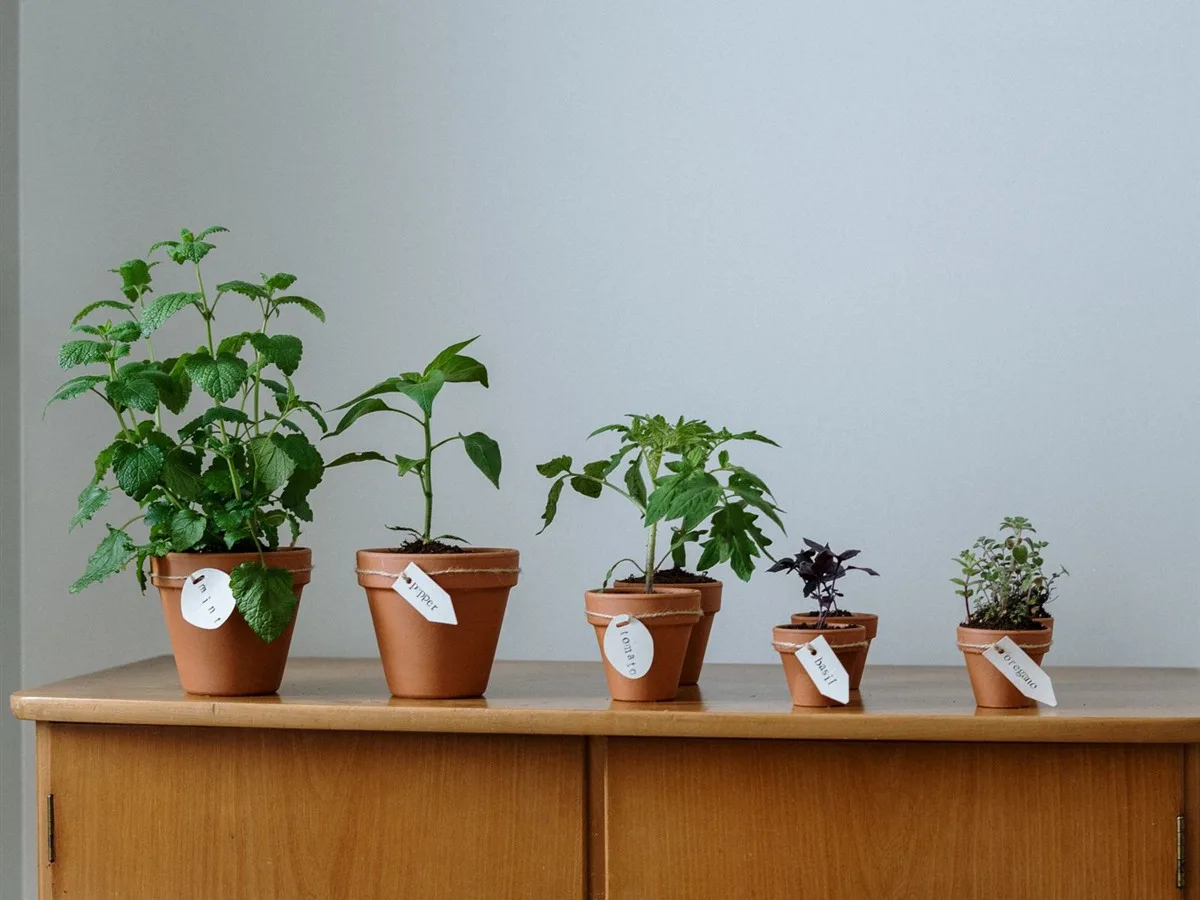
Chart: herbs that grow well together
| Herb | Light | Water | Grows well with | Keep away from |
|---|---|---|---|---|
| Basil | Full sun | Medium | Parsley, chives, oregano (with care) | Rosemary, sage, mint |
| Parsley | Sun or part shade | Medium to high | Chives, basil, cilantro | Rosemary, mint |
| Chives | Sun or part shade | Medium | Parsley, basil, cilantro, thyme | Mint |
| Cilantro | Morning sun | Medium to high | Parsley, chives | Rosemary, mint |
| Rosemary | Full sun | Low | Thyme, oregano, sage | Basil, parsley, cilantro, mint |
| Thyme | Full sun | Low | Rosemary, oregano, sage | Mint, parsley |
| Oregano | Full sun | Low to medium | Rosemary, thyme, sage | Mint |
| Sage | Full sun | Low | Rosemary, thyme, oregano | Basil, mint |
| Mint | Sun or part shade | High | Best on its own | Almost everything |
The 3 herb groups that grow well together
Group 1: sun-loving, dry-soil herbs
Rosemary, thyme, oregano, and sage. These are dry-climate plants that love lots of sun, fast-draining soil, and infrequent watering. Together, they make a planter that smells like a Mediterranean kitchen. If you want to start with one of them, see how to grow rosemary in a pot, how to grow thyme in a pot or how to grow oregano in a pot.
Use potting mix with some coarse sand and water only when the soil is dry an inch or two down. This is the group that suffers most from overwatering.
Group 2: moist-soil herbs
Parsley, chives, and cilantro. They like soil that stays cool and slightly moist. They handle partial shade well, which helps in kitchens without much direct light.
Parsley and chives together are one of the most practical pairs to keep on a windowsill. Cilantro can join them, but it has a short life cycle and bolts quickly in the heat, so you will replant it more often.
Group 3: basil and its partners
Basil loves strong sun, like group 1, but wants slightly moist soil, like group 2. That puts it somewhere in the middle.
Its best neighbors are parsley and chives, as long as the pot gets plenty of sun. It can live with oregano in a large pot with moderate watering, but oregano prefers drier soil. See the full care guide in how to grow basil in a pot and where to cut in how to prune basil.
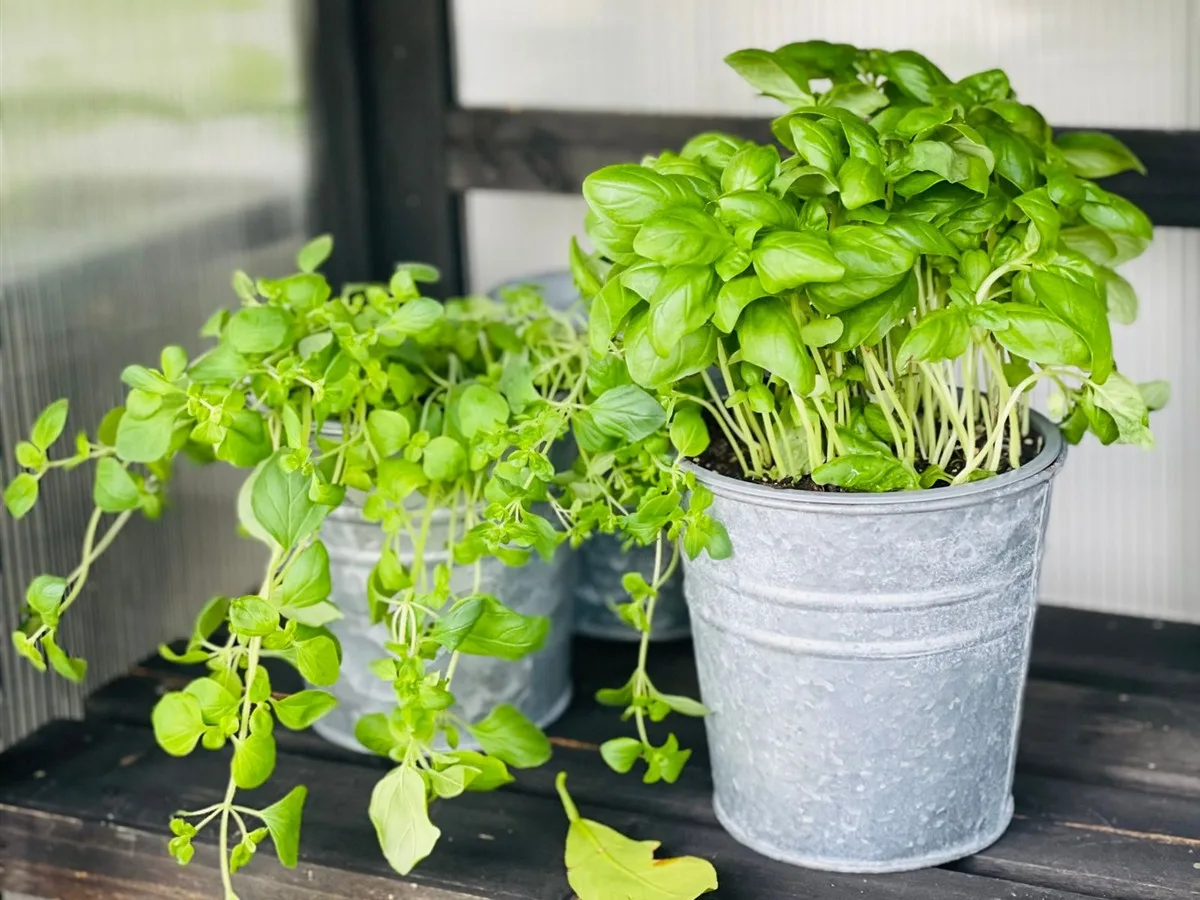
Herbs that should grow alone
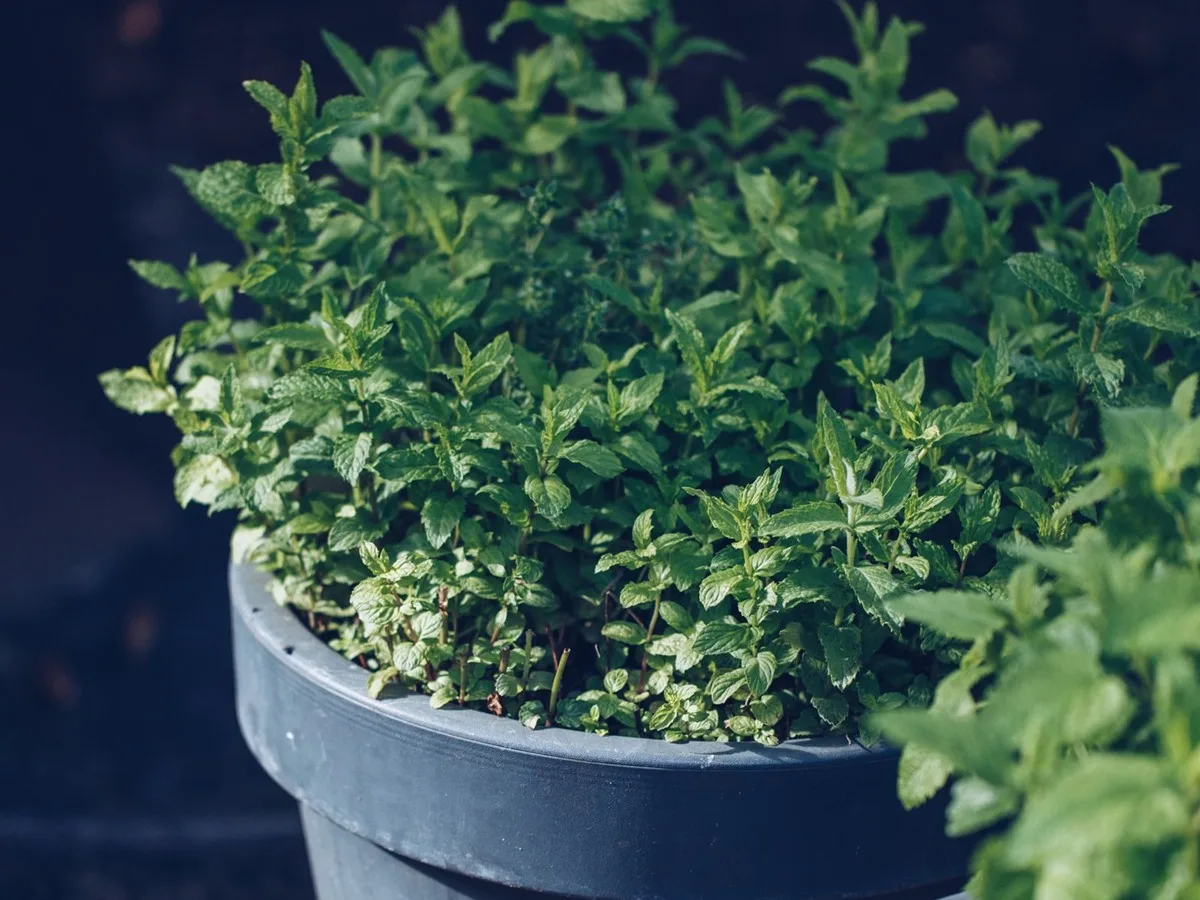
Mint
Mint spreads through stems that run underground. In no time, it fills the whole pot and smothers its neighbors. It also loves water, which most other herbs do not.
The ideal is to give mint its own pot. If you really want it in a planter with other herbs, plant it inside a plastic pot sunk into the planter, with the rim slightly above the soil. That keeps the roots contained. Learn more in how to grow mint in a pot.
Lemon balm
It belongs to the same family as mint and also grows large and spreads. It does best in a pot of its own.
Fennel
Fennel grows tall, has a deep root, and many gardeners recommend keeping it away from other plants. In a container, it does best alone and in a deep pot.
Ready-made herb combinations to try
- Windowsill classic: parsley + chives. 16-inch planter, sun or partial shade.
- Italian: basil + parsley + chives. 24-inch planter with plenty of sun.
- Mediterranean: rosemary + thyme + oregano. 24-inch planter, full sun, little water.
- Grilling herbs: rosemary + thyme + sage. Same care as the Mediterranean mix.
- Salsa garden: cilantro + chives + parsley. Soil always cool and morning sun.
- Tea and cocktails: mint alone, in a large, wide pot.
How to plant a mixed herb container
- Pick one group. Combine only herbs with the same water and light needs.
- Choose the container. Use a planter at least 16 inches long and 8 inches deep, with drainage holes.
- Prepare the soil. Mix potting soil with compost. For the sun group, add coarse sand.
- Plan the spacing. Leave 6 to 8 inches between plants. Put taller herbs in the back and short ones in front.
- Plant at the same depth the seedling was in its original pot, without burying the stem.
- Water well on planting day and keep it in bright light, out of harsh sun, for two days.
- Move it into the sun gradually and adjust watering to the group you chose.
If you are short on space, your planter can become a green wall. Find ideas in vertical garden in an apartment.
How many herbs fit in one pot?
| Container size | How many herbs | Example |
|---|---|---|
| 8-inch round pot | 1 | One basil or one mint |
| 12-inch round pot | 2 to 3 small ones | Chives + parsley |
| 16-inch planter | 2 | Parsley + chives |
| 24-inch planter | 3 | Rosemary + thyme + oregano |
| 32-inch planter or larger | 4 | Basil + parsley + chives + cilantro |
When in doubt, plant fewer. Crowded herbs compete for light, get thin, and get sick more often. A container that looks a little empty at first fills in fast.
Watering and light for herbs grown together
Watering should follow the most sensitive herb in the pot. For the sun group, water only when the soil is dry an inch or two down. For the moist-soil group, water when the surface starts to dry.
Always do the finger test and empty the saucer after watering. If one of your herbs keeps stretching toward the window, see our guide to leggy herbs.
As for light, put the sun group in your brightest window. Parsley, chives, and mint can handle spots with less sun.
Iowa State University Extension has a complete guide to growing herbs in containers, with tips on soil, watering, and light.
How to feed herbs that share a pot
Herbs grown together also share the nutrients in the soil. That is why a mixed planter runs out of food faster than a pot with a single plant.
The moist-soil group and basil like a little more fertilizer, because they produce lots of leaves. A thin layer of compost on top of the soil every month or two is usually enough.
The sun group needs very little. Too much fertilizer leaves rosemary, thyme, and oregano with less aroma. Once every two or three months is plenty. Learn how in how to use compost in pots.
Growing herbs together in winter
In cold weather, herbs grow slowly and the soil takes longer to dry. In a full planter, that raises the risk of root rot. Water less, always in the morning, and pull the planter away from cold glass at night.
Basil and cilantro suffer most from cold. If needed, take them out of the planter and move them somewhere warmer. Find more tips in how to grow herbs in winter.
Common mistakes when growing herbs together
- Grouping by looks instead of by water and light needs.
- Putting mint with other herbs without a root barrier.
- Cramming in too many plants so the planter looks full right away.
- Using a shallow container, which dries out fast and limits roots.
- Watering every herb the same way, without thinking about its group.
- Forgetting to harvest. Regular harvesting keeps plants compact and balanced.
Harvesting from the tips makes each herb grow bushier and keeps one from shading the other. If one of your herbs looks unhealthy, our guide on why your basil is dying can help you find the cause.
What to do when one herb dies in a mixed pot
It is common for one herb to finish its life cycle before the others, especially cilantro and basil. When that happens, gently remove the plant with its roots, disturbing the neighbors as little as possible.
Fill the hole with fresh soil and compost and plant a new seedling from the same group. That way, your planter keeps producing without starting over from scratch.
To plan a complete herb garden, with pots, light, and what to plant first, see the complete kitchen herb garden guide. For individual herbs, check out how to grow parsley in a pot and how to grow green onions in a pot.
- Group herbs that need the same amount of water and light.
- Rosemary, thyme, oregano, and sage form the sun and dry-soil group.
- Parsley, chives, and cilantro form the moist-soil group.
- Basil pairs best with parsley and chives in a sunny spot.
- Mint should grow alone, or in a pot sunk inside the planter.
- Leave 6 to 8 inches between plants and do not overcrowd.
Frequently asked questions about herbs that grow together
Which herbs grow well together?
The ones that need the same care. Rosemary, thyme, oregano, and sage grow well together. So do parsley, chives, and cilantro. Basil pairs with parsley and chives. Mint should grow on its own.
Can I plant basil and rosemary together?
It is not recommended. Basil likes slightly moist soil, and rosemary likes dry soil. In the same pot, one of them will struggle. Plant them in separate pots, side by side.
Can mint be planted with other herbs?
Only with a barrier. Mint spreads underground and takes over the pot. If you want it in a planter, plant it inside a sunken plastic pot, with the rim slightly above the soil.
Can parsley and chives share a pot?
Yes. They are one of the best pairs. Both like moist soil and tolerate partial shade, and both are used constantly in the kitchen.
What size pot do I need for multiple herbs?
For two herbs, a 16-inch planter. For three, a 24-inch one. It should be at least 8 inches deep, always with drainage holes so water can drain out.
How far apart should herbs be planted?
Leave 6 to 8 inches between plants. Herbs that grow larger, like basil and rosemary, need the extra space. Chives and thyme can be a little closer.
Does growing herbs together keep pests away?
Some aromatic herbs can confuse certain insects, but the effect is limited and not always proven. What protects plants most is keeping them strong, with good light, proper watering, and airflow.
Can cilantro grow with parsley?
Yes. Both like moist soil and morning sun. Just remember that cilantro has a short life cycle and bolts quickly in the heat, so you will need to replant it before the parsley.