How to Grow Thyme in a Pot: Indoor and Outdoor Care Guide
Thyme is a small herb with tiny leaves, but its aroma can transform roasts, vegetables and sauces. It is also one of the easiest herbs to keep at home. In this guide, you’ll learn how to grow thyme in a pot, from planting to harvest, and how to keep it healthy for years, indoors or out.
Let’s look at what thyme needs, the three ways to plant it, how to water, prune and harvest, and what to do when it starts to dry out or look like a bundle of sticks.
What does thyme need to grow well in a pot?
Thyme comes from the dry, rocky hillsides of the Mediterranean, where rain is scarce and the sun is strong. Everything it needs at home mirrors that place: lots of light, soil that dries fast and very little water.
- Light: 6 or more hours of direct sun a day. It is one of the most sun-loving herbs.
- Soil: light, gritty and very well drained. Heavy, damp soil rots the roots.
- Water: little. The soil should dry out between waterings.
- Fertilizer: very little. Rich soil makes thyme soft and less fragrant.
- Pot: with drainage holes, ideally terracotta.
Iowa State University Extension puts it simply: thyme grows best in full sun and well-drained soil. In other words, light and drainage matter more than anything else.
Unlike cilantro, which lives only a few months, thyme is a perennial. With good care, the same plant gives you fresh sprigs for three or four years.
What types of thyme are best for pots?
There are dozens of thyme varieties, but three are easy to find at garden centers and work well in containers:
| Type | What it looks like | Best use |
|---|---|---|
| Common thyme (English or French) | Small shrub with gray-green leaves and a strong aroma | Roasts, stews, soups and roasted vegetables |
| Lemon thyme | Bright green or gold-edged leaves with a lemony scent | Fish, chicken, salads and tea |
| Creeping thyme | Low, spreading mat with purple flowers | Planter edges and hanging pots |
For cooking, common thyme is the go-to. Lemon thyme is a great second choice, because it has a different flavor and the same care needs.
What size pot does thyme need?
Thyme doesn’t need a big pot. Its roots are shallow and fine. What really matters is drainage: the container must let water out quickly.
- Size: 6 to 8 inches deep and wide for one plant. For two or three plants, a 16 to 24-inch window box.
- Material: unglazed terracotta is ideal. It breathes and helps the soil dry faster.
- Holes: a must. Without them, water pools at the bottom and the roots rot.
Plastic pots work too, as long as they drain well. In that case, water a little less, because plastic holds more moisture.
What is the best soil for thyme?
Thyme soil should be very different from basil or parsley soil. It needs to be leaner and drain much faster. A simple mix that works well:
- 2 parts quality potting mix;
- 1 part coarse sand;
- 1 part perlite or fine gravel.
Cactus and succulent mix also works well on its own, or blended half and half with regular potting mix. Skip garden soil, which compacts in pots and stays wet.
Thyme likes neutral to slightly alkaline soil. If your mix is very acidic, a tablespoon of garden lime or finely crushed eggshell per pot helps balance it.
How to grow thyme in a pot: 3 ways
1. From a nursery plant (easiest)
Buying a young plant is the fastest and most reliable route. Choose a compact plant with firm, fragrant leaves, no dry patches in the center and no pests under the leaves.
- Prepare the pot with drainage and the gritty mix.
- Dig a hole the size of the root ball.
- Set the plant at the same depth it was growing, without burying the stem.
- Fill in with soil and press lightly.
- Water well once, then wait for the soil to dry before watering again.
For the first few days, keep it in bright light but out of harsh afternoon sun. After a week, move it to the sunniest spot you have.
2. From cuttings
If you have a thyme plant, or know someone who does, you can make new plants for free. It is the cheapest way to multiply your herbs.
- Cut a young, green, soft stem about 3 to 4 inches long.
- Strip the leaves from the bottom half.
- Push the bare part into light, moist potting mix or sand.
- Cover with a clear plastic bag or a cut plastic bottle to hold in humidity.
- Keep in bright, indirect light and keep the soil lightly moist.
Roots form in three to six weeks. When the cutting pushes out new growth, it has rooted and can move to its permanent pot.
3. From seed (slowest)
Thyme seed is tiny, almost like dust. It does germinate, but slowly, and seedlings take months to become harvest-size plants.
- Scatter the seeds on top of moist soil.
- Cover with a very thin layer of sifted soil, just enough to hide them.
- Mist with water and keep the surface moist until they sprout.
- When seedlings reach 2 inches, keep only the strongest, about 6 inches apart.
Germination takes two to four weeks. If you want to harvest soon, start with a plant or a cutting.
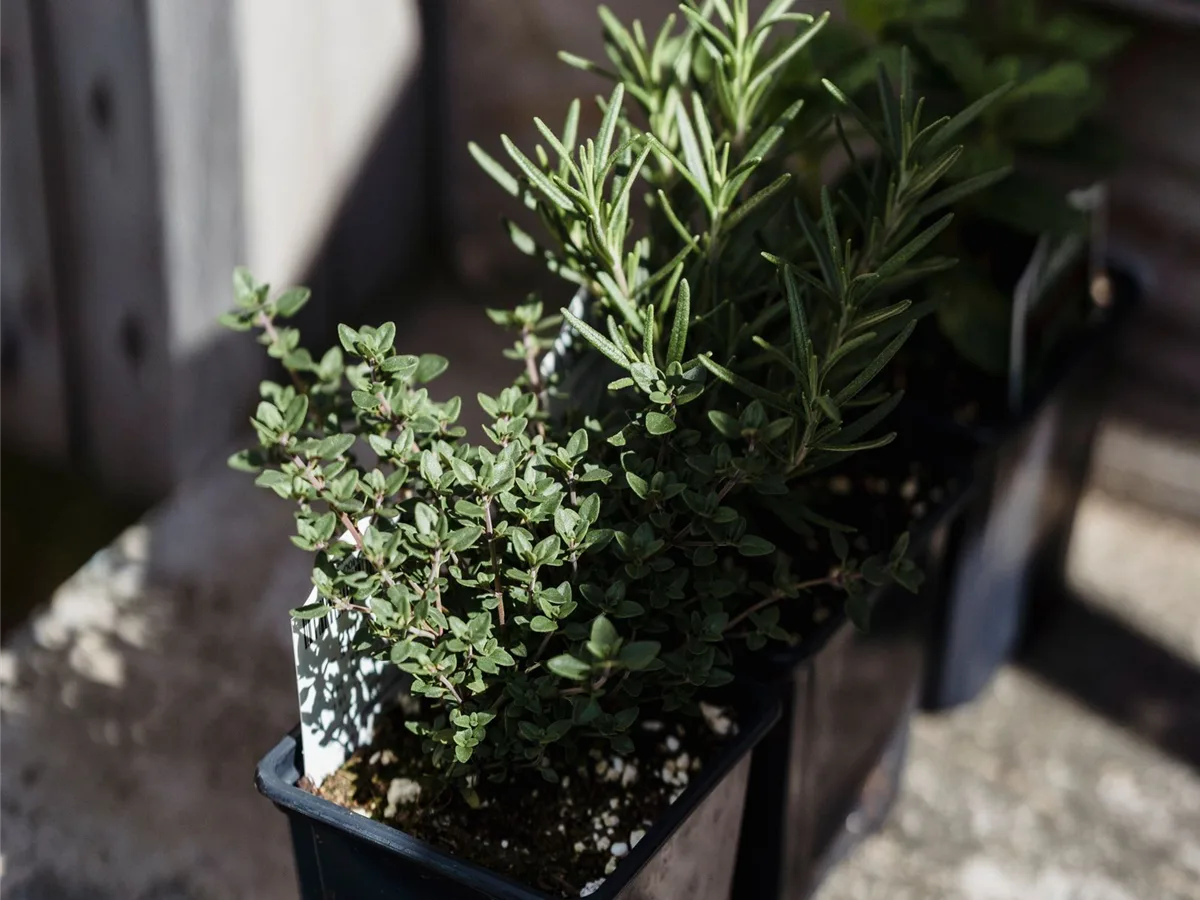
Can you grow thyme indoors?
Yes, but light is the make-or-break factor. Indoors, put thyme in your sunniest window, ideally south-facing. West-facing windows are the next best choice.
In low light, thyme grows long, thin stems with few leaves and loses its aroma. If that happens, see how to fix it in leggy herbs. During the darker winter months, a simple LED grow light for 12 to 14 hours a day makes a big difference.
Keep it away from heating vents and radiators, which dry the leaves, and from cold window glass at night. For more ideas on placing your pots, check the kitchen herb garden guide.
How often should you water thyme in a pot?
This is the most important part of the guide. What kills most potted thyme isn’t drought, it’s too much water. Its fine roots rot quickly in wet soil.
- Do the finger test. Push a finger about 1 inch into the soil. If it is dry, water. If it is damp, wait.
- Water deeply, but rarely. Water until it runs out of the holes, then don’t water again until the soil is dry.
- Empty the saucer about 15 minutes after watering.
- Water the soil, not the leaves, to prevent fungal problems.
In practice, that often means watering every two to three days in summer and about once a week in winter, or even less indoors. But the soil is the guide, not the calendar.
A sign that confuses many people: overwatered thyme also dries out and turns brown, as if it were thirsty. If the soil is wet and the plant looks dry, the problem is too much water. See what to do in overwatered herbs.
How to prune and harvest thyme without killing it
Regular harvesting is good for thyme. Every cut at the tips triggers new shoots, and the plant becomes fuller and rounder. The key is never to cut into old wood.
- Start harvesting when the plant is about 6 inches tall.
- Cut only the green, soft part of the stems, 2 to 3 inches from the tip.
- Never remove more than one third of the plant at once.
- Avoid cutting into the hard, brown, woody part. Thyme rarely regrows from there.
- Use clean scissors and harvest in the morning, when the aroma is strongest.
NC State Extension recommends that you harvest just before flowering, when the essential oil in the leaves peaks. Once the flowers open, the leaves are still good, just a little less aromatic.
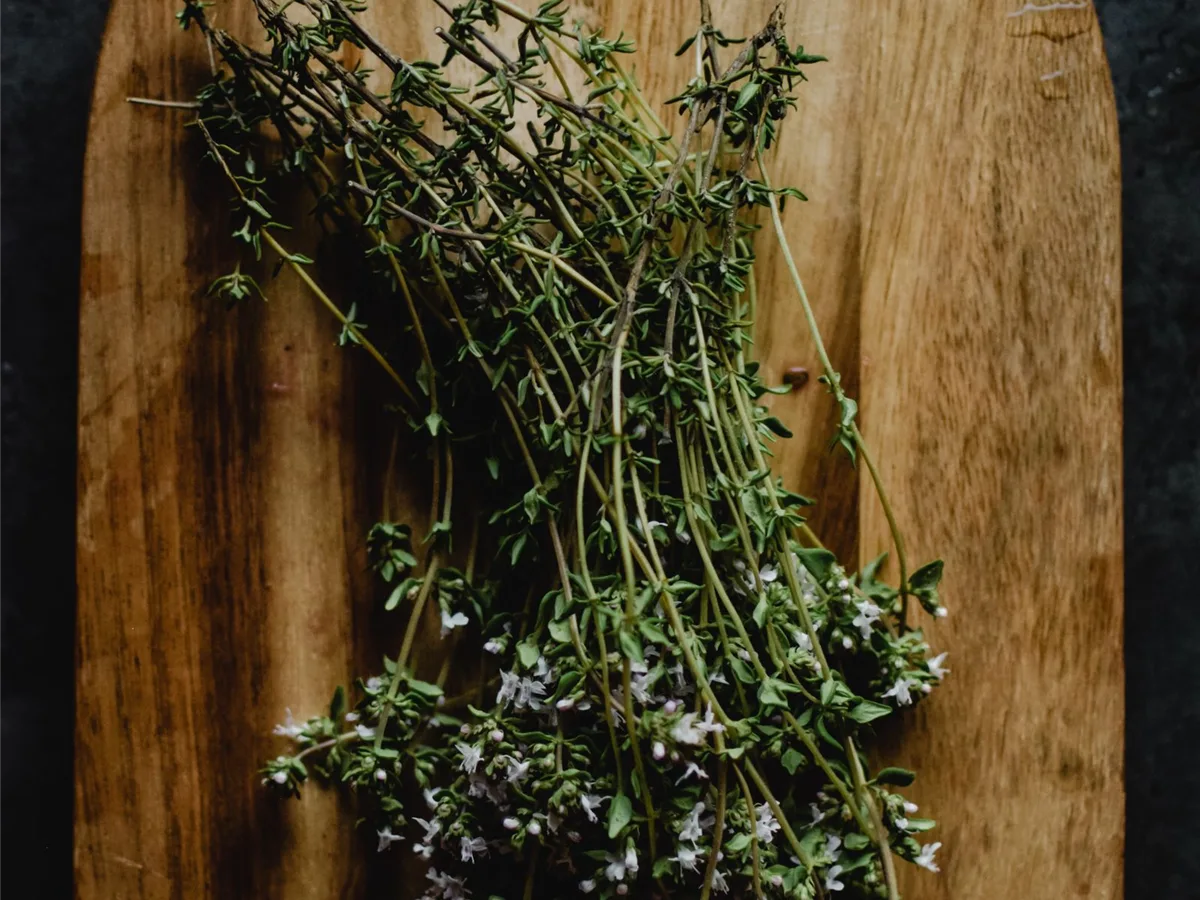
Pruning after flowering
Thyme blooms in late spring and early summer, with tiny white, pink or lilac flowers. The flowers are edible and, according to Penn State Extension, attract numerous small pollinators, including native bees.
When the flowers fade, give the plant a light trim: cut off the flowering tips plus another inch of green stem. This stops the plant from spending energy on seeds and keeps it compact.
Why does thyme get woody?
Over time, the base of thyme stems hardens and turns brown, like wood. That is natural, since thyme is a small shrub. The problem is when the center goes bare, with leaves only at the tips.
This happens for three main reasons:
- No pruning: without regular cuts, stems grow outward and the center ages.
- Low light: the plant stretches toward the sun and drops its lower leaves.
- Age: after three or four years, thyme naturally loses vigor.
To prevent it, always harvest from the tips and prune after flowering. When a plant gets very old and woody, the best fix is to take cuttings from the green stems and start fresh plants.
How to fertilize thyme
Thyme needs very little fertilizer. In the wild, it grows in poor, rocky soil. Too much feeding makes the plant soft, full of bland leaves and more prone to fungus.
A light top-dressing of worm castings or compost in spring, and again in late summer, is plenty. If you prefer liquid fertilizer, use it at half strength once a month during the growing season, and not at all in winter.
Thyme in winter
Common thyme is hardy and handles cold well outdoors, as long as the soil is dry. Cold, wet soil is what does the most damage. In pots, roots are more exposed than in the ground, so in very cold regions it is safer to bring the pot indoors or into an unheated garage with a window.
Indoors in winter, water even less, give it the brightest window you have and keep it away from heat sources. For a full plan, see how to grow herbs in winter.
University of Florida IFAS, in a hot and humid climate, also stresses planting thyme in well-draining soil, which is what keeps the roots from rotting. Humidity plus poor airflow is as risky as cold, wet soil.
Common thyme problems in pots
| What you see | Likely cause | What to do |
|---|---|---|
| Dry, brown stems with wet soil | Overwatering and root rot | Stop watering, check the holes and repot if the soil smells bad |
| Long, thin stems with few leaves | Not enough light | Move to the sunniest window or add a grow light |
| Bare center and woody base | No pruning or an old plant | Trim from the tips and take cuttings to renew |
| Yellowing lower leaves | Soggy soil or normal aging | Water less often and remove old leaves |
| White fuzz on the soil | High humidity and poor airflow | Scrape off the layer and water less |
| Fine webbing and pale speckles | Spider mites, common in dry indoor air | Rinse with water and improve humidity |
| Small green or black insects on new growth | Aphids | Spray off with water and use insecticidal soap |
If a white layer appears on the soil, see what to do about white mold on soil. For insects, the herb plant pests guide shows how to treat them without harsh chemicals. And if the tips are drying out, check the causes of herb leaves turning brown.
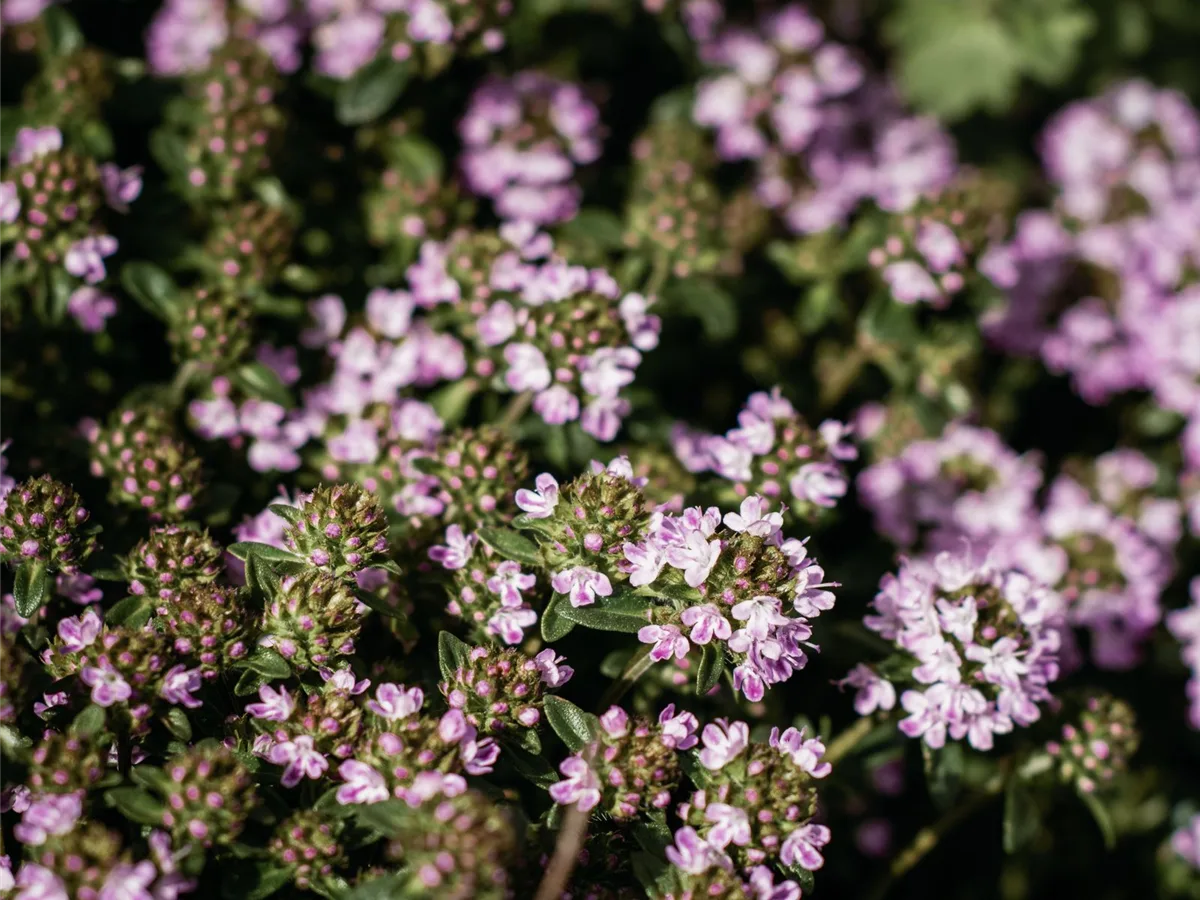
Can thyme be planted with other herbs?
Yes, and it pairs beautifully with herbs that also like strong sun and dry soil: rosemary, oregano, sage and marjoram. Together they make a planter that smells like a Mediterranean kitchen.
Avoid planting thyme with basil, parsley, cilantro and mint, which need moister soil. With the same watering, one side always suffers. See the full chart in herbs that grow well together.
Rosemary is thyme’s best partner, because their care is almost identical. To build the pair, see also how to grow rosemary in a pot.
How to use and store thyme
Thyme is one of the few herbs that keeps its flavor well when dried. So it’s worth saving whatever you trim.
- Fresh: add whole sprigs to stews and roasts and remove them before serving, or run your fingers down the stem to strip the leaves.
- Dried: tie small bundles and hang them upside down in a dry, airy spot out of the sun for one to two weeks.
- Frozen: chop the leaves and freeze them in ice cube trays with olive oil.
For the full step by step, see how to dry and freeze herbs.
Common mistakes when growing thyme in a pot
- Watering every day, as if it were basil.
- Using a pot without holes or leaving water in the saucer.
- Planting in heavy soil with no sand or grit.
- Keeping it in low light, like the middle of the kitchen.
- Over-fertilizing, which dulls the aroma.
- Cutting into woody stems, where it won’t regrow.
- Never pruning and letting the center age.
If your thyme already looks yellow at the base, the causes are often the same as in other herbs. See herb leaves turning yellow for a quick diagnosis.
- Thyme needs 6 or more hours of direct sun a day.
- Use a pot with drainage holes, ideally terracotta, and a gritty, fast-draining mix.
- Water only when the soil is dry about 1 inch down.
- Start with a nursery plant or a cutting. Seed is slow.
- Harvest from the tips, never more than one third of the plant, and never into woody stems.
- Trim lightly after flowering and renew plants from cuttings every three or four years.
Frequently asked questions about growing thyme in a pot
Does thyme need full sun?
Yes. Thyme needs 6 or more hours of direct sun a day. In shade, it grows thin, with few leaves and little aroma. Indoors, use a south-facing window or a grow light.
How often should I water potted thyme?
Only when the soil is dry about 1 inch down. In summer, that is often every two to three days. In winter, about once a week or less.
What size pot does thyme need?
About 6 to 8 inches deep and wide for one plant. Drainage holes matter most. Terracotta helps the soil dry out faster.
Can you grow thyme from a cutting?
Yes. Cut a green stem 3 to 4 inches long, strip the lower leaves and push it into light, moist mix. Roots form in three to six weeks.
Why is my thyme dying?
Most often from overwatering, which rots the roots. If the soil is wet, stop watering and check the drainage holes. If it has been dry for days, it needs water.
Can thyme grow indoors all year?
Yes, with enough light. Keep it in your sunniest window, water sparingly and add a grow light in winter if the plant starts to stretch.
Can thyme and rosemary share a pot?
Yes. Both like strong sun, dry soil and little water. Use a larger pot or planter and leave about 8 inches between them.
How long does a thyme plant live?
Three to four years in a pot, on average. After that, it gets very woody and produces less. Take cuttings from green stems to start new plants.