
Chamomile Plant: How to Grow It in Pots for Homemade Tea
The chamomile plant is one of the most rewarding herbs to grow in a pot: it sprouts easily from seed, grows fast and, within a few months, covers itself in small white-and-yellow flowers for homemade tea. Success comes down to three things: sowing at the right time, giving it plenty of sun and picking the flowers at the right moment.
In this guide, you’ll learn the difference between the two chamomiles, when and how to sow, which pot and soil to use, how to water, when to harvest, how to dry the flowers and what to know before brewing your first cup.
German vs. Roman chamomile: which one to grow
Two different plants go by the name chamomile, and it’s worth knowing which one you’re buying before you sow.
| Feature | German chamomile (Matricaria chamomilla) | Roman chamomile (Chamaemelum nobile) |
|---|---|---|
| Life cycle | Annual: sprouts, blooms and dies in one season | Perennial: lives for years (zones 4 to 9) |
| Growth habit | Upright, up to 2 feet tall | Low, creeping mat |
| For tea | The classic tea chamomile | Used less, because it tastes more bitter |
| How to tell them apart | Hollow yellow center | Solid yellow center |
The University of Wisconsin explains that German chamomile is an annual in the daisy family, while Roman chamomile is a creeping, evergreen perennial with a more bitter taste. Montana State University adds the easy test: cut a flower in half, and German chamomile has a hollow center, while Roman’s is solid.
For tea, choose German chamomile. It’s the one sold as “chamomile” or “German chamomile” on most seed packets, and it’s the one the rest of this guide covers.
Chamomile is a cool-season plant
This is the detail that makes the biggest difference. Montana State University notes that chamomile is easy to grow but prefers cooler climates, and its seedlings can handle a light frost.
In hot summer weather, chamomile grows fast, blooms briefly and goes to seed early. That’s why timing matters more than almost anything else.
When to plant chamomile
The University of Wisconsin gives two windows: sow in fall, or shortly before your average last spring frost. You can also start seeds indoors 6 to 8 weeks before the last frost.
- Cold-winter areas: start seeds indoors in late winter and move the pot outside after the last frost. Flowers arrive in early to midsummer.
- Mild-winter areas (Gulf Coast, Southern California, the Southwest): fall sowing works well. The plant grows through the cool months and blooms in late winter and spring.
- Hot summers: plan to harvest before the heat peaks, and give the pot afternoon shade in late spring.
In NC State’s plant database, German chamomile blooms from June to October in its region, with a long flowering season when the flowers are picked regularly.
What pot to use for chamomile
The University of Wisconsin points out that chamomile has shallow, spreading roots. A wide pot is more useful than a deep one.
- For 2 or 3 plants: a pot about 10 to 12 inches across and 8 inches deep.
- For a bigger harvest: a long window box or planter about 8 inches deep.
- Spacing: about 8 inches between plants. Montana State spaced its transplants 8 inches apart.
- Drainage holes: a must. Chamomile doesn’t like standing water.
One important detail: Wisconsin and NC State both warn that chamomile tends not to transplant well once it’s large. Sow directly in the final pot, or move seedlings while they’re still small.
The best soil for chamomile
Chamomile isn’t fussy. NC State says it grows best in well-drained, sandy or loamy soil, tolerates poor soil, and should be kept out of soil that’s rich, heavy or wet.
A simple mix:
- 2 parts regular potting mix;
- 1 part perlite or coarse sand;
- A small handful of compost or worm castings, no more.
Make sure the mix drains freely and the holes stay open. Rich, soggy soil gives you soft, leafy plants with fewer flowers.
How to sow chamomile seeds, step by step
Chamomile seeds are tiny, almost like dust. The main rule is: don’t bury them.
- Moisten the soil in the pot before sowing.
- Mix the seeds with a little fine sand so they spread evenly.
- Scatter them on the surface and press gently with your palm. The University of Wisconsin explains that the seeds need light to germinate, so don’t cover them with soil.
- Water with a spray bottle so you don’t wash the seeds away.
- Keep the surface moist until they sprout. In warm conditions, Wisconsin says germination usually happens within a week.
- Thin the seedlings: when they’re about 2 inches tall, keep the strongest ones, about 8 inches apart.
If you’d rather, sow in individual cells and transplant while the seedlings are small. NC State recommends starting chamomile in individual containers for exactly that reason. You’ll find more tips in the guide to growing herbs from seed.
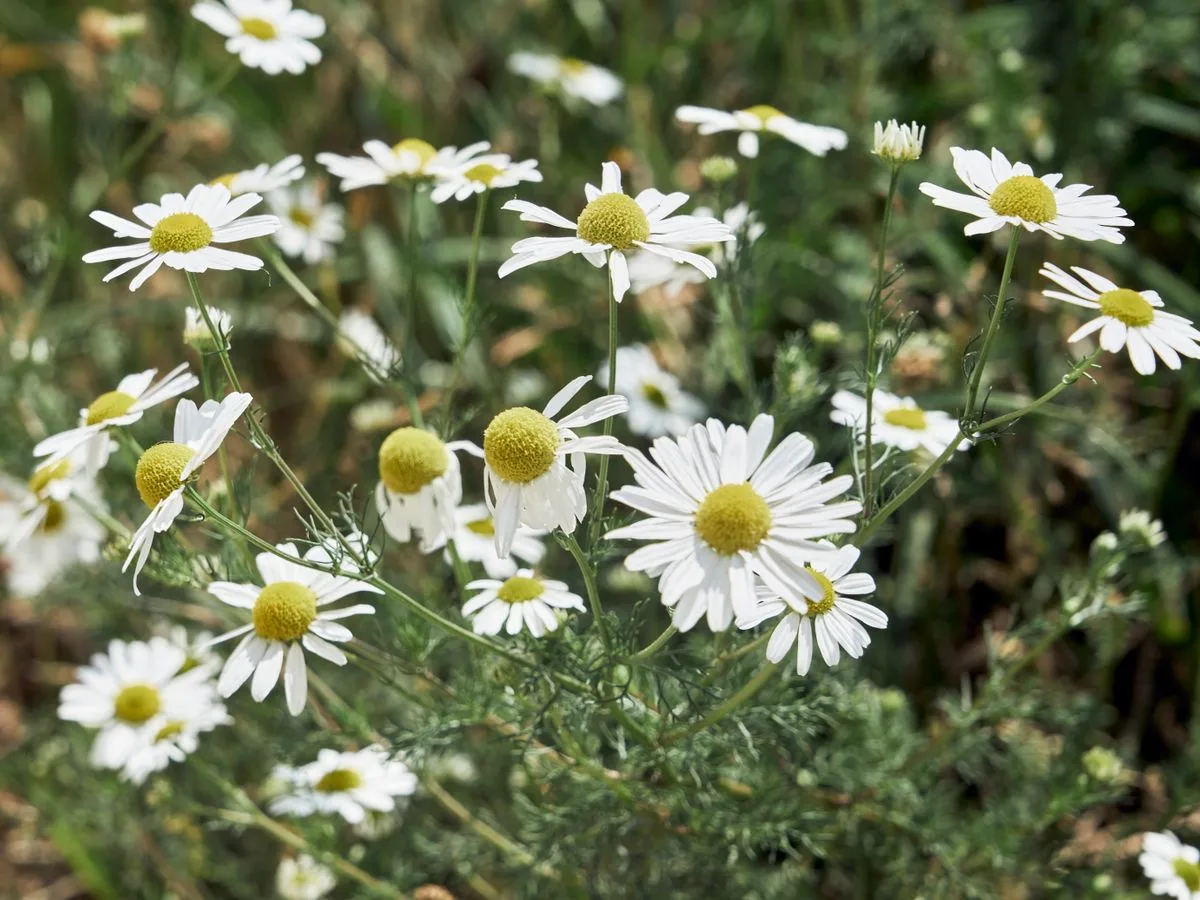
Light: chamomile needs sun
NC State calls for full sun, which means 6 or more hours of direct sunlight a day. Wisconsin also recommends full sun.
- Best spot: a south-facing balcony, patio or window.
- In hot climates: morning sun with some afternoon shade helps the plant bloom longer.
- Indoors: only right next to a very bright window, or under a grow light. In low light, chamomile gets thin, flops over and flowers poorly.
Plants that stretch and flop are asking for more light. See the signs in the guide to leggy herbs, and if you’re starting seeds indoors, check the guide to grow lights for herbs.
How to water chamomile
The University of Wisconsin advises keeping the upper levels of the soil moist but not wet. Because the roots are shallow, chamomile feels dry spells quickly, but it also rots if it sits in water.
- Touch the soil about an inch down.
- If it’s dry, water until it drains from the holes.
- If it’s still damp, wait.
- Empty the saucer after 15 minutes.
Use a spray bottle while the seeds germinate. Once the plants are established, water the soil rather than the flowers. Yellowing leaves and soil that never dries point to overwatering; learn how to fix it in the guide to overwatered herbs.
Fertilizer: chamomile wants very little
The University of Wisconsin says chamomile grows well in poor soil and doesn’t need much fertilizer. Rich soil makes it leafy and floppy.
- At planting: the handful of compost in the mix is enough.
- During growth: if the leaves turn pale, a weak dose of organic liquid fertilizer once a month will do.
- Avoid: fresh manure and strong high-nitrogen feeds.
For homemade options, see the guide to homemade fertilizer for herbs.
When and how to harvest chamomile flowers
The flower is the part you use for tea. The University of Wisconsin recommends harvesting when the flowers are near full bloom, snipping just the flower head from the stem.
- The right stage: white petals open and the yellow center well formed. Old flowers with petals bent down are past their best.
- How to pick: pinch the heads off with your fingers or small scissors. You can also “comb” the plant with spread fingers.
- How often: in Montana State trials, flowers were picked every 10 days, for 3 to 4 harvests in the season.
- Best time: in the morning, once the dew has dried.
Frequent picking keeps new buds coming. Wisconsin notes that chamomile produces a prolific number of flowers until the seeds start to ripen, or until frost if you keep deadheading.
How to dry and store chamomile
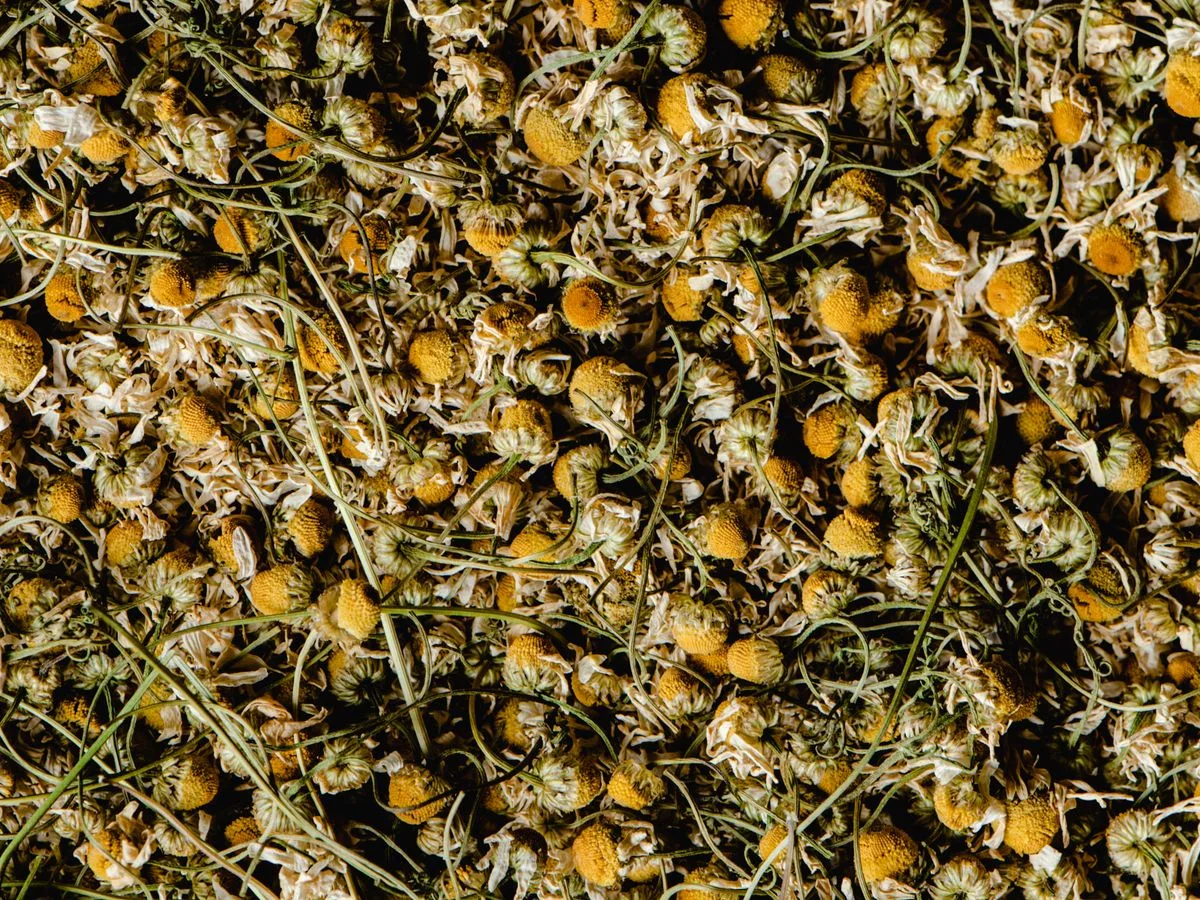
You can use the flowers fresh or dried. Montana State warns that they must be dried carefully, without heat, to avoid discoloration.
- Spread the flowers in a thin layer on a screen, mesh rack or clean cloth.
- Leave them in a dry, airy spot out of direct sun.
- Turn them once a day.
- When they’re dry and crumbly, usually in one to two weeks, store them in a tightly closed glass jar away from light.
Other methods, including a low oven or a dehydrator, are covered in the guide on how to dry and freeze herbs.
Chamomile reseeds itself
As an annual, German chamomile finishes its life cycle after it flowers and sets seed. But it often comes back on its own. Wisconsin explains that it readily self-seeds unless every flower head is removed.
- Want more next year? Let a few flowers dry on the plant and drop into the pot.
- Want to save seed? Pick dry flower heads, rub them between your fingers and keep the seeds in a paper envelope in a cool place until the next sowing season.
- Don’t want it to spread? Remove all the flowers before they dry. Montana State warns that, in the ground, German chamomile can become weedy.
Common problems and fixes
| Problem | Likely cause | What to do |
|---|---|---|
| Seeds didn’t sprout | Covered with soil, or the surface dried out | Resow on the surface and mist to keep it moist |
| Thin, floppy plants | Not enough light | Move to a spot with 6+ hours of sun |
| Small green or black bugs on the tips | Aphids | Spray off with water or use insecticidal soap |
| White powder on leaves | Powdery mildew | Improve air flow and water at soil level |
| Plant died after blooming | End of its natural life cycle | Normal for German chamomile; save the seeds |
Wisconsin notes that chamomile has few pest problems other than aphids, and NC State mentions powdery mildew as a possible disease. See how to handle aphids without harsh chemicals in the guide to herb plant pests.
What to know before you brew
Chamomile tea is widely enjoyed, but a few precautions are worth knowing. According to the National Center for Complementary and Integrative Health (NCCIH), chamomile is likely safe in the amounts found in teas, but it can cause allergic reactions and may interact with some medicines.
- Allergies: the risk is higher for people allergic to related plants, such as ragweed, chrysanthemums, marigolds or daisies.
- Medicines: interactions with warfarin, a blood thinner, and with some drugs processed by the liver have been reported.
- Pregnancy and breastfeeding: little is known about safety.
This guide is about growing the plant and isn’t medical advice. If you take daily medication, are pregnant or breastfeeding, talk to your doctor before using chamomile regularly.
Pets need a little care too. NC State lists chamomile as toxic to dogs, cats and horses, and the ASPCA lists Roman chamomile as toxic to them as well. Keep the pot out of reach.
A small tea garden in pots
Chamomile pairs well with other tea plants you can grow at home. Just remember that each one has its own water and light needs:
- Lemon balm and mint like moister soil; give each its own pot.
- Lemongrass wants a big pot and lots of sun.
- Lavender loves strong sun and dry soil, and perfumes the whole corner.
See the full list in the guide to herbs for tea, and the pairings that work in herbs that grow together.
- For tea, grow German chamomile (Matricaria chamomilla).
- It’s a cool-season plant: start indoors 6 to 8 weeks before the last frost, or sow in fall where winters are mild.
- Scatter seeds on the surface without covering them; they need light to sprout.
- Use a wide pot with drainage holes, and sow directly in it or transplant small seedlings.
- Give it at least 6 hours of sun a day.
- Keep the top of the soil lightly moist and feed very little.
- Pick flowers near full bloom every 10 days or so, and dry them out of the sun.
- If you’re allergic to ragweed or take blood thinners, check with your doctor before drinking the tea.
With a well-timed sowing and a sunny spot, a single pot of chamomile gives you flowers for many cups of tea.
Chamomile plant FAQ
When should I plant chamomile?
Start seeds indoors 6 to 8 weeks before your last spring frost, or sow outdoors in fall where winters are mild. Chamomile prefers cool weather.
How long does chamomile take to bloom?
About three months from sowing. In Montana State trials, plants sown indoors in early April started flowering in mid-July.
Should chamomile seeds be covered?
No. The seeds need light to germinate. Scatter them on the surface and press them in gently.
Does chamomile need full sun?
Yes, at least 6 hours of direct sun a day. In very hot climates, some afternoon shade helps.
Does chamomile come back every year?
German chamomile is an annual, but it readily reseeds itself. Roman chamomile is a true perennial.
Can you grow chamomile indoors?
Yes, right next to a very sunny window or under a grow light. In low light, it gets thin and blooms poorly.
How often can I harvest chamomile flowers?
Every 7 to 10 days while the plant is blooming. Frequent picking encourages new flowers.
Is chamomile toxic to cats and dogs?
Yes. NC State lists chamomile as toxic to dogs, cats and horses. Keep the pot out of reach.