How to Propagate Herbs From Cuttings: Complete Guide
Want to learn how to propagate herbs from cuttings and multiply your herb garden for free? With a single sprig of basil, rosemary or mint, you can grow a whole new plant. This guide shows which herbs root from cuttings, where to cut, how to root them in water or soil and how to care for the new plant.
Let’s take it step by step: first, what a cutting is and which herbs root easily. Then the water and soil methods, how to care for the new plant and the most common mistakes.
What is a stem cutting?
A stem cutting is a piece of stem you snip from a plant and encourage to grow roots. Within a few weeks, it forms roots and becomes a new plant, an exact copy of the parent.
The benefits are huge: the new plant is free, grows faster than one started from seed and keeps the same flavor and aroma as the original. If you have one wonderfully fragrant rosemary, you can have ten just like it.
The secret is the node, the small bump on the stem where leaves attach. That’s where roots form. Purdue University advises taking the cutting at a node, because this is where root formation is more abundant.
Which herbs can you propagate from cuttings?
Many herbs root from cuttings, but not all of them. Soft-stemmed herbs root easily, even in water. Woody herbs, whose stems turn hard and bark-like over time, prefer soil. Here’s the overview:
| Herb | In water? | In soil? | Time to root |
|---|---|---|---|
| Mint | Yes, very easy | Yes | 1 to 2 weeks |
| Basil | Yes, very easy | Yes | 1 to 2 weeks |
| Oregano | Yes | Yes | 2 to 3 weeks |
| Lemon balm | Yes | Yes | 2 to 3 weeks |
| Rosemary | Sometimes | Yes, best method | 3 to 6 weeks |
| Sage | Sometimes | Yes, best method | 3 to 6 weeks |
| Thyme | Hard | Yes | 3 to 5 weeks |
Purdue University lists basil, oregano, lavender, rosemary, thyme and sage as herbs that root easily from shoot tip cuttings. The times in the table are approximate and change with temperature and season.
Which herbs don’t grow from cuttings?
Parsley, cilantro and dill aren’t grown from cuttings. Their stems rise straight from the root, so they’re grown from seed. Green onions and lemongrass multiply differently, by dividing clumps or rooting the base of the stalks. See how in how to regrow vegetables from scraps and how to grow lemongrass in a pot.
When should you take herb cuttings?
The best time is spring and early summer, when plants are growing vigorously and full of fresh shoots. Cuttings root fastest then. Late summer is also a great moment to take cuttings of tender herbs like basil, so you can grow them indoors through winter.
Take cuttings in the morning, when the plant is well hydrated. Choose healthy, green stems with no flowers. A stem in bloom spends its energy on the flowers and roots more slowly.
A great time to take cuttings is right after pruning. The stems you’d normally throw away become new plants. If you’re not sure where to cut, see how to prune basil, which follows the same logic as most herbs.
What you’ll need
- Clean, sharp scissors or pruners: a clean cut avoids crushing the stem and helps it root.
- A healthy parent plant: free of pests, spots or mold.
- Small glasses or jars: for the water method.
- Small pots or cups with drainage holes: for the soil method.
- Light potting mix: seed-starting mix, or potting mix blended with perlite or vermiculite.
- A clear plastic bag: optional, to hold in humidity.
How to root herb cuttings in water
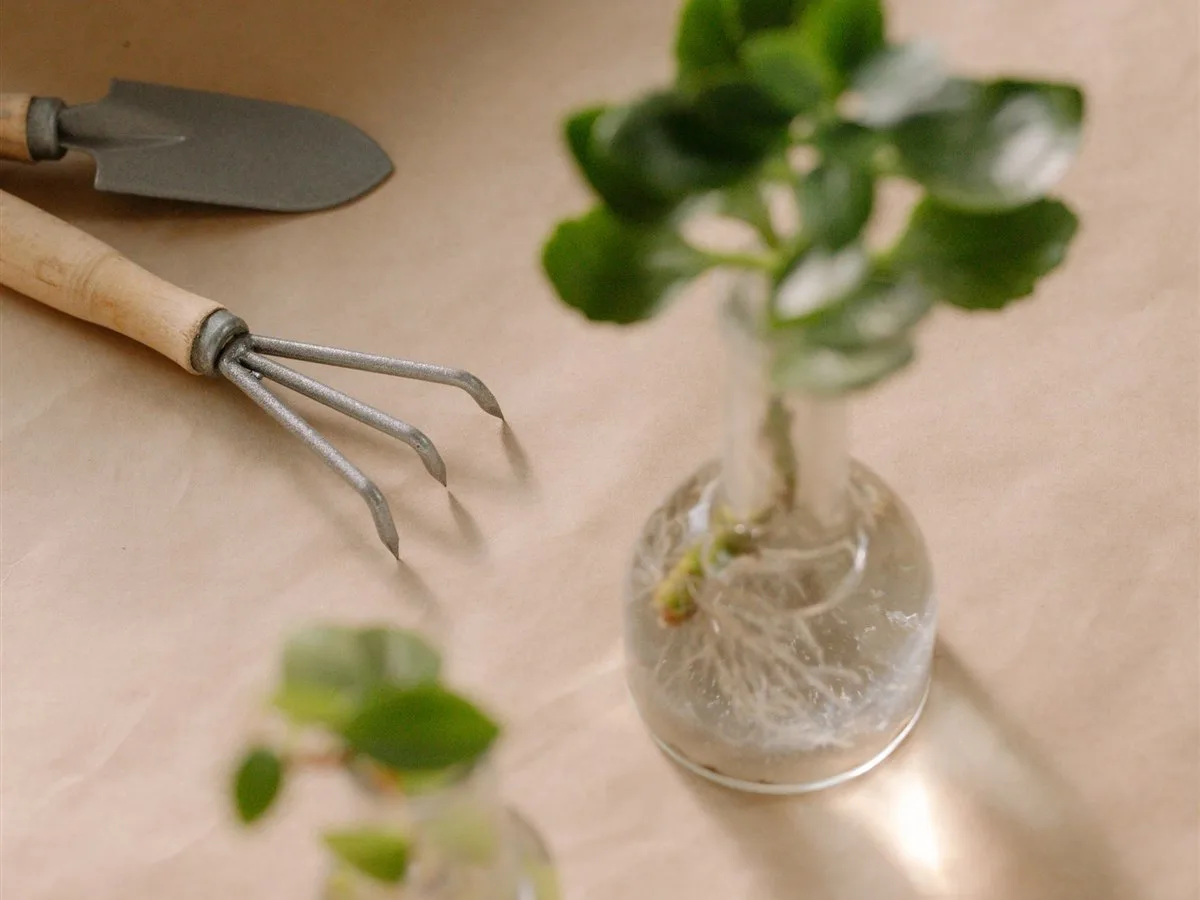
This is the easiest method and the most fun, because you can watch the roots grow. It works very well for mint, basil, oregano and lemon balm.
- Snip a 3 to 5 inch stem just below a node. Choose a young, green stem with no flowers.
- Strip the lower leaves, keeping only two or three pairs at the tip. No leaves should sit in the water, or they’ll rot.
- Place the stem in a glass of water, covering at least one or two nodes.
- Keep it somewhere bright, out of direct sun, like near a window with a sheer curtain. Strong sun heats the water and scorches the cutting.
- Change the water every two or three days so it doesn’t turn cloudy or smelly.
- Wait until roots reach about an inch. This usually takes one to three weeks.
Don’t leave the cutting in water too long. Roots grown in water are thin and fragile. The sooner they go into soil, the easier the transition. If roots are longer than 2 inches, it’s past time to pot them up.
How to root herb cuttings in soil
This is the best method for woody herbs like rosemary, sage and thyme. Roots that form directly in soil are sturdier and don’t suffer when the cutting changes environment.
- Snip a 3 to 5 inch stem just below a node. For rosemary and sage, use the new green growth, not the brown woody part.
- Strip the leaves from the bottom half.
- Prepare a small pot with drainage holes and light mix with perlite or vermiculite. Moisten it well first.
- Make a hole with a pencil and insert the bare stem, covering one or two nodes. Firm the mix around it.
- Cover with a clear plastic bag, without letting it touch the leaves, to hold in humidity. Open it a little each day for airflow.
- Keep it somewhere bright and warm, out of direct sun, with the soil lightly moist.
Purdue University recommends that you cover the container with plastic to increase humidity and place it in a warm, shaded location, but don’t let the plastic lie on the foliage, or it can decay.
How do you know it worked? When new leaves appear at the tip, or when you tug gently on the cutting and feel resistance, roots have formed. At that point, you can remove the bag.
Do you need rooting hormone?
For most herbs, no. The University of Wisconsin explains that softwood sage cuttings taken in summer root in a moist, well-drained medium, generally without needing rooting hormone. Hormone can help with woodier stems, but it’s optional.
Some gardeners dip cuttings in ground cinnamon to protect against fungus. There’s no guarantee it speeds rooting, but it doesn’t usually hurt either. What really makes the difference is a clean cut, a buried node and the right amount of moisture.
How to care for new cuttings until they’re potted
A freshly rooted cutting is a baby plant. It can’t handle strong sun or dry soil yet. Follow these steps for the first few weeks:
- Light: bright but indirect, until the cutting puts out new leaves.
- Water: lightly moist soil, never soggy. Too much water rots the base of the cutting.
- Fertilizer: none at first. New roots burn easily.
- Airflow: if you’re using a bag, open it daily to prevent mold.
If white fuzz shows up on the soil in your cups, it’s a sign of too much moisture and too little air. See how to fix it in white mold on soil.
When should you move cuttings to their own pot?
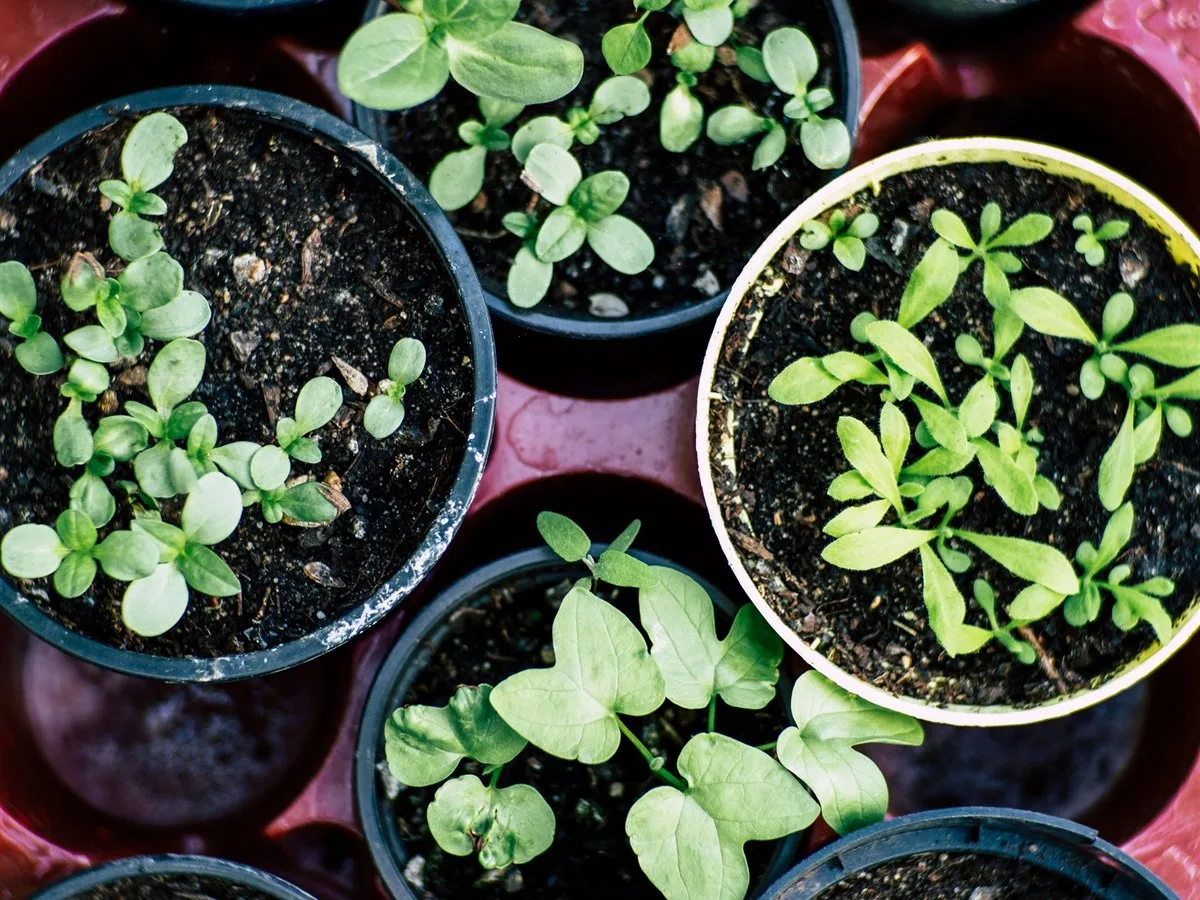
Pot up your cutting when it has firm roots and starts growing, with fresh leaves at the tip. For water cuttings, that’s when roots are about an inch long. For soil cuttings, it’s when roots begin to show through the drainage holes.
- Prepare the final pot with drainage holes and the right soil for that herb.
- Water the cutting first, so the root ball slides out in one piece.
- Plant at the same depth it was growing, without burying the leaves.
- Water well and keep it in partial shade for a week before moving it into the sun.
Each herb has its own preferences for pot, sun and water. See the guide for each one: basil, mint, rosemary, sage, thyme and oregano.
Tips for each herb
Mint
Mint is the easiest herb to multiply. The University of Illinois notes that mint is propagated by either stem or root cuttings. Almost any sprig in a glass of water will root within days. It also spreads on its own, so you can simply pull off rooted pieces from the pot.
Basil
Basil roots very quickly in water. Use the stems you remove when pruning. One tip: take cuttings in late summer, before the plant starts to decline. That way, you’ll have young plants ready for a sunny windowsill over winter. If your plant is already struggling, see why your basil is dying.
Rosemary
The University of Illinois says rosemary is best propagated from stem cuttings, which root easily and grow quickly. Use the soft green tip, never the woody part. In a gritty soil mix, it roots more reliably than in water.
Sage and thyme
Both get woody over the years and need renewing. Take cuttings from your own plant every two or three years, before it gets too old. That way, you’ll always have a young plant ready to take over.
Oregano and lemon balm
Both root well in water and in soil. You can also try layering: bend a stem down to the soil in the same pot, cover a section of it and wait for roots before cutting it from the parent. Purdue University describes layering as an easy way to propagate mint, lemon balm and thyme.
Common mistakes when propagating herbs from cuttings
- Cutting too far from a node: the stem below the node rots. Cut just below it.
- Leaving leaves in water or soil: they rot and infect the cutting.
- Using a stem in flower: the cutting spends energy on blooms and roots slowly.
- Using woody stems: on rosemary and sage, brown growth rarely roots.
- Putting cuttings in strong sun: they wilt before they have roots to drink.
- Forgetting to change the water: stale, cloudy water rots the stem.
- Soggy soil: the base rots. Aim for moist, not wet.
- Leaving cuttings in water too long: the roots get fragile and struggle in soil.
- A cutting is a stem you snip and root; it becomes an exact copy of the parent plant.
- Cut 3 to 5 inches, just below a node, from a young stem with no flowers.
- Strip the lower leaves; none should sit in water or soil.
- Mint, basil and oregano root easily in water, in one to three weeks.
- Rosemary, sage and thyme root better in soil, in three to six weeks.
- Keep cuttings bright, warm and out of direct sun.
- Rooting hormone is optional for most herbs.
- Parsley and cilantro don’t grow from cuttings; start them from seed.
With cuttings, your herb garden multiplies for free and you’ll never run out. To choose what to grow next, see the perennial herbs list and the kitchen herb garden guide.
Frequently asked questions about propagating herbs from cuttings
Which herbs can be grown from cuttings?
Mint, basil, oregano, lemon balm, rosemary, sage and thyme. Parsley and cilantro can’t; they’re grown from seed.
How long do herb cuttings take to root?
Mint and basil take one to two weeks. Rosemary, sage and thyme take three to six weeks.
Is it better to root cuttings in water or soil?
Soft-stemmed herbs like mint and basil do well in water. Woody herbs like rosemary and sage root better in soil.
Where should I cut a stem for propagation?
Just below a node, the spot on the stem where leaves attach. That’s where roots form.
How long should an herb cutting be?
About 3 to 5 inches, with two or three pairs of leaves at the tip and a bare lower stem.
Do I need rooting hormone for herb cuttings?
For most herbs, no. A clean cut, a buried node and the right moisture are usually enough.
Why did my cutting rot?
Usually because leaves were left in the water, the water wasn’t changed, the soil was soggy or the cut was too far from a node.
Can I root herbs from the grocery store?
Yes, if the stems are fresh. Bunches of mint and basil often root well in a glass of water.