Perennial Herbs: 10 Herbs That Grow Back for Years
Imagine planting once and harvesting fresh herbs for years, without buying new plants every season. That is what perennial herbs give you. In this guide, you will meet 10 herbs that live for years in a pot, learn what each one needs and see how to care for them so they never stop producing.
Let’s look at the difference between perennial and annual herbs, the 10 herbs one by one, how to plan a pot garden that produces year-round and the care that keeps them going for years.
What are perennial herbs?
In the garden, plants are grouped by how long they live. Knowing which group each herb belongs to changes how you plan.
- Annuals: sprout, grow, flower and die in one cycle, from a few months to a year. Examples: basil and cilantro.
- Biennials: live about two years. Parsley is the best-known example.
- Perennials: live for several years and grow back after every harvest.
University of Illinois Extension puts it simply: perennial herbs grow year after year and can be brought indoors during winter. In other words, they are the backbone of a garden that never has to start from scratch.
If you want fresh food on hand, a smaller grocery bill and less reliance on the store, perennials are the first step. Annuals come in as a supplement, sown in batches.
Chart: 10 perennial herbs for pots
| Herb | Light | Water | Minimum pot | How to propagate |
|---|---|---|---|---|
| Chives | Sun or part shade | Medium | 6 inches | Divide the clump |
| Rosemary | Full sun | Low | 10 inches | Cuttings |
| Thyme | Full sun | Low | 6 inches | Cuttings or division |
| Oregano | Full sun | Low | 8 inches | Cuttings or division |
| Sage | Full sun | Low | 8 inches | Cuttings |
| Mint | Sun or part shade | High | 8 inches, on its own | Cuttings in water or division |
| Bay laurel | Full sun | Low | 12 inches or more | Cuttings (slow) |
| Lemongrass | Full sun | Medium | 12 inches, deep | Divide the clump |
| Lemon balm | Sun or part shade | Medium | 8 inches | Cuttings or division |
| Marjoram | Full sun | Low | 6 inches | Cuttings |
1. Chives
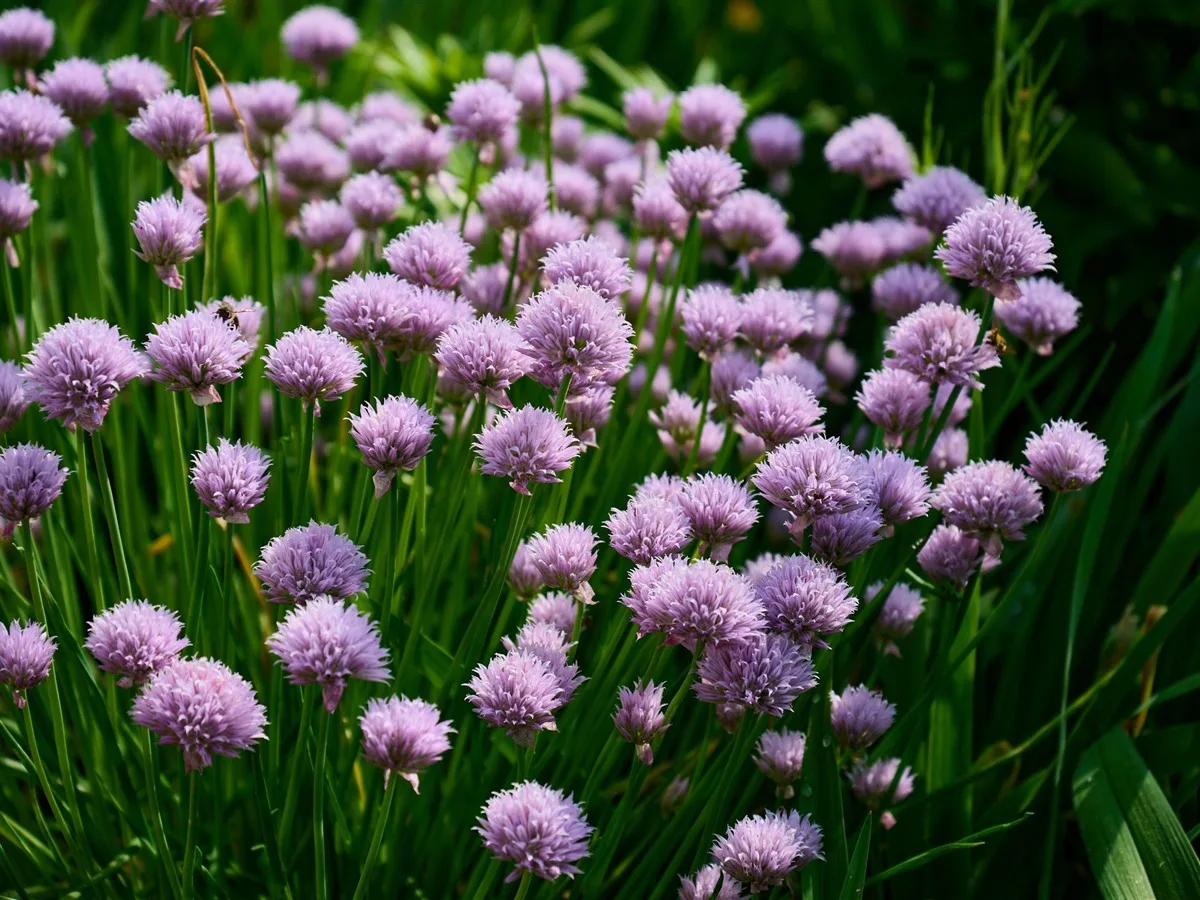
Chives are the easiest perennial of all. They form a clump that grows back after every cut, for years. Just snip the leaves about an inch above the soil, and in a few weeks the pot is full again.
They also need less sun than most herbs. Penn State Extension lists chives among the herbs that only need 2 to 6 hours of direct sunlight. Every year or two, divide the clump in half and plant it in separate pots. For their close cousin, see how to grow green onions in a pot.
2. Rosemary
Rosemary can live for many years in a large pot, as long as it gets strong sun and fast-draining soil. Its worst enemy is overwatering, which rots the roots. In cold climates, bring it indoors before the first hard frost.
Harvest stems from the tips, and never cut into the bare, woody part, which rarely regrows. See the full care guide in how to grow rosemary in a pot.
3. Thyme
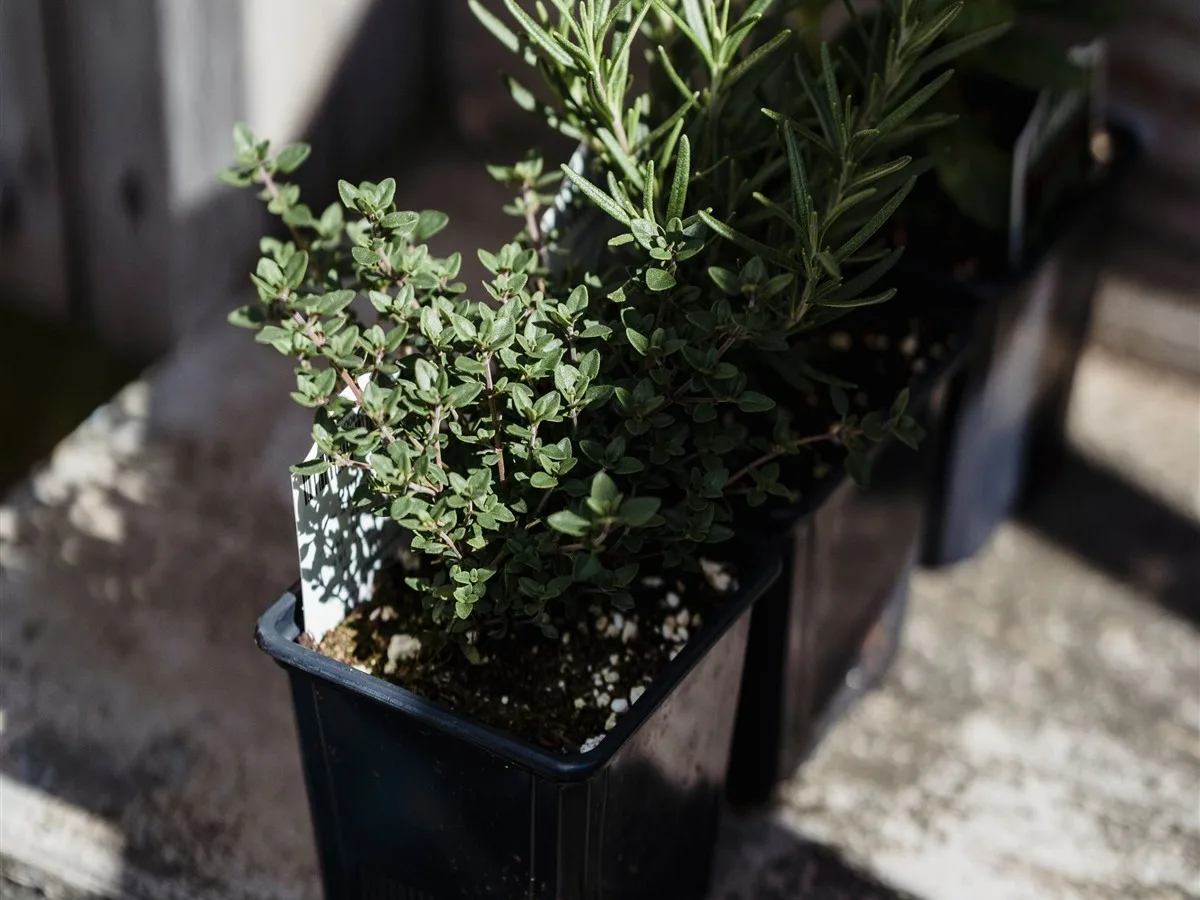
Small and tough, thyme fits even in shallow pots. It loves full sun and soil that is almost dry. Over time, the base gets woody, and the plant loses vigor after three or four years.
That is why it’s worth taking cuttings now and then to renew the pot. The step-by-step is in how to grow thyme in a pot.
4. Oregano
Oregano is one of the most generous perennials. It spreads across the pot, bounces back after harvest and forgives the odd missed watering. Choose Greek oregano, which has the most flavor.
Cut the stems while always leaving a few sets of leaves at the bottom. Learn more in how to grow oregano in a pot.
5. Sage
Sage has velvety leaves and a bold flavor, great with meats and pasta. It likes strong sun and soil that dries between waterings. It lives well for a few years, but, like thyme, it gets woody and needs renewing from cuttings.
6. Mint
Mint is almost impossible to kill, as long as it gets water. It spreads through roots that run underground and takes over the whole pot. That is why it should always be planted on its own.
When the pot is packed, lift the plant, divide the root ball into two or three pieces and replant. See the care guide in how to grow mint in a pot.
7. Bay laurel
Bay laurel is a tree, but it grows slowly and adapts well to a large pot, where it stays shrub-sized. It can live for decades. The leaves are used fresh or dried in soups, stews and sauces.
Pick the older, firmer leaves, which have more aroma, and let the young ones grow. For a neat shape, give it a light trim in late winter, cutting back the longest tips.
It needs direct sun and soil that dries out a little between waterings. Penn State lists bay among the herbs that do best in direct sunlight and should dry out slightly between waterings. Bring it indoors when nights get cold.
8. Lemongrass
Lemongrass forms large clumps that last for years and give you tea all the time. It needs full sun and a deep pot, because the roots are vigorous. It is frost-tender, so in cold climates it spends the winter indoors.
To harvest, cut the leaves about 4 inches above the base, or pull a whole stalk from the edge. When the clump gets too big, divide and replant it. You can even start from store-bought stalks, as shown in how to regrow vegetables from scraps.
9. Lemon balm
Lemon balm is a mint relative with a soft lemon scent, lovely in tea, salads and desserts. It grows fast, tolerates some shade and comes back stronger after every cut.
Like mint, it can spread and self-seed, so a pot keeps it under control. Cut it back by half when it gets leggy or starts to flower, and it will push out fresh, tender leaves.
10. Marjoram
Marjoram is oregano’s sweeter, milder cousin. It is a tender perennial: in a pot, kept indoors through the winter, it lives for several years. It loves sun and light, fast-draining soil.
Harvest it like oregano, cutting the stems above a set of leaves. Pinch off flower buds to keep the leaves coming.
What about herbs that aren’t perennial?
Some of the most-used herbs have a short life. That is not your fault: it is the plant’s natural cycle.
- Basil: an annual. With pruning and no flowers, it lasts much longer, but one day it ends. See how to prune basil to stretch that time.
- Cilantro: an annual that bolts quickly in hot weather.
- Parsley: a biennial. In its second year, it flowers and the leaves shrink.
The secret to never running out is to sow in batches, a new small pot every month or two. That way, when one plant starts to tire, the next one is ready. See how in how to grow parsley in a pot.
How to plan a pot garden that produces year-round
The idea is simple: a permanent base of perennials, topped up with annuals sown in batches.
- Pick your sunniest spot. Most perennials need at least 6 hours of direct sun.
- Group by water needs. Rosemary, thyme, oregano, sage and marjoram go together, with little water. Chives, mint and lemon balm go separately, with more water.
- Start with the easy ones: chives, oregano and mint.
- Add one annual at a time, like basil or parsley, sowing a new pot every month or two.
- Save the surplus. When the harvest is more than you use, dry or freeze it.
See which herbs share a pot well in herbs that grow well together. And to save your harvest, learn how to dry and freeze herbs.
How to keep perennial herbs going for years
A plant that stays in the same pot for years needs a few things that annuals don’t.
Harvest from the tips
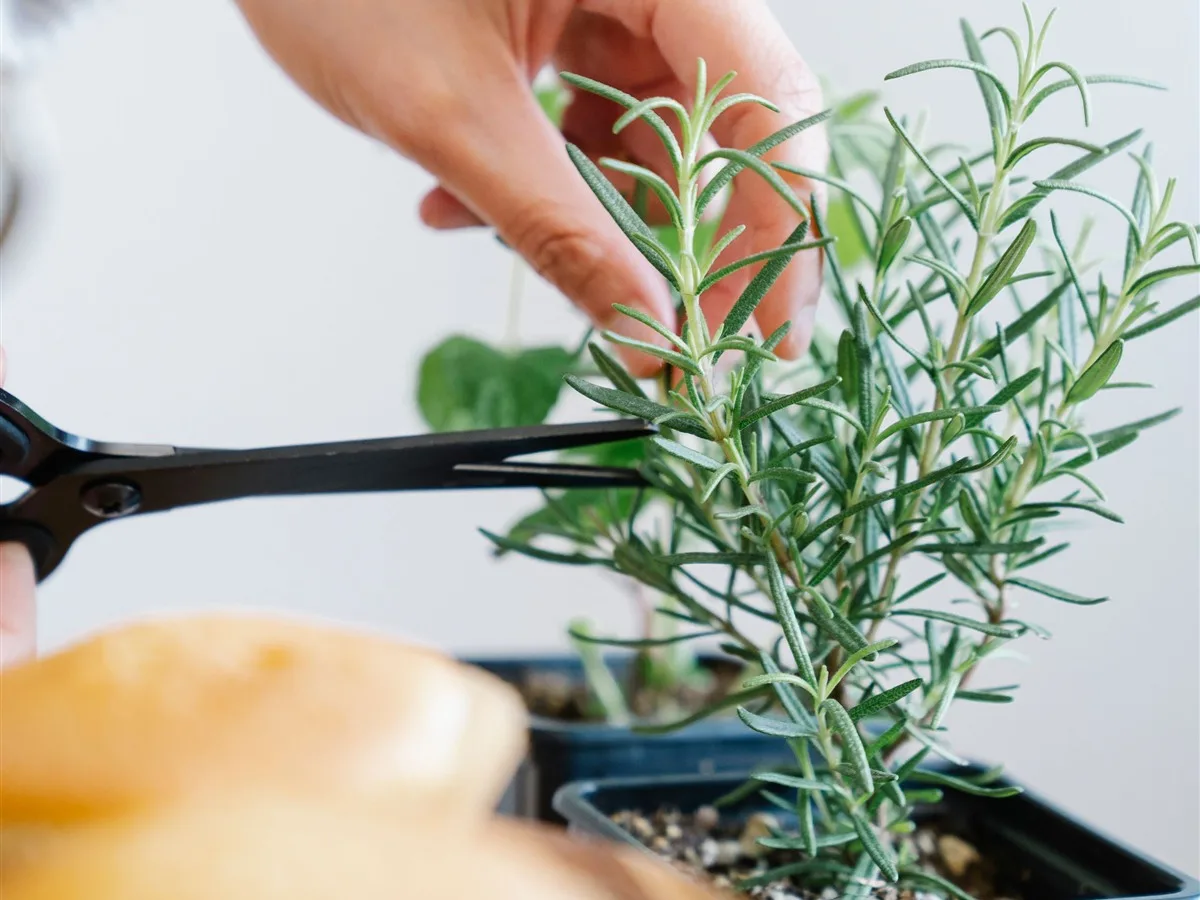
Always cut a stem just above a set of leaves, never down into the woody part. That way, the plant branches out and doesn’t go bare at the bottom. Never take more than a third of the plant at once.
Do one renewal pruning a year
In late winter, cut back about a third of the stems on rosemary, thyme, oregano and sage, always above green leaves. This encourages new shoots and slows down aging.
Repot or divide
When roots start poking out of the drainage hole, it’s time for a change. Penn State explains that perennial herbs can be repotted several times to accommodate new growth, ideally in early spring. Chives, mint, oregano and lemongrass can be divided instead of moving to a bigger pot.
Go easy on fertilizer
Dry-climate herbs lose aroma with too much fertilizer. A spoonful of compost every two or three months is enough. See how in how to use compost in pots.
Plan for winter
In winter, almost all of them grow slowly. Water less, move the pots closer to the window and harvest lightly. Iowa State notes that herbs ideally receive four to six hours of direct sunlight a day, and some may need a grow light. See more in how to grow herbs in winter.
Common mistakes with perennial herbs
- Watering them all the same: rosemary and thyme die on the watering mint loves. See overwatered herbs.
- Keeping them in shade: without sun, they get thin and lose their scent.
- Cutting into the woody part, which rarely regrows.
- Never repotting, leaving the roots with no room.
- Planting mint with other herbs, which end up smothered.
- Expecting basil to last forever instead of sowing the next one.
- Perennial herbs live for several years and grow back after every harvest.
- The easiest for pots are chives, oregano and mint.
- Rosemary, thyme, oregano, sage and marjoram like full sun and little water.
- Bay laurel and lemongrass need a large, deep pot and winter protection.
- Basil, cilantro and parsley are not perennial: sow them in batches.
- Harvest from the tips, do one renewal pruning a year and repot when the roots fill the pot.
Frequently asked questions about perennial herbs
Which herbs are perennial?
Chives, rosemary, thyme, oregano, sage, mint, bay laurel, lemongrass, lemon balm and marjoram. Some, like rosemary, bay and lemongrass, need winter protection in cold climates.
What is the easiest perennial herb to grow?
Chives. They tolerate part shade, grow back after every cut and can be divided when the pot fills up.
Is basil a perennial?
Common basil is an annual. With pruning and no flowers, it lasts for months, but eventually it finishes its cycle. Sow a new one from time to time.
How long does rosemary live in a pot?
Several years, with strong sun, fast-draining soil and little water. When the base gets very woody, take cuttings to renew it.
Can I plant several perennial herbs in one pot?
Yes, if they have the same water needs. Rosemary, thyme, oregano and sage go well together. Mint should always grow on its own.
Do perennial herbs need fertilizer?
Very little. A spoonful of compost every two or three months is enough. Too much fertilizer leaves dry-climate herbs with less aroma.
How often should I repot perennial herbs?
When roots start coming out of the drainage hole, usually every one or two years. Late winter or early spring is the best time.
Can perennial herbs stay outside in winter?
Chives, thyme, oregano, sage and mint handle cold well in the ground. In pots, roots are more exposed, so move them to a sheltered spot or indoors. Rosemary, bay, lemongrass and marjoram should come inside before frost.