Christmas Plants: Care Guide for the Best Holiday Plants
Christmas plants brighten the house during the holidays and, unlike cut flowers, they keep living long after New Year’s. Poinsettias, Christmas cactus, amaryllis and rosemary trees are the most popular, and each one needs slightly different care.
In this guide, you will meet the main Christmas plants, see what each one needs in a quick comparison table, learn how to pick a healthy plant at the store and find out what to do with them once the holidays are over. Every plant also has its own full guide here on the blog.
Let’s take it step by step: first, the most popular plants and how they compare. Then, how to choose them, the care they all share, pet safety and what to do after Christmas.
What are the most popular Christmas plants?
Four plants show up in almost every garden center and grocery store in December. They are pretty, affordable and last a long time with the right care.
- Poinsettia: the plant with red leaves that became the symbol of Christmas.
- Christmas cactus: a spineless cactus with hanging flowers that blooms around the holidays.
- Amaryllis: a huge trumpet-shaped flower that grows from a bulb.
- Rosemary: the kitchen herb that, pruned into a cone, becomes a fragrant little Christmas tree.
Lemon cypress, kalanchoe and anthurium are also very common this time of year. We cover them further down.
Christmas plant care at a glance
The table sums up the care for the four main plants. Use it as a quick reference and open each plant’s full guide for the details.
| Plant | Light | Water | Cats and dogs | After Christmas |
|---|---|---|---|---|
| Poinsettia | Bright, about 6 hours of strong light | When the soil surface feels dry | Mildly toxic: irritates mouth and stomach | Turns green; colors up again with long nights |
| Christmas cactus | Bright, indirect light | When the top layer dries out | Non-toxic | Blooms every year with long, cool nights |
| Amaryllis | At least 4 hours of direct sun | Little at first; more once it sprouts | Toxic, especially the bulb | Keep the leaves so the bulb can rebloom |
| Rosemary tree | 6 or more hours of direct sun | Only when the soil is dry to the touch | Non-toxic | Becomes a kitchen herb for years |
Notice that the watering rule is almost the same for all of them: wait for the top of the soil to dry. Too much water, not too little, is what kills most Christmas plants.
Poinsettia: the red Christmas plant
The poinsettia (Euphorbia pulcherrima) is the best-selling Christmas plant in the world. The red part is not a flower: those are colored leaves called bracts. The real flowers are the small yellow dots in the center.
The University of Florida explains that the plant is native to Mexico and became a holiday symbol in the United States. In a pot, it needs bright light, careful watering and no cold or hot drafts.
The most common mistake is leaving the pot inside foil full of water. The roots rot and the leaves drop within days. The full routine, including how to make it turn red again, is in our poinsettia care guide.
Christmas cactus: the holiday bloomer
The Christmas cactus (Schlumbergera) is a spineless cactus from the rainforests of Brazil, where it grows on tree branches. That is why it likes bright light but not harsh all-day sun, and a light, well-draining potting mix.
It forms buds when nights get long and cool. In the United States, that happens in late fall, so the plant blooms around Thanksgiving and Christmas.
The secret to more flowers is giving it long, cool nights for a few weeks. See how in our Christmas cactus care guide. It is a great pick for pet owners, because it is non-toxic.
Amaryllis: the giant holiday flower
The amaryllis (Hippeastrum) grows from a large bulb and produces two to four huge flowers on top of a thick stalk. You can buy it already in bloom or as a bulb to plant at home.
If you plant the bulb, it blooms 4 to 8 weeks later. So, for flowers at Christmas, plant the bulb in late October or early November. North Carolina State University describes the plant and its care.
When the flower fades, cut only the stalk and keep the leaves. They are what recharge the bulb. The full step-by-step is in our amaryllis care guide.
Rosemary: the Christmas tree you can eat
Rosemary pruned into a cone looks just like a tiny pine tree. The thin leaves resemble pine needles, and the scent fills the house. After Christmas, it stays on the windowsill as a kitchen herb.
Rosemary is a sun lover: it needs six or more hours of direct sun a day. In low light, the base goes bare and the stems stretch. Learn how to set up, decorate and keep yours alive in our rosemary Christmas tree guide.
If you do not have a rosemary plant yet, start with how to grow rosemary in a pot. It is a perennial herb and can live for many years in the same pot.
Other plants that look great at Christmas
Not every Christmas plant has to be one of the four classics. These are also easy to find in stores in December:
Lemon cypress
This is the bright yellow-green “mini tree” that smells like lemon when you brush its leaves. It likes sun and soil that stays slightly moist. Indoors, especially in dry winter air, it tends to fade and dry out. Keep it in your sunniest window and away from heating vents.
Kalanchoe
A succulent with clusters of small, very colorful flowers, including red ones. It needs little water and lots of light. But note: the ASPCA lists kalanchoe as toxic to cats and dogs.
Anthurium
Red anthurium matches Christmas colors and lasts a long time indoors in bright light without direct sun. It is also toxic to pets, because it contains crystals that irritate the mouth.
Holly and mistletoe
These are the sprigs with red or white berries from classic Christmas cards. If you use fresh ones, keep them away from pets and kids: both are toxic.
How to choose a healthy Christmas plant at the store
A well-chosen plant lasts weeks longer. Before you buy, run this quick check:
- Leaves: firm, with bright color and no spots. Skip plants with yellow, drooping or fallen leaves.
- Base: leaves all the way down to the soil. A bare base points to low light or poor watering.
- Soil: moist but not soggy. Wet soil with a bad smell means root rot.
- Buds: on flowering plants, choose ones with some closed buds, not only open flowers. The bloom will last longer at home.
- Pests: look under the leaves. White powder, fine webbing or tiny bugs mean you should pick another plant.
- Display spot: avoid plants kept by the store door, in cold drafts, or displayed outside in the cold.
On the way home, wrap the plant to protect it from cold air, even for a short walk to the car. Sudden cold is the main reason leaves drop in the first few days.
Care tips that work for every Christmas plant
Each plant has its quirks, but some rules apply to all of them. Follow just these, and most Christmas plants will get through the holidays in good shape.
1. Remove the foil
Decorative foil or cellophane traps water at the bottom of the pot, and the roots rot. Clemson University recommends that you take the plant out of its decorative pot cover whenever you water. If you like the look, use a bigger cachepot and empty it after watering.
2. Water by touch, not by the calendar
Push a finger into the soil before watering. If the top is dry, water until it drains from the hole. If it is still damp, wait. The warning signs of too much water are in our guide to overwatered plants, which applies to any potted plant.
3. Lots of light, no drafts
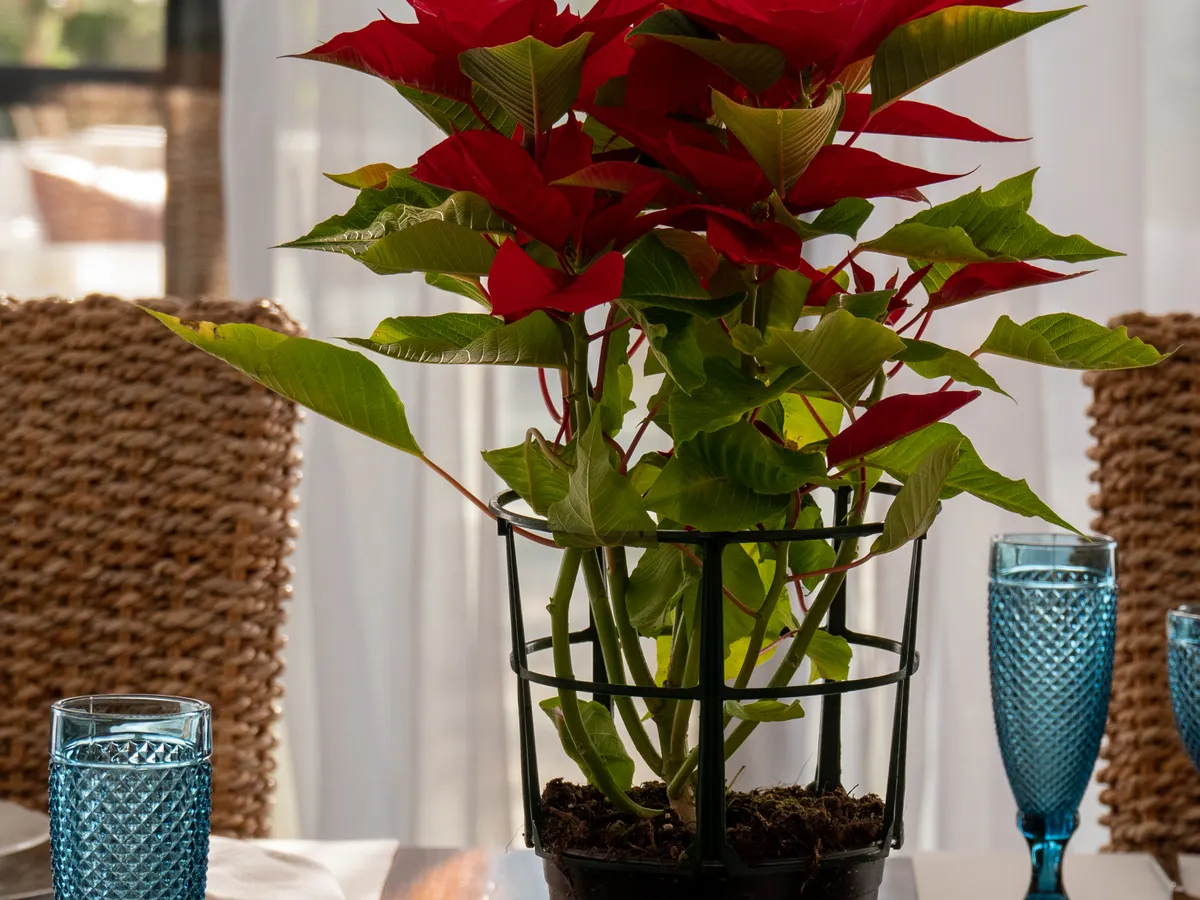
Keep the plants near your brightest window. Avoid heating vents, fireplaces, drafty doors and cold glass. If you want a plant as a centerpiece, move it to the table only for the party and back to the window afterward.
4. No fertilizer during the holidays
The plant is already stressed by the move. Start feeding again, lightly, only when it puts out new growth. For simple options, see our homemade fertilizer guide.
Winter care: heated homes and cold windows
In most of the United States, Christmas plants spend the holidays in heated homes with dry air and short days. That combination is hard on them. A few simple habits help a lot:
- Dry air: heating dries leaves and soil fast. Group plants together or set them on a tray of pebbles with water below the pot.
- Cold glass: leaves touching a frosty window can get damaged. Leave a small gap between the plant and the glass.
- Short days: winter light is weak. Give sun lovers like rosemary your sunniest window, or add a grow light.
- Travel: if you are away for the holidays, water well before you leave and group the pots in a bright, cool spot.
Many of these tips are the same ones that keep kitchen herbs alive in winter. See more in our guide to growing herbs in winter.
Christmas plants and pets
Cats and dogs love to nibble on new plants, and some Christmas plants are dangerous for them. The ASPCA list of toxic and non-toxic plants is the most used reference. Here is a summary:
| Plant | For cats and dogs |
|---|---|
| Christmas cactus | Non-toxic |
| Rosemary | Non-toxic |
| Poinsettia | Mildly toxic: may cause drooling, vomiting and irritation |
| Amaryllis | Toxic, especially the bulb |
| Kalanchoe | Toxic |
| Anthurium | Toxic: irritates the mouth |
| Holly and mistletoe | Toxic |
If your pet eats a toxic plant and acts unwell, call your veterinarian. When in doubt, choose non-toxic plants or keep the others up high, out of reach.
How to decorate with Christmas plants
Living plants make holiday decor prettier, more fragrant and cheaper, because you can use them for years. A few simple ideas:
- Centerpiece: group two to five small pots on a tray or in a basket, with pine cones and ribbon. The step-by-step is in our Christmas centerpiece ideas.
- Holiday windowsill: line up pots of rosemary, thyme and a poinsettia. It looks lovely and the plants get light.
- Living tree: swap the plastic tabletop tree for a rosemary tree with light ornaments and cool LED lights.
- Front entry: a large lemon cypress with a red bow welcomes guests (bring it in if nights drop below freezing).
Keep lit candles away from the leaves and skip spray-on snow, which clogs the leaves and keeps the plant from breathing.
Christmas plants as gifts
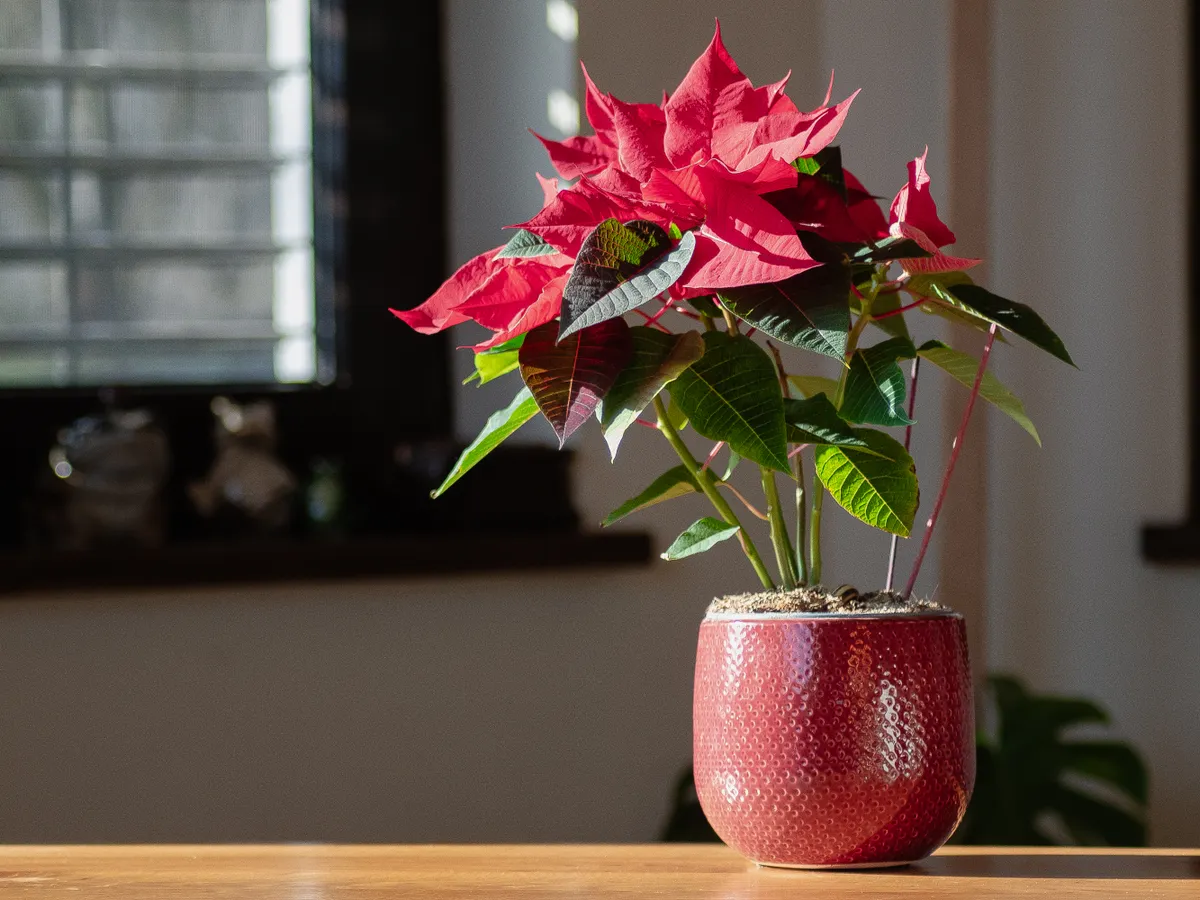
A plant is a gift that lasts much longer than a bouquet. To get it right, pick an easy plant and add a card with the care basics.
For someone with a cat or dog, Christmas cactus and rosemary are the safest picks. For someone who loves to cook, a potted herb or a rosemary tree is always a hit. See more ideas, including tools and kits, in our gifts for gardeners list.
What to do with Christmas plants after the holidays
Most Christmas plants end up in the trash in January, but almost all of them can live for years. Here is what to do with each one:
| Plant | After the holidays |
|---|---|
| Poinsettia | Keep it in bright light, prune it back once the color fades and, to color up next Christmas, give it 14 hours of darkness a night from October to late November. |
| Christmas cactus | Keep it in bright light, feed it from spring to late summer and give it long, cool nights in fall to bloom again. |
| Amaryllis | Cut the faded stalk, keep the leaves growing with sun, water and fertilizer, then give the bulb a rest. |
| Rosemary | Remove the ornaments and treat it as a kitchen herb: sun, little water and light pruning. |
| Lemon cypress | Keep it in the sunniest window and move it outdoors in spring, after the last frost. |
Make any change of spot gradually over a few days, so the plant can adjust to the new light. If you also grow herbs, see how to bring it all together in our kitchen herb garden guide.
Common Christmas plant mistakes
- Leaving the foil on: water pools and the roots rot.
- Watering every day: most die from too much water, not thirst.
- Putting the plant in the darkest corner: without light, leaves drop and blooms end early.
- Heating vents and cold drafts: they dry the leaves and make buds fall.
- Throwing it out after Christmas: with a little care, almost all of them bloom again.
- Forgetting about pets: keep amaryllis, kalanchoe and anthurium out of reach of cats and dogs.
- The most common Christmas plants are poinsettia, Christmas cactus, amaryllis and rosemary.
- Almost all need bright light, well-draining soil and water only when the top of the soil is dry.
- Remove the decorative foil so water does not pool in the pot.
- In winter, keep plants away from heating vents, cold drafts and frosty glass.
- Christmas cactus and rosemary are non-toxic to cats and dogs; amaryllis, kalanchoe and anthurium are toxic.
- After the holidays, almost all of them can keep growing and bloom again.
With good light, little water and a bit of attention, your Christmas plants will brighten the holidays and still be there for next Christmas.
Christmas plants FAQ
What are the most common Christmas plants?
Poinsettia, Christmas cactus, amaryllis and rosemary trees. Lemon cypress, kalanchoe and anthurium are also widely sold in December.
What is the easiest Christmas plant to care for?
Christmas cactus and rosemary are among the easiest. Christmas cactus needs bright light and little water; rosemary needs direct sun and water only when the soil is dry.
Which Christmas plants are safe for cats and dogs?
Christmas cactus and rosemary are listed as non-toxic by the ASPCA. Amaryllis, kalanchoe, anthurium, holly and mistletoe are toxic.
Why is my Christmas plant dropping leaves?
The most common causes are water trapped in the foil, low light and cold or hot drafts. Fix watering and placement first.
How often should I water Christmas plants?
Only when the top of the soil is dry. In a heated home, that may be every few days. Check with your finger before watering.
Can Christmas plants be in direct sun?
Rosemary, amaryllis and kalanchoe like direct sun. Poinsettia and Christmas cactus prefer bright light without harsh afternoon sun.
What should I do with Christmas plants after the holidays?
Remove the decorations, move the plants to a bright spot and care for them like regular houseplants. Most can bloom again the following year.
When should I buy Christmas plants?
Plants in bloom can be bought in early December. Amaryllis bulbs should be planted 4 to 8 weeks ahead, and a rosemary tree should be shaped weeks before Christmas.