
Aloe Vera Plant Care: Light, Water, Soil and Pups
Aloe vera plant care is simple once you know one thing: this plant stores water in its thick leaves and hates wet feet. Most aloes don’t die from neglect. They die from too much water, a pot with no drainage hole and soil that stays soggy for days.
In this guide, you’ll learn how to pick the pot and soil, where to put your aloe indoors, how often to water in summer and winter, how to grow new plants from pups and how to fix soft, thin, brown or floppy leaves. Answers to the most common questions are at the end.
Let’s take it step by step: the plant, the pot and soil, light, water, pups, winter care and problems.
What is aloe vera?
Aloe vera is a succulent that grows as a rosette of thick, gel-filled leaves with small teeth along the edges. NC State Extension describes it as a plant that reaches 2 to 3 feet tall and spreads by offsets. In a pot, it usually stays between 1 and 2 feet.
Aloe grows slowly. A small plant can take months to fill out, and that’s normal. In return, it lives for many years in the same pot and keeps making pups you can share.
What aloe vera needs to thrive
Think of aloe as a cactus with soft leaves. It wants the same basics:
- Light: bright light with a few hours of direct sun. NC State lists full sun to partial shade.
- Soil: fast-draining cactus and succulent mix.
- Water: deep but infrequent. Let the soil dry out completely between waterings.
- Pot: with a drainage hole. Terracotta is best because it breathes and dries faster.
- Temperature: warm. Aloe can’t handle frost and suffers in cold, wet soil.
The best pot and soil for aloe vera
The pot matters more than anything else. NC State recommends a clay pot with several drainage holes and very well-drained soil made for succulents.
| Plant size | Pot size | Tip |
|---|---|---|
| Pup or small plant | 4 to 5 inches | A small pot dries faster and protects the roots |
| Medium plant (up to 12 inches) | 6 to 8 inches | Wide and shallow works best |
| Mature plant | 10 to 12 inches | Heavy, so it doesn’t tip over |
Don’t jump to a huge pot. UF/IFAS Gardening Solutions warns that a container that is too large can lead to root rot and suggests going up no more than two pot sizes at a time. Extra soil holds extra water.
Use a bagged cactus and succulent mix. Or make your own: one part potting soil, one part coarse sand and one part perlite or pumice. Skip regular garden soil, which stays wet and compacts in a pot.
Where to put aloe vera indoors
In most US homes, aloe grows best in a south- or west-facing window, where it gets several hours of direct sun. An east window can work too. A north window is usually too dim.
If you move your aloe outside for summer, or from a dim room to a sunny spot, do it gradually. UF/IFAS explains that aloe can sunburn when moved from low to bright light too quickly. Start with an hour or two of morning sun and increase it over one to two weeks.
With too little light, aloe survives but stretches, turns pale and its leaves flop over. If your home is on the dark side, see our guide to plants for low light for ways to make the most of every window.
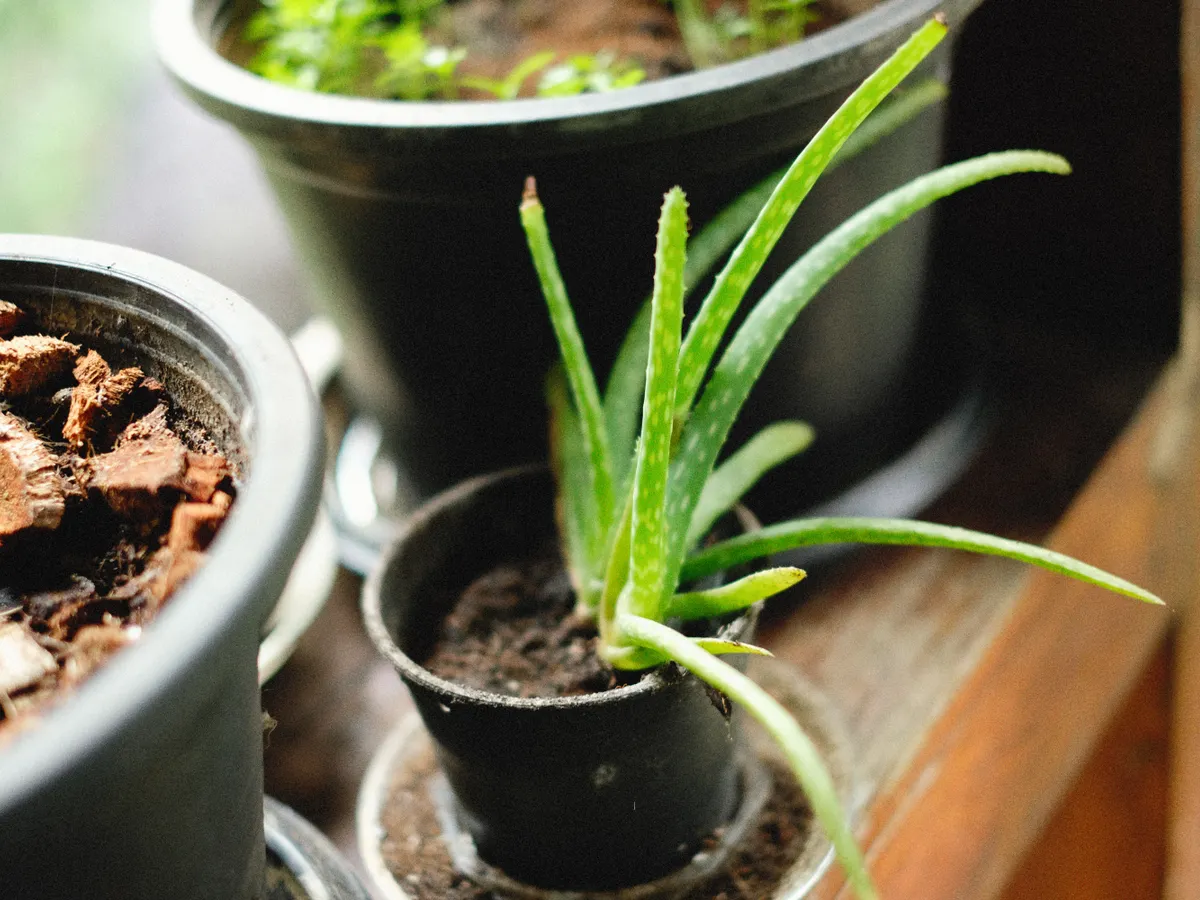
How often to water aloe vera
The rule is simple: water only when the soil is completely dry. NC State says to allow the soil to dry completely between waterings and water less in winter. UF/IFAS adds that you should never let your plant sit in water.
- Push a finger or a wooden skewer about 2 inches into the soil.
- If it comes out dry and clean, it’s time to water.
- Water slowly until it runs out of the drainage hole.
- After about 15 minutes, empty the saucer.
In practice, that’s often every one to two weeks in summer and every three to four weeks in winter. Small terracotta pots in sun dry fastest. Large plastic pots in a dim room take much longer.
Water the soil, not the center of the rosette. Water sitting between the leaves in a cool room can rot the heart of the plant.
Soft, mushy, see-through or yellow leaves are signs of overwatering. If you see them, stop watering and follow the steps in our guide to overwatered plants, which apply to aloe too.
Does aloe vera need fertilizer?
Very little. Aloe grows slowly and doesn’t like rich soil. Feed a mature plant once in spring and once in summer with a balanced liquid fertilizer at half strength, or a cactus fertilizer.
Skip feeding in fall and winter, when growth slows down indoors. Too much fertilizer can burn the leaf tips. If you prefer kitchen-scrap options, see our homemade fertilizer guide and use small doses.
How to propagate aloe vera from pups
Aloe multiplies on its own. Over time, small pups, also called offsets, pop up around the mother plant, each with its own roots. NC State lists division as the recommended way to propagate it.
- Wait until the pup has at least four leaves and is about 4 inches tall.
- Water the mother plant the day before, so the soil loosens.
- Slide the plant out of the pot, or clear the soil around the pup.
- Pull the pup away by hand or cut it with a clean knife, keeping as many roots as you can.
- Let the cut dry in the shade for a day or two.
- Pot it in a small container with dry or barely damp succulent mix.
- Wait about a week before the first watering, and keep it in bright, indirect light for two weeks.
A pup without roots can still take, but it’s slower. The idea is similar to propagating herbs from cuttings: a clean cut, light soil and patience.
Rooting a single aloe leaf rarely works. The cut leaf usually dries up or rots before it makes roots. Stick with pups.
When to repot aloe vera
Repot when the plant starts tipping over, when pups fill the pot or when roots come out of the drainage hole. That’s usually every two to three years.
Spring or early summer is the best time. Separate the pups, trim dry or rotten roots and replace all the old soil. After repotting, wait five to seven days before watering, so damaged roots can heal.
Aloe vera in winter
Aloe is a warm-climate plant. NC State notes that it stays outdoors year-round only in USDA zones 10 and warmer; UF/IFAS lists zones 8 to 11 for outdoor aloes. In most of the US, it’s a houseplant in winter.
- Bring it in early: move outdoor aloes inside before the first frost.
- Water much less: with short days and cool rooms, the soil stays wet for longer.
- Watch the glass: leaves touching a freezing window can get damaged. Leave a few inches of space.
- Keep it away from heat vents: hot, dry air blasting on the plant dries the leaf tips.
- Cold and wet is the worst combo: chilly, soggy soil rots the roots in days.
For more tips on getting plants through the cold months, see our guide to growing herbs indoors in winter.
Does aloe vera flower?
It can, but not often indoors. NC State explains that only plants at least three years old bloom, sending up a tall spike of tubular yellow to orange flowers. UF/IFAS adds that indoor plants rarely bloom.
If your aloe has never flowered, it doesn’t mean it’s unhealthy. More sun, a summer outdoors and a dry winter rest raise the odds.
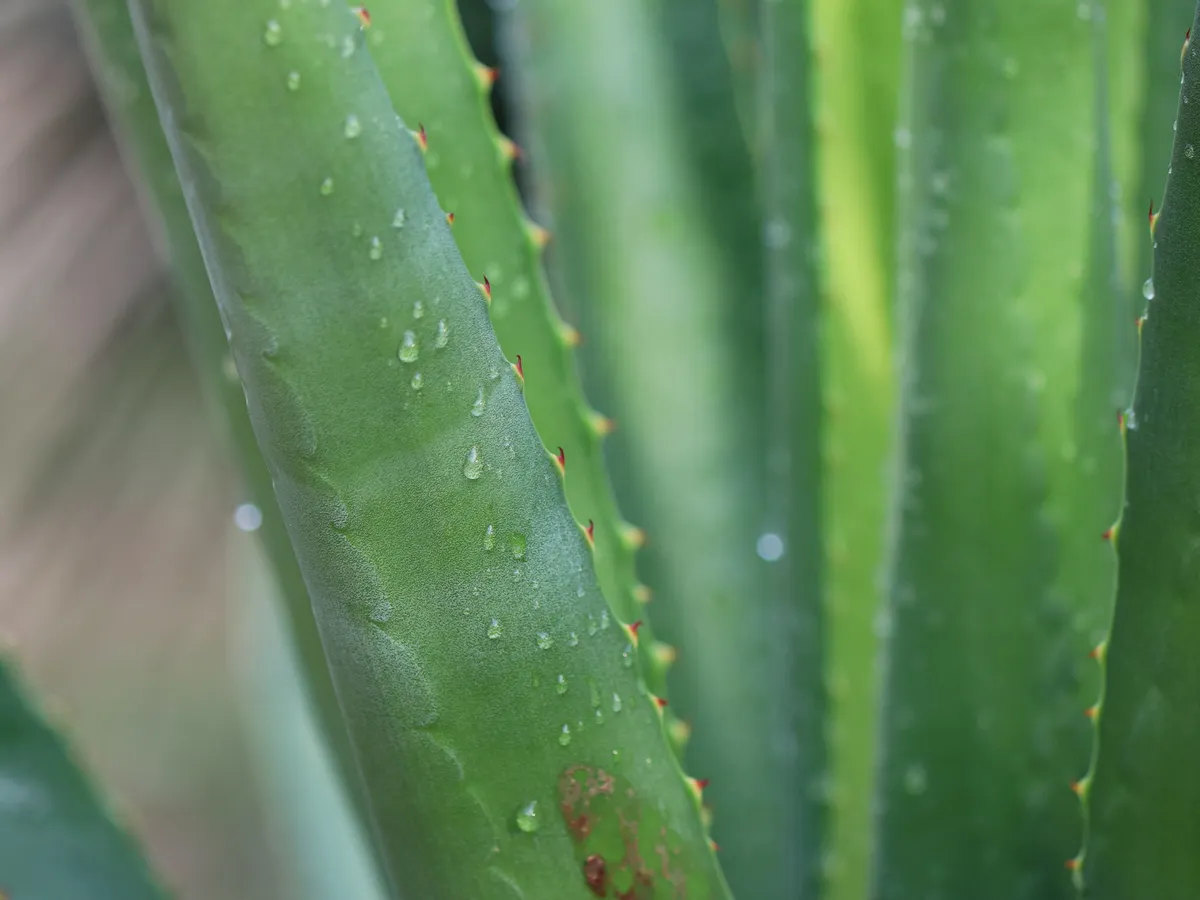
Common aloe vera problems
| Problem | Likely cause | What to do |
|---|---|---|
| Soft, yellow or see-through leaves | Overwatering or heavy soil | Stop watering, check the roots, switch to succulent mix |
| Thin, wrinkled, curling leaves | Underwatering for a long time | Water deeply until it drains, then repeat when dry |
| Floppy leaves and a stretched plant | Not enough light | Move it gradually to a brighter window |
| Reddish or brown leaves | Too much sun or a sudden change in light | Give afternoon shade and adjust slowly |
| Dry brown tips | Strong sun, dry heat or too much fertilizer | Adjust water and feeding; trim only the dry part |
| White cottony fluff between leaves | Mealybugs | Dab with rubbing alcohol on a cotton swab and isolate |
| Black base and a bad smell | Root rot | Cut off rotten parts, let dry, repot in dry soil |
NC State lists mealybugs, aphids, scale, leaf spot, aloe rust and sooty mold as possible problems. For gentle ways to deal with bugs, see our guide to houseplant and herb pests.
Brown leaves have several causes, and the checklist is similar to the one for herbs. See our guide to leaves turning brown to narrow it down.
Is aloe vera toxic to cats and dogs?
Yes. The ASPCA lists aloe as toxic to dogs, cats and horses, with signs such as vomiting, lethargy and diarrhea. Keep the pot out of reach of pets.
Can I use the gel from my plant?
This guide is about growing aloe. Still, it helps to know that a leaf has two different parts: the clear gel inside and a yellow sap, called latex, just under the skin.
The National Center for Complementary and Integrative Health (NCCIH) says that aloe gel on the skin is generally well tolerated, but aloe latex taken by mouth can cause cramps and diarrhea, and oral use may be unsafe during pregnancy and breastfeeding.
So don’t drink homemade aloe. Before using the gel on your skin, test it on a small patch first. For any medical use, talk to your doctor or pharmacist.
Common aloe vera mistakes
- Watering on a schedule: always check that the soil is dry first.
- No drainage hole, or a decorative pot holding water: roots rot quickly.
- Regular potting soil or garden soil: it stays wet; use succulent mix.
- A huge pot for a small plant: the soil takes too long to dry.
- Going from shade to full sun overnight: the leaves burn.
- Cold, wet winters: the fastest way to lose the plant.
To build a green corner in your kitchen with aloe and herbs, see our kitchen herb garden guide. And if you like plants that are useful as well as pretty, check out these herbs for tea you can grow at home.
- Aloe vera is a succulent: lots of light, little water.
- Use a pot with a drainage hole, ideally terracotta, and cactus and succulent mix.
- Water only when the soil is completely dry and never leave water in the saucer.
- Move it into stronger sun gradually so the leaves don’t burn.
- In winter, keep it indoors in a bright window and water much less.
- Grow new plants from the pups around the mother plant.
- Aloe is toxic to cats and dogs; keep it out of reach.
With bright light, gritty soil and watering at the right time, your aloe will stay firm, green and full of pups to share with friends.
Aloe vera plant care FAQ
How often should I water an aloe vera plant?
Only when the soil is completely dry. That’s often every one to two weeks in summer and every three to four weeks in winter.
Does aloe vera need direct sunlight?
It does best with bright light and a few hours of direct sun, like a south or west window. Move it into stronger sun gradually to avoid sunburn.
What is the best soil for aloe vera?
A fast-draining cactus and succulent mix, or equal parts potting soil, coarse sand and perlite. The key is that water drains quickly.
Why are my aloe leaves soft and mushy?
Usually it’s overwatering. Stop watering, make sure the pot drains and, if the roots are dark and soft, repot in fresh, dry succulent mix.
Why is my aloe plant drooping?
Most often it’s too little light. It can also be overwatering or a pot that is too small for the plant’s weight. Move it to a brighter spot gradually.
How do I propagate aloe vera?
Separate a pup with at least four leaves and some roots, let the cut dry for a day or two and pot it in succulent mix. Wait a week before watering.
Can aloe vera live indoors all year?
Yes, in a bright window with a few hours of direct sun. Indoors it grows more slowly and rarely blooms, but it can live for many years.
Is aloe vera safe for cats and dogs?
No. The ASPCA lists aloe as toxic to dogs, cats and horses, with signs like vomiting, lethargy and diarrhea. Keep it out of reach.