How to Grow Rosemary in a Pot and Keep It Alive Indoors
Rosemary has a reputation for being tricky, but the secret is simple: it loves strong sun and soil that’s almost dry, the opposite of what many people give it. In this guide, you’ll learn how to grow rosemary in a pot, from planting to harvest, and how to avoid the mistakes that make it dry up seemingly overnight.
Let’s go over what rosemary needs, three ways to plant it, how to water, prune and harvest it, and what to do when it starts drying out.
What does rosemary need to thrive in a pot?
Rosemary is a shrub from the Mediterranean, where it grows in strong sun, little rain and stony ground. At home, the more you copy those conditions, the happier it will be.
- Sun: 6 to 8 hours of direct light a day.
- Soil: light, sandy and very fast-draining.
- Water: not much. The soil should dry between waterings.
- Pot: medium to large, with drainage holes.
- Air: a well-ventilated spot without stagnant humidity.
University of Maryland Extension recommends full sun and well-drained soil with a pH of about 6.5 to 7.0. In other words, a near-neutral mix without strong acidity.
A fun fact: in 2017, botanists changed rosemary’s scientific name from Rosmarinus officinalis to Salvia rosmarinus. It’s a cousin of sage. The plant itself, of course, is the same.
What kind of pot is best for rosemary?
Rosemary grows deep roots and can live for many years. So start with a pot at least 8 inches (20 cm) deep and wide. For a mature plant, 12 to 16 inches (30 to 40 cm) is ideal.
Drainage holes are non-negotiable. Without them, water pools, the roots rot and the plant dries out from the top. That’s the number-one reason rosemary dies in containers.
| Pot type | Advantage | Watch out for |
|---|---|---|
| Unglazed terracotta or clay | Breathes and helps the soil dry faster | It’s the best match for rosemary; in hot weather, check the soil more often |
| Plastic | Light and inexpensive | Holds more moisture: water less often |
| Long window box | Room to plant other dry-loving herbs | Needs to be at least 8 inches deep |
| Pot without holes | Looks nice as decor | Use it only as a cover, with a draining pot inside |
What soil does rosemary like?
Rosemary doesn’t like heavy, soggy soil. The ideal mix is light and loose. An easy recipe:
- 2 parts quality potting mix;
- 1 part coarse sand, perlite or fine gravel;
- a handful of compost or worm castings.
Cactus and succulent mix also works well, especially if you tend to overwater. Just add a little compost so the plant has some nutrients.
Avoid plain garden soil. In a pot, it compacts, holds too much water and suffocates the roots.
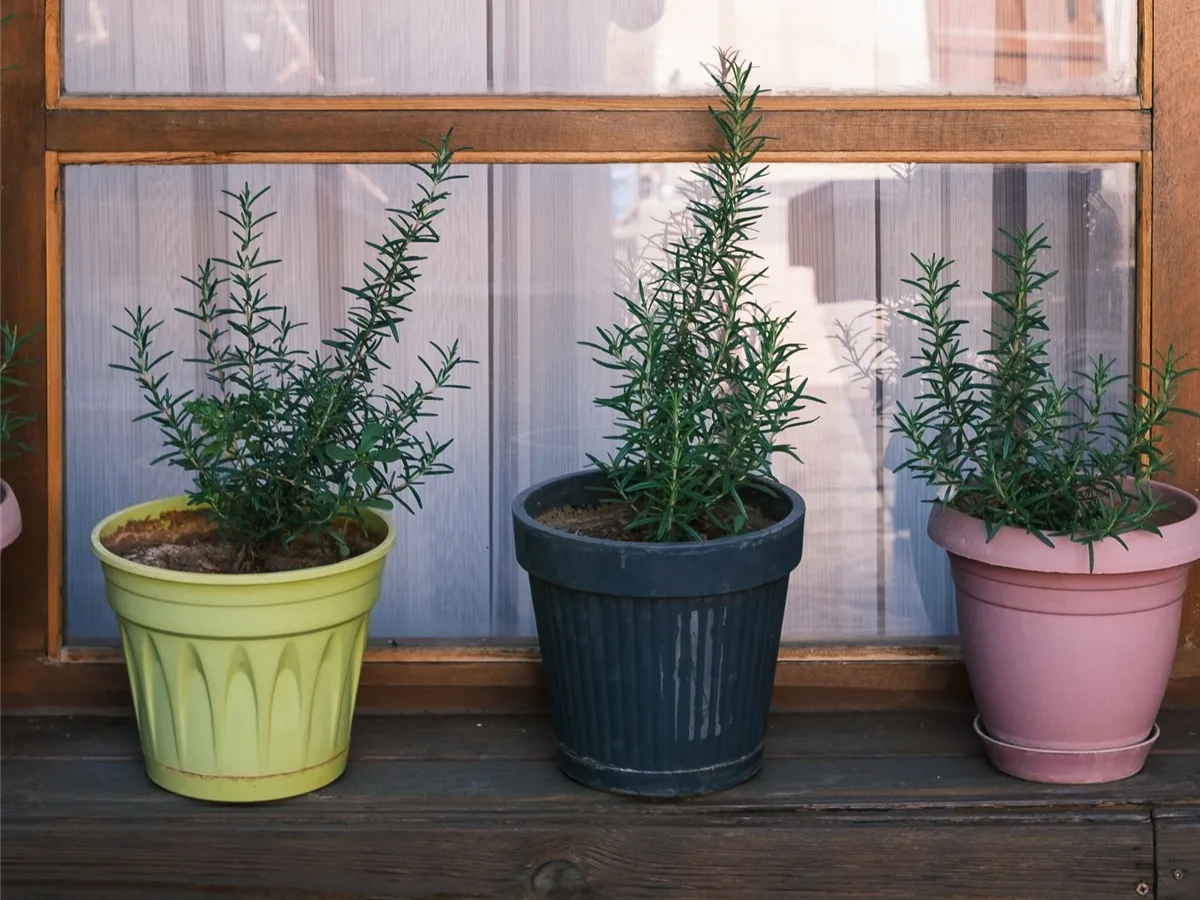
How to grow rosemary in a pot: 3 ways
1. From a nursery plant (the easiest)
Buying a young plant from a garden center or grocery store is the fastest route. Choose one with green, firm leaves, a strong scent, no dry patches and no bugs under the leaves.
- Prepare the pot with your potting mix.
- Dig a hole the size of the root ball.
- Set the plant at the same depth it was growing before.
- Fill in with soil and press gently around it.
- Water thoroughly once, until it drains from the bottom.
- Keep it in bright, indirect light for two or three days before moving it to full sun.
2. From a cutting
This is the cheapest method, and it works very well. You can take a cutting from a friend’s plant or even use a fresh sprig from the grocery store, as long as it’s nice and green.
- Cut a 4- to 6-inch (10 to 15 cm) piece from a tip that’s still green and flexible.
- Strip the leaves from the bottom 2 inches (5 cm).
- Plant it straight into a small pot of sandy mix, burying about half the stem, or place it in a glass of water.
- Keep it in a bright spot out of harsh sun, with the soil only lightly moist.
- Roots form in 3 to 6 weeks. When the cutting puts out new growth, it has taken.
Tip: start three or four cuttings at once. Not all of them will root, so this way you’re sure to get at least one new plant.
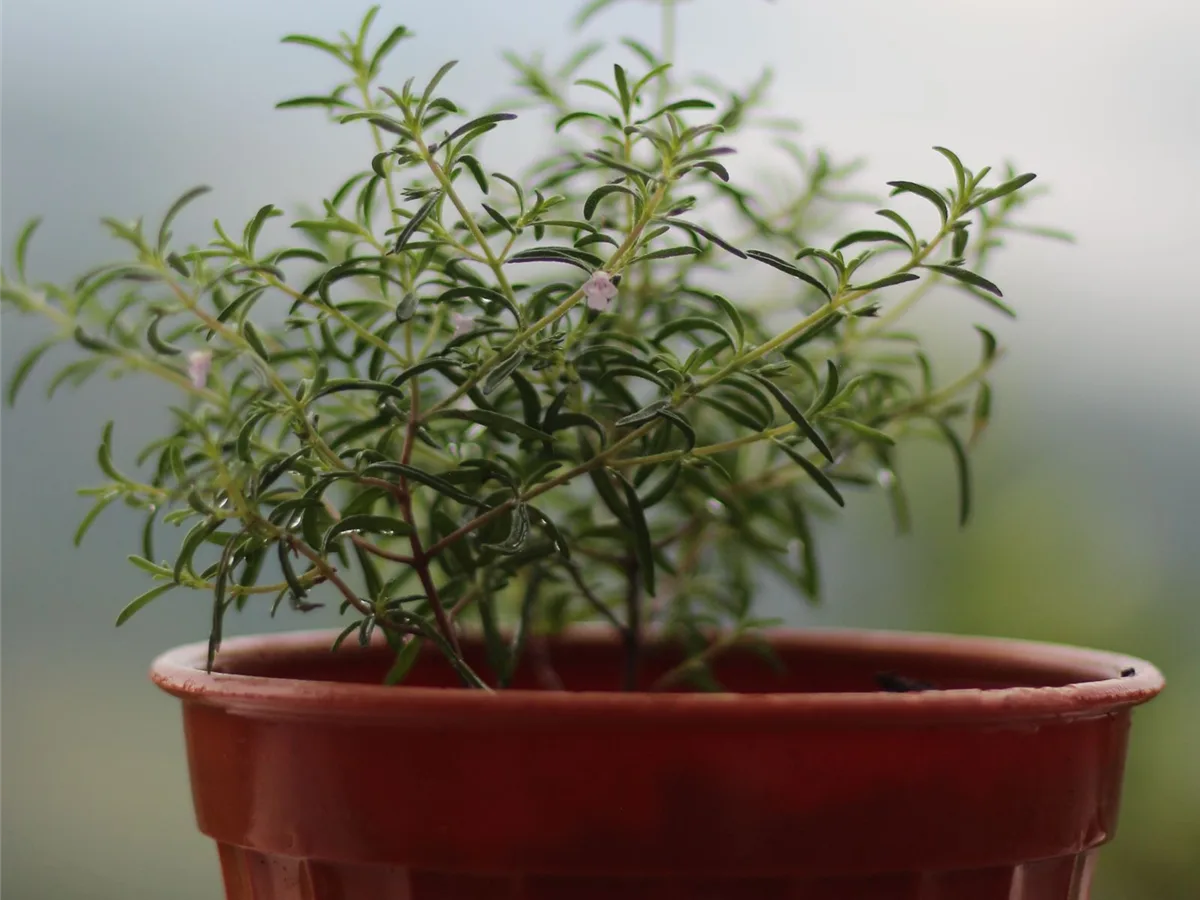
3. From seed (the slowest)
Growing rosemary from seed is possible, but it takes patience. Seeds take two to four weeks to sprout, and many never do. It’s months before the seedling is big enough to harvest.
If you want to try, sow in a tray of fine seed-starting mix, cover very lightly, keep it moist and put it in a warm, bright place. Move it to its final pot when it’s about 3 inches (8 cm) tall.
How often should you water rosemary in a pot?
This is the biggest mistake people make with rosemary: too much water. It handles a few dry days just fine, but it dies quickly when its roots sit in wet soil.
- Do the finger test. Push a finger about an inch into the soil. Water only if it feels dry.
- Water deeply when you water. Soak until it drains from the bottom, then let it dry out.
- Empty the saucer about 15 minutes later.
- Water the soil, not the leaves. Wet foliage invites fungus.
In practice, that usually means watering every two or three days in summer and about once a week in winter. But the soil sets the schedule, not the calendar.
Here’s a tricky detail: rosemary that’s getting too much water also turns dry and brown, as if it were thirsty. If the soil is wet and the plant looks dry, the problem is overwatering. See what to do in our guide to overwatered herbs. And if the leaves are turning brown for other reasons, see our guide to herb leaves turning brown.
Where should you keep rosemary indoors?
In the sunniest spot you have. In the Northern Hemisphere, a south-facing window gets the most sun through the day. A west-facing window is the next best choice.
Sunny balconies, patios and outdoor ledges are great in warm months. Deep inside the kitchen, away from the window, rosemary gets thin and sparse and loses its scent. If that’s your situation, a grow light helps a lot.
North Dakota State University, where winters are harsh, recommends about eight hours of direct sun for rosemary grown indoors and names root rot from overwatering as the biggest problem.
If your rosemary has already stretched toward the light, see how to bring it back in our guide to leggy herbs.
How to prune and harvest rosemary without killing it
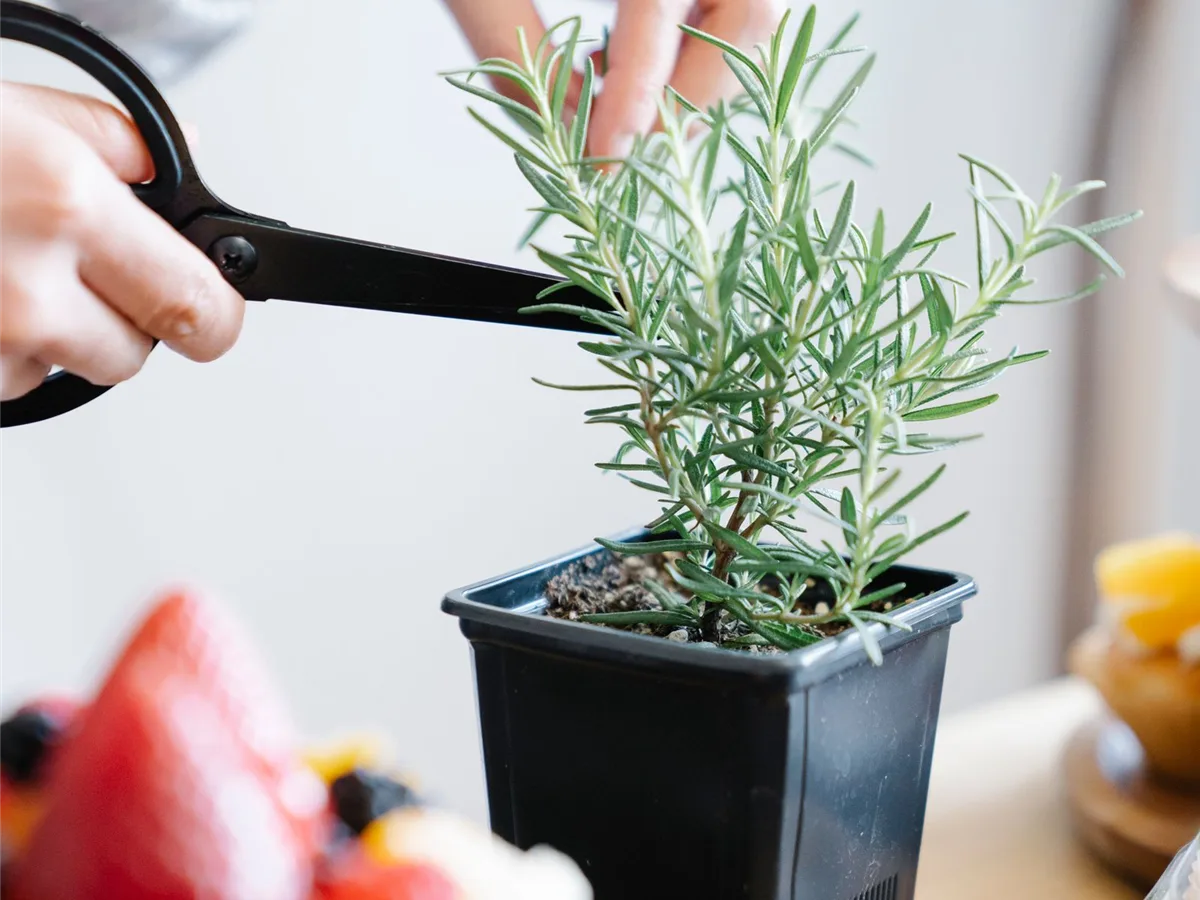
Regular harvesting is good for rosemary. Every tip you snip encourages new shoots, and the plant fills out. The key is knowing where to cut.
- Cut only the green, soft part of the stems, 2 to 4 inches (5 to 10 cm) from the tip.
- Never take more than a third of the plant at once.
- Avoid cutting into the hard, brown wood. Rosemary struggles to resprout from old wood.
- Use clean scissors and cut just above a pair of leaves.
- Let young plants grow first. Start harvesting once they reach 6 to 8 inches (15 to 20 cm).
If you want to save a big harvest, rosemary is one of the herbs that keeps its flavor best when dried. Learn how to dry and freeze herbs without losing flavor.
How to fertilize rosemary
Rosemary needs very little fertilizer. In overly rich soil, it grows fast and soft and loses some of its aroma. Here, less is more.
A tablespoon of compost or worm castings on the soil surface every two or three months is plenty for a medium pot. You can also use a liquid fertilizer at half strength now and then in spring and summer. Skip feeding in winter, when growth slows. See how to use compost in pots without overdoing it.
Rosemary in winter and cold weather
Rosemary is only partly cold-hardy. Many common varieties survive light frosts, but hard freezes kill them, especially in a pot, where the roots are more exposed than in the ground. If your winters drop well below freezing, bring the pot indoors before the first hard frost.
Indoors, give it your brightest window and a cool room if you can. Water much less, because the soil dries slowly in winter. Dry indoor air can stress the plant, so a tray of pebbles and water under the pot helps. See more tips in how to grow herbs in winter.
Why is my rosemary drying out? Problems and fixes
| What you see | Likely cause | What to do |
|---|---|---|
| Leaves drying while the soil is wet | Overwatering, root rot | Stop watering and check the roots |
| Leaves drying and the soil has been dry for days | Underwatering | Water until it drains from the bottom |
| Long, thin stems with few leaves | Too little light | Move it to the sunniest spot |
| White powder on the leaves | Powdery mildew, a fungus | Remove affected parts and improve airflow |
| Tiny pale dots and fine webbing | Spider mites | Rinse the leaves and use insecticidal soap |
| Small green or black bugs on the tips | Aphids | A spray of water and insecticidal soap |
| White fuzz on top of the soil | Soil that’s too wet | Scrape off the surface and water less |
| Hard, bare stems at the base | Natural aging | Prune the tips and start new cuttings |
The University of California’s pest management program lists the most common rosemary pests and diseases, including aphids, spider mites, whiteflies, powdery mildew and root rot.
To identify and treat each bug without harsh chemicals, see our guide to herb plant pests. And if a white fuzz has appeared on the soil, read our article on white mold on soil.
Can rosemary be planted with other herbs?
Yes, as long as its neighbors also love strong sun and dry soil. Good companions for rosemary are thyme, oregano, sage and lavender.
Basil, mint, parsley and chives, on the other hand, prefer moister soil. If they share a pot, one side will suffer: either the rosemary rots or the others dry out. See the full chart in our guide to herbs that grow together.
How long does rosemary live in a pot?
Unlike basil, which is an annual, rosemary is a perennial. With good care, it can live for several years in a container. Over time, the base of the stems gets woody and less leafy, and that’s normal.
Every two or three years, move it to a slightly bigger pot or refresh part of the soil. It’s also smart to keep a backup plant from a cutting, so you can replace the old one when it starts to decline.
If you’re building a whole herb garden from scratch, rosemary is a great pick for your sunniest spot. Check out our complete kitchen herb garden guide and, if you’re short on space, our ideas for a vertical garden in an apartment.
Common mistakes that kill rosemary
- Watering every day, as if it were basil or mint.
- Leaving water in the saucer or using a pot without holes.
- Putting it in a corner with no sun.
- Using heavy soil that doesn’t drain.
- Cutting into the hard, brown wood of the stems.
- Overfeeding in hopes it’ll grow faster.
- Planting it with water-loving herbs.
If you grow basil too, it’s worth comparing their care in how to grow basil in a pot. Both love sun, but basil needs a lot more water.
- Rosemary needs 6 to 8 hours of direct sun a day.
- Use a pot at least 8 inches wide with drainage holes and a light, sandy mix.
- Water only when the soil is dry an inch down, and always empty the saucer.
- Harvest the green tips, never more than a third, and never into old wood.
- A 4- to 6-inch cutting roots in 3 to 6 weeks and is the cheapest way to get new plants.
- Pair it only with dry-loving herbs like thyme, oregano and sage.
Frequently asked questions about growing rosemary in a pot
Does rosemary need full sun?
Yes. Rosemary needs 6 to 8 hours of direct light a day. In shade, it gets thin and sparse, loses its scent and becomes more prone to fungal problems.
How often should I water potted rosemary?
Only when the soil is dry about an inch down. In summer, that’s usually every two or three days; in winter, about once a week. Always check with your finger before watering.
Why is my rosemary drying out?
The most common cause is overwatering, which rots the roots. If the soil is wet and the leaves are dry, stop watering. Other causes are low light, going dry for too long and pests.
Can I grow rosemary from a cutting?
Yes. Cut a green, 4- to 6-inch stem, strip the lower leaves and plant it in sandy mix or place it in water. Roots appear in 3 to 6 weeks.
What size pot does rosemary need?
Start with a pot at least 8 inches (20 cm) deep and wide. For a mature plant, 12 to 16 inches is ideal. The pot must have drainage holes.
Can I plant rosemary with basil?
It’s not ideal. Basil likes more water, and rosemary likes dry soil. In the same pot, one of them will suffer. Pair rosemary with thyme, oregano or sage instead.
Will rosemary grow back after cutting?
Yes, if you cut the green part of the stems. It struggles to resprout from hard, brown wood, so always harvest from the tips.
Can rosemary stay outside in winter?
It depends on your climate. Many varieties handle light frosts, but hard freezes can kill potted rosemary. If your winters drop well below freezing, bring it indoors to a bright window before the first hard frost.