Christmas Cactus Care: Light, Water and How to Get Blooms
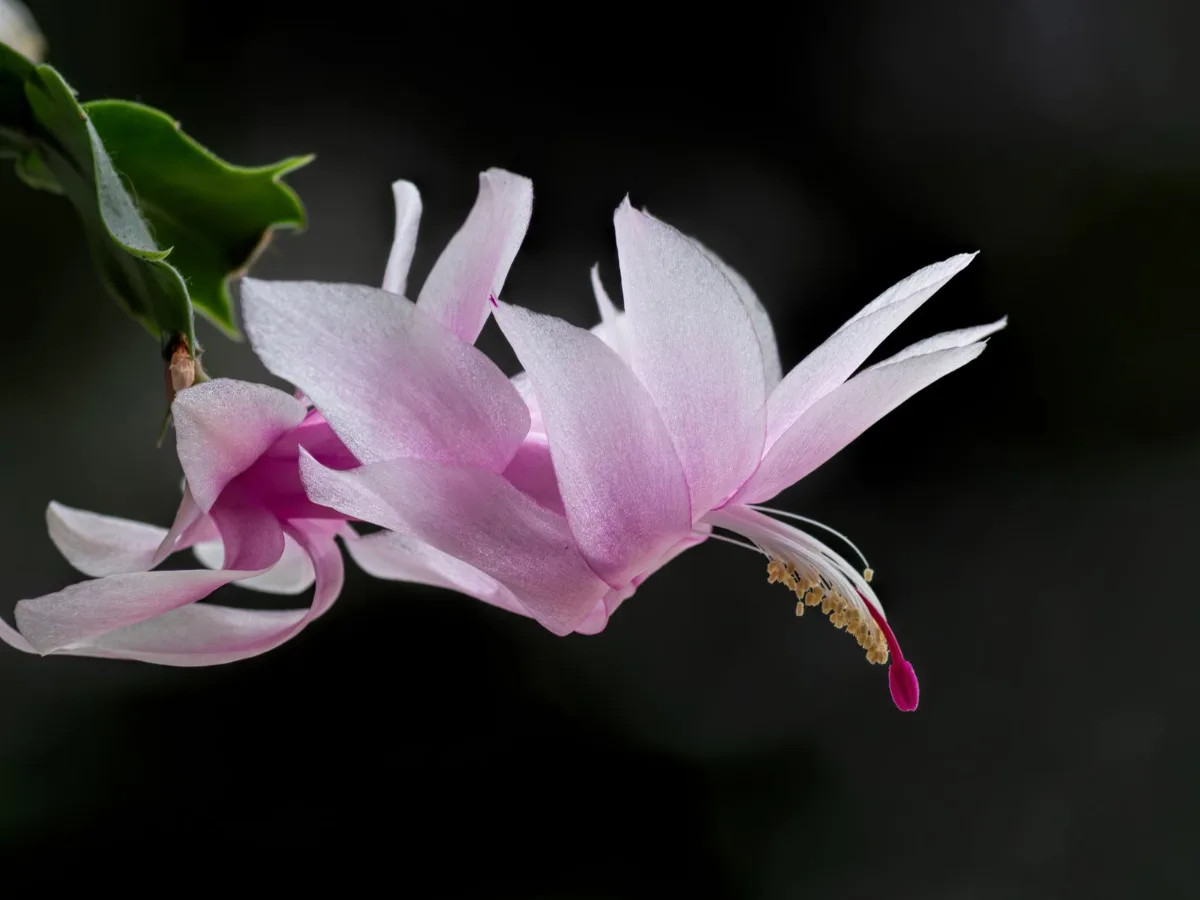
The Christmas cactus is one of the easiest holiday plants to keep for years: arching stems made of flat segments that cover themselves in pink, red, white or orange flowers right when the days are shortest. Many families pass the same plant down for generations.
In this guide, you’ll learn Christmas cactus care step by step: light, watering, soil, fertilizer, how to make it bloom every year, why buds drop and how to grow new plants from cuttings.
Let’s go step by step: first, how to tell which holiday cactus you have. Then daily care, the secret to blooming, common problems and how to propagate.
What is a Christmas cactus?
The Christmas cactus (Schlumbergera) is a spineless cactus that grows on trees, not in the desert. North Carolina State University explains that the most common species is native to the rainforests of southeastern Brazil, where it grows on trees or rocky areas in coastal mountains.
That’s the key to its care. In nature, it lives in the dappled shade of the forest, with humidity and bright light but no harsh sun. Its roots cling to bark and moss, so they need air and drainage, not heavy wet soil.
Fun fact: in Brazil, where seasons are reversed, the same plant blooms in May and is called “flor-de-maio,” the May flower.
Christmas, Thanksgiving or Easter cactus?
Three similar plants are sold as “holiday cactus,” and most plants labeled “Christmas cactus” in stores are actually Thanksgiving cacti. The University of Illinois explains how to tell them apart:
| Plant | Stem segments | Flowers and bloom time |
|---|---|---|
| Thanksgiving cactus (S. truncata) | Pointed teeth along the edges | Tubular, yellow anthers; late November to late December |
| Christmas cactus (S. x buckleyi) | Smooth, rounded or scalloped edges | Tubular, purplish-brown anthers; late December to March |
| Easter cactus (Rhipsalidopsis gaertneri) | Rounded edges | Star-shaped; March to May |
The details come from the University of Illinois guide on how to identify and care for holiday cacti and get them to rebloom. The good news: Thanksgiving and Christmas cacti need almost identical care, so everything below works for both.
What does a Christmas cactus need?
| Need | How much | Practical tip |
|---|---|---|
| Light | Bright, indirect light | An east window, or a few feet back from a sunny one |
| Temperature | Around 70 °F by day; no frost | Cool fall nights help it bloom |
| Water | When the top of the soil dries | Never let the pot sit in water |
| Soil | Light and fast-draining | Cactus mix or potting mix with perlite |
| Fertilizer | Spring through late summer | Stop as it gets ready to bloom |
Light
The University of Wisconsin recommends bright, indirect light or light shade, with no more than a few hours of direct sun, ideally in the morning. Deep shade, on the other hand, leaves the plant weak and flowerless.
NC State warns that direct sunlight can scorch the stems, and that they turn yellow in summer without shade. Reddish or yellowish segments are usually a sign of too much sun. If your home is dim, see how to place plants well in low-light spots.
Temperature
Wisconsin notes that holiday cacti have minimum temperatures of 55 to 60 °F and cannot tolerate frost. If the plant spends summer outdoors, Illinois recommends bringing it inside before nights drop into the low 50s.
While it’s blooming, Illinois suggests about 70 °F during the day and 55 to 65 °F at night. Keep it away from heat vents, fireplaces and drafty doors, which dry out the buds.

How often should you water a Christmas cactus?
Because it’s a cactus, many people barely water it. But it’s a forest cactus and likes a bit more water than desert types. Still, overwatering is the number one killer. NC State warns that overwatering can cause root rot.
- General rule: water when the top inch of soil is dry, until water drains from the holes.
- While blooming: Illinois advises keeping the soil moist but not waterlogged. Letting it dry out can make flowers drop.
- After blooming: water less until new growth appears, then return to normal.
- Late summer: Wisconsin suggests watering a little less in August and September to harden the stems that will carry flowers.
- Saucer: never leave standing water under the pot.
Wilted, shriveled, dull gray-green stems usually point to a watering problem. Illinois explains that overwatering is the most common cause, because it kills the roots, so the plant wilts even in wet soil. See how to fix it in overwatered plants.
Best soil and pot for a Christmas cactus
The mix should be light and drain fast, like the bark it grows on in nature. Illinois suggests cactus potting soil, or roughly 60 to 80% potting soil with 20 to 40% perlite.
- DIY mix: two parts light potting mix, one part perlite and a handful of fine orchid bark.
- Pot: always with drainage holes. Hanging baskets show off the arching stems.
- Size: it blooms best when a little pot-bound. Don’t jump to a much bigger pot.
- Repotting: about every three years, in spring, according to Illinois. Wisconsin says at least every 4 to 5 years.
How to fertilize a Christmas cactus
Illinois recommends fertilizing with a complete houseplant fertilizer from spring through late summer. That’s when the plant is actively growing.
Use light doses every 3 to 4 weeks, and stop in fall, when it’s getting ready to bloom. If you prefer kitchen-made options, see the recipes and doses in homemade fertilizer for potted plants.
How to make a Christmas cactus bloom
Holiday cacti are short-day plants: they set buds when nights get long and cool. That’s why they bloom in late fall and winter. If yours won’t bloom, it’s almost always missing long nights, cool nights or both.
The two blooming rules
- Long nights: Illinois recommends at least 12 hours of continuous darkness per night for 5 to 6 weeks. Light interruptions of 2 hours or more can prevent bud set.
- Cool nights: the same source suggests days at 65 to 70 °F and nights at 55 to 65 °F. Nights near 55 °F can trigger blooms regardless of night length, but temperatures below 50 °F can make buds drop.
Step-by-step bloom routine
- Start in early fall: about 6 to 8 weeks before you want flowers. For Christmas blooms, start in late September or early October.
- Find a dark room: a spare bedroom or basement window where no lamps are turned on at night works well, as Illinois suggests.
- Keep it cool: a room that stays in the upper 50s to low 60s at night is ideal.
- Water a bit less: enough to keep the stems firm, not wrinkled.
- Skip the fertilizer during this period.
- Buds showing? Don’t move it. Wisconsin warns that moving it to very different light or temperature can make buds stop developing and abort.
- Resume normal watering once the buds begin to swell.
Illinois explains that once buds have formed, day length no longer affects flowering. At about 70 °F, Wisconsin says the plant should bloom for 2 to 3 weeks.
Pinch for more flowers
Flowers form at the tips of the stems, so more tips mean more blooms. Illinois recommends pinching stems back in June. Twist off one or two segments at the end of each stem: the plant branches out, and you get free cuttings.
Why are my Christmas cactus buds falling off?
It’s the most frustrating problem: the plant fills with buds, and they drop before opening. Illinois lists the main causes: high temperatures, drafts, too little light, over- or underwatering and low humidity.
| Sign | Likely cause | What to do |
|---|---|---|
| Buds drop after a move | Sudden change in light or temperature | Pick its spot before buds form and leave it there |
| Buds drop, soil is dry | Too little water while blooming | Keep the soil lightly moist until flowers open |
| Limp stems, soil is wet | Overwatering and root rot | Let it dry and check the drainage holes |
| Red or yellow segments | Too much direct sun | Move it to bright, indirect light |
| No buds at all | Lamps on at night or warm nights | Give 12 hours of full darkness and cooler nights in fall |
| White cottony spots | Mealybugs | Wipe with a cotton swab and see the pest guide |
Illinois says to watch for mealybugs, scale and spider mites, and notes that fungus gnats can show up if the mix stays too wet. See how to handle them in common plant pests and fungus gnats.
How to propagate a Christmas cactus
Christmas cactus is one of the easiest plants to propagate: almost any piece of stem can become a new plant. Wisconsin recommends using single joints or cuttings of 2 to 3 joints, letting them dry in a shady spot for 2 to 3 days before planting.
- Pick the time: right after flowering or in late spring, when the plant starts growing again.
- Twist or cut: take pieces of 2 to 3 segments, gently twisting at the joint or cutting with clean scissors.
- Let them callus: 2 to 3 days in the shade, until the cut end forms a dry skin.
- Plant: push the base, about a third of the bottom segment, into a light mix with perlite.
- Water lightly: keep the mix barely moist, never soggy.
- Wait: roots form in about 2 to 3 weeks, according to Wisconsin.
Plant several cuttings in one pot for a fuller plant sooner. They make lovely homemade gifts. The same principle works for herbs: see how to propagate herbs from cuttings.
Is Christmas cactus toxic to cats and dogs?
NC State lists it as non-toxic to cats and dogs. A pet that chews a lot of segments may still get a mild upset stomach, but it’s a much safer holiday plant than many others. That makes it a good pick for homes with pets.
Christmas cactus and other holiday plants
The Christmas cactus pairs well with other holiday favorites. Poinsettias need a similar long-night routine to color up again: see poinsettia care. For a fragrant touch, add a potted rosemary plant nearby.
An amaryllis is another holiday bloomer that is easy to grow indoors. See amaryllis care for planting and reblooming tips. A Christmas cactus also makes a great present that lasts for decades. Find more ideas in these gifts for gardeners.
A Christmas cactus also looks lovely in a table centerpiece with other plants. See these Christmas centerpiece ideas with live plants.
If you also grow herbs indoors in winter, many of the same light and watering rules apply. See the kitchen herb garden guide.
Common Christmas cactus mistakes
- Treating it like a desert cactus: strong sun and almost no water scorch and shrivel the stems.
- Overwatering: soggy soil rots the roots.
- A pot that’s too big: the soil stays wet too long and the plant blooms less.
- Lamps on at night in fall: the most common reason for a plant without flowers.
- Moving it when it has buds: the buds drop.
- Fertilizing in fall: it pushes leaves, not flowers.
- Christmas cactus is a spineless forest cactus from Brazil that grows on trees.
- Most “Christmas cacti” in stores are Thanksgiving cacti; care is almost the same.
- Give it bright, indirect light, with only gentle morning sun.
- Use a light, fast-draining mix and a pot with holes.
- Water when the top of the soil dries, without making it soggy.
- Feed from spring through late summer and stop in fall.
- To bloom, give it 12 hours of darkness and cool nights for 5 to 6 weeks.
- Don’t move it once buds appear.
With bright light, careful watering and long, dark fall nights, your Christmas cactus can bloom every year and become one of those plants that stays in the family for years.
Christmas cactus care FAQ
Does a Christmas cactus need sun?
It needs bright, indirect light. A few hours of gentle morning sun are fine, but strong direct sun scorches and reddens the stems.
How often should I water a Christmas cactus?
When the top inch of soil is dry. While it’s blooming, keep the soil lightly moist. Never leave water in the saucer.
Why won’t my Christmas cactus bloom?
It’s usually lamps on at night or warm nights in fall. It needs 12 hours of full darkness and cool nights for 5 to 6 weeks.
Why are the buds falling off my Christmas cactus?
Moving the plant, too much or too little water, heat, drafts and dry air. Choose its spot before buds form and leave it there.
How can I tell a Thanksgiving cactus from a Christmas cactus?
Thanksgiving cactus has pointed teeth on its segments and yellow anthers. Christmas cactus has rounded segments and purplish-brown anthers.
How do I propagate a Christmas cactus?
Take pieces of 2 to 3 segments, let them dry in the shade for 2 to 3 days and plant them in a light mix. Roots form in 2 to 3 weeks.
Is Christmas cactus safe for pets?
Yes. It’s listed as non-toxic to cats and dogs, though eating a lot of it may cause a mild upset stomach.
How long does a Christmas cactus live?
Many years. With good care, it keeps growing and blooming, and rooting a few cuttings every few years keeps the same plant going even longer.