How to Regrow Vegetables From Scraps
The green onions you used at lunch can grow back in a glass of water on your windowsill. The same goes for the base of a romaine head and the bottom of a celery bunch. In this guide, you will learn how to regrow vegetables from scraps, step by step for each one, and what you can realistically expect.
Let’s look at why regrowing scraps is worth it, what works and what doesn’t, the steps for each vegetable and how to keep the water from going bad.
Why regrow vegetables from scraps?
Regrowing what would end up in the trash is one of the simplest ways to start growing some of your own food at home. You don’t need seeds or nursery plants, and almost everything fits on a windowsill.
- Save money: one bunch of regrown green onions gives you several harvests before it tires out.
- Less food waste: the root end, which would go in the trash or compost, becomes food again.
- More self-reliance: you always have some fresh herbs and greens on hand, without a trip to the store.
- A great first project: perfect for kids and for anyone who thinks they can’t grow anything.
University of Illinois Extension sums it up well: regrowing vegetables from scraps is easier than you think and helps you save money.
One honest note: regrown scraps won’t replace a full garden. They add to it. Green onions and leafy greens give a lot. Lettuce and celery grow new leaves, but rarely a head as big as the one you bought.
Chart: what regrows and how
| Vegetable | Part you use | Where it starts | What you harvest |
|---|---|---|---|
| Green onions | White part with roots | Water | New greens, several cuts |
| Leeks | White base with roots | Water | Green leaves |
| Romaine lettuce | Base (about 2 inches) | Water, then soil | New leaves from the center |
| Celery | Base of the bunch (about 2 inches) | Water, then soil | Thin stalks and leaves |
| Bok choy | Base of the head | Water, then soil | New leaves |
| Ginger | Piece with 2 or 3 buds | Soil | New rhizome, over several months |
| Sweet potato | Whole or half tuber | Water, then soil | Slips and new sweet potatoes |
| Potato | Piece with 1 or 2 eyes | Soil | New potatoes |
| Garlic | Cloves | Soil | Garlic greens fast; a bulb takes months |
| Lemongrass | Stalk with the base | Water, then soil | A clump that lasts for years |
| Carrots and beets | Top (about 2 inches) | Water | Greens only |
| Basil and mint | Stem without flowers | Water, then soil | A new plant |
Vegetables that regrow in water
The fastest are the ones with a root end or a “heart.” They use the energy stored in the base to push out new leaves in just a few days.
Green onions
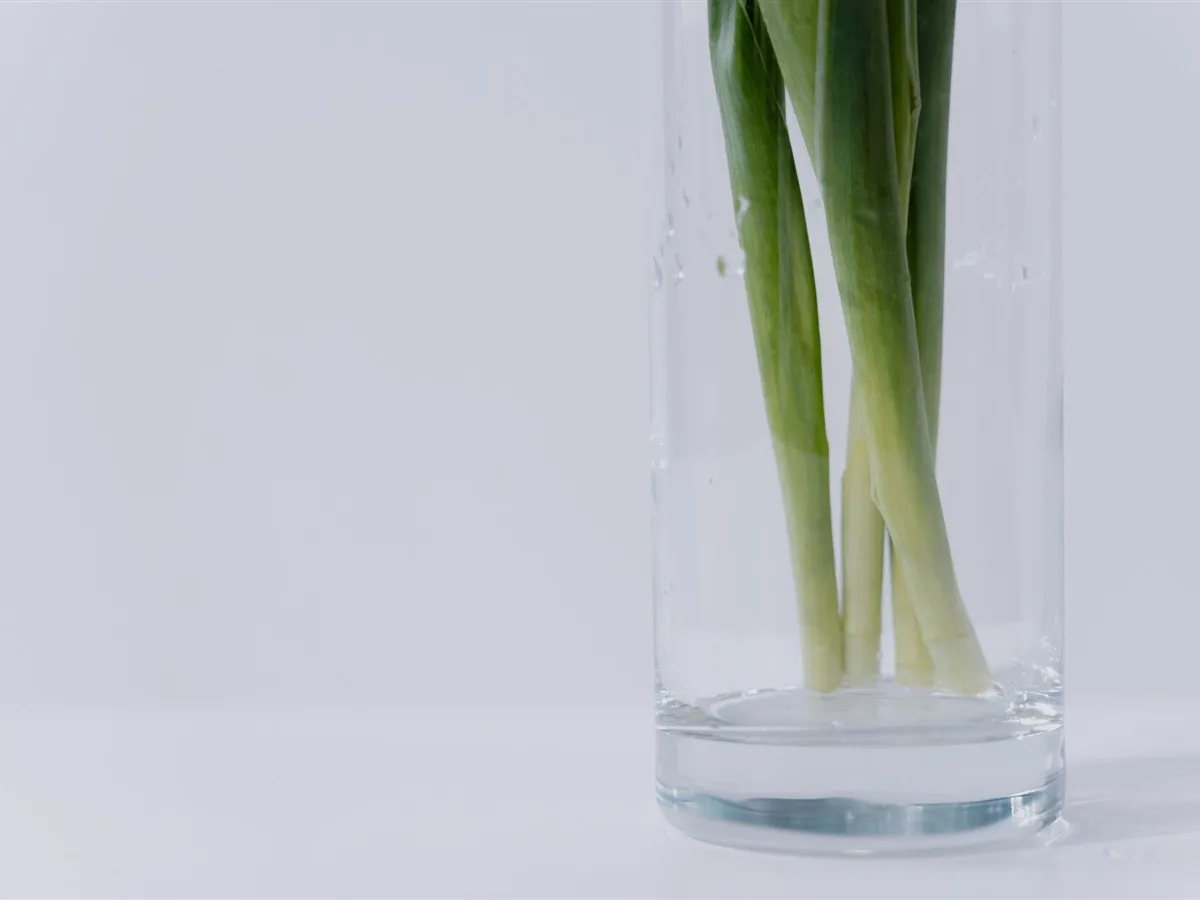
This is the champion. Save the white part with roots, about 1 to 2 inches long. Stand it in a glass or jar with water reaching only halfway up the white part, near a bright window.
- Use the white part with the roots still attached.
- Stand it upright, with water covering only the bottom.
- Place it in your brightest window.
- Change the water every two or three days.
- Cut the new greens when they are 4 to 6 inches tall, always leaving about an inch above the white part.
According to Iowa State University Extension, new shoots appear within a week or two, and the bulbs produce for a few months before their reserves run out. For green onions that last much longer, move them to soil once the roots grow. See the full guide on how to grow green onions in a pot.
Leeks
Leeks work just like green onions. Save the white base with roots, about 2 inches long, and set it in a glass with a little water. The green leaves from the center grow back and are great in sautés, soups and omelets.
Romaine, celery and bok choy
These three regrow from the center. The trick is to keep the whole base, about 2 inches tall, in one piece.
- Cut the head, leaving about 2 inches of the base.
- Set it in a shallow dish with about half an inch of water.
- Keep it in a bright, warm spot near a window.
- Change the water every two or three days.
- After about a week, once roots appear, plant the base in soil, burying only the bottom.
Iowa State explains that new leaves emerge from the center within days to weeks, and the plant is more productive in potting soil than in water. Romaine, with its tall head, works best. From celery, expect thin stalks and lots of leaves, perfect for stock.
Lemongrass
If you buy lemongrass stalks with the base still on, set them in a glass with an inch of water. Once the roots are about an inch long, plant them in a deep pot in full sun. It forms a clump that lasts for years, as long as you bring it indoors before frost.
Vegetables that regrow in soil
Roots and tubers, like ginger, potatoes and garlic, prefer to go straight into soil. In water, they often rot before they sprout.
Ginger
Ginger is a rhizome that sprouts from its buds, the small light “eyes” on the skin. Choose a firm, plump piece with several buds. Organic ginger is more likely to sprout.
- Cut pieces with two or three buds each.
- Let them dry for two or three days so the cut ends callus.
- Plant them horizontally, about 2 inches deep, in a wide pot.
- Water sparingly, only when the soil dries, until shoots appear.
- Once sprouted, keep it warm and bright and water regularly.
Be patient: according to Iowa State, ginger can take one to two months to sprout. You harvest the new rhizome once the foliage yellows and dies back, several months later.
Sweet potatoes
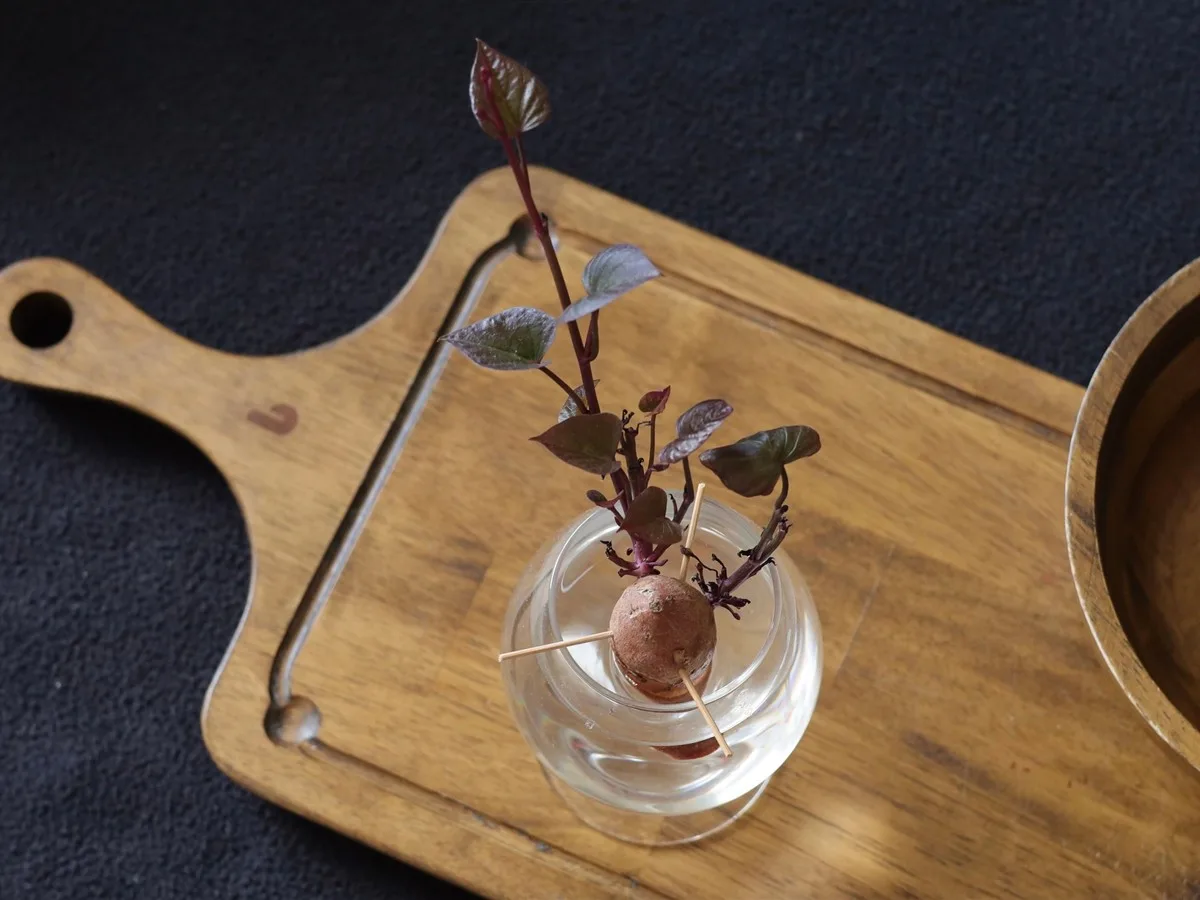
Sweet potatoes grow slips, which are the young plants. Push three or four toothpicks into the tuber and rest it on the rim of a glass, with the bottom in water. Change the water every few days.
Within a few weeks, roots grow below and slips grow on top. When the slips have leaves and are about 6 inches long, twist each one off and set it in water until it roots. Then plant it in a large pot or in the garden. Young sweet potato leaves are also edible when sautéed.
Potatoes
A potato that started sprouting in the pantry can become a new plant. Cut pieces with one or two sprouted eyes and let them dry on a windowsill for a few days so they don’t rot in the soil.
Plant them 6 to 8 inches deep in a deep pot or grow bag. As the plant grows, add more soil around the stems. Smithsonian Gardens notes that you can harvest once the tops start to yellow and wilt, about 70 days later, depending on the type of potato.
Garlic
Separate the largest cloves and plant them pointed end up, 1 to 2 inches deep. In a few days, garlic greens appear, which you can snip and use like chives. A full new bulb takes many months and needs a cold period at the right time of year.
Carrot and beet tops: greens only
Many people plant a carrot top hoping for a new carrot. That doesn’t happen. The root you eat has already been harvested, and the top can only grow leaves.
It is still worth doing. Set the top, about 2 inches long, in a shallow dish of water. Beet greens are great sautéed, and carrot greens can go into pesto or chimichurri in small amounts.
Herbs: a new plant from one stem
Basil, mint, oregano, thyme and sage root from stem cuttings. It is not exactly a scrap, but it is a great way to multiply a bunch of herbs from the store.
- Cut 2- to 4-inch stems with no flowers.
- Remove the leaves from the bottom half.
- Set them in a glass of water, with no leaves under water.
- Change the water once or twice a week.
- Plant in soil once the roots are about an inch long.
Basil and mint are the easiest. Once planted, see how to care for them in how to grow basil in a pot and how to grow mint in a pot. For a bushy plant, also learn how to prune basil.
What won’t regrow from scraps
Not everything from the store will grow back. Knowing this saves a lot of frustration.
- Cucumbers, zucchini and yellow squash: they are picked before the seeds mature, so the seeds rarely sprout.
- Hybrid tomatoes and melons: the seeds may sprout, but the fruit may not match what you bought.
- Treated potatoes, garlic and ginger: some are treated to prevent sprouting. If yours doesn’t sprout, it’s not your fault.
- Carrots and beets: as we saw, they only grow greens.
Smithsonian Gardens confirms that store-bought cucumber and zucchini seeds are unlikely to grow, because the vegetables are harvested before the seeds mature.
What about avocados and pineapples?
Both will sprout and make a fun project, but as houseplants. An avocado pit held with toothpicks over a glass of water grows a root and a stem in a few weeks. Indoors, though, it almost never bears fruit.
A pineapple top roots after it dries and is planted in sand or a light mix. Iowa State points out that the plant takes two to three years to mature, and any fruit will be very small.
How to keep the water from going bad
The biggest problem with regrowing in water is stagnant water. It turns cloudy, gets slimy and rots the base.
- Change the water every two or three days, or sooner if it turns cloudy.
- Use a little water: only the base should be wet, never the whole plant.
- Wash the jar now and then to remove the slippery film.
- Toss anything mushy, dark or smelly and start again.
- Give it light: without it, the new leaves come out thin and pale.
If nothing happens after a week or two, the base probably had no energy left. Put it in the compost and try another one. See what can go in compost and how to start apartment composting.
From water to soil: when and how
In water, the plant lives on its stored energy. In soil, it can feed again and produce for much longer. That is why almost everything gives more once it’s planted.
- Wait until the roots are about an inch long.
- Use a pot with drainage holes and light potting mix with a little compost.
- Bury only the base, leaving the leaves above the soil.
- Water well on the first day and keep the soil lightly moist for the first week.
- Move the pot to your sunniest spot.
If the soil stays soggy, the base will rot. See the signs in overwatered herbs. And to feed your plants with what comes out of your kitchen, see how to use compost in pots.
How to set up a regrowing station on your windowsill
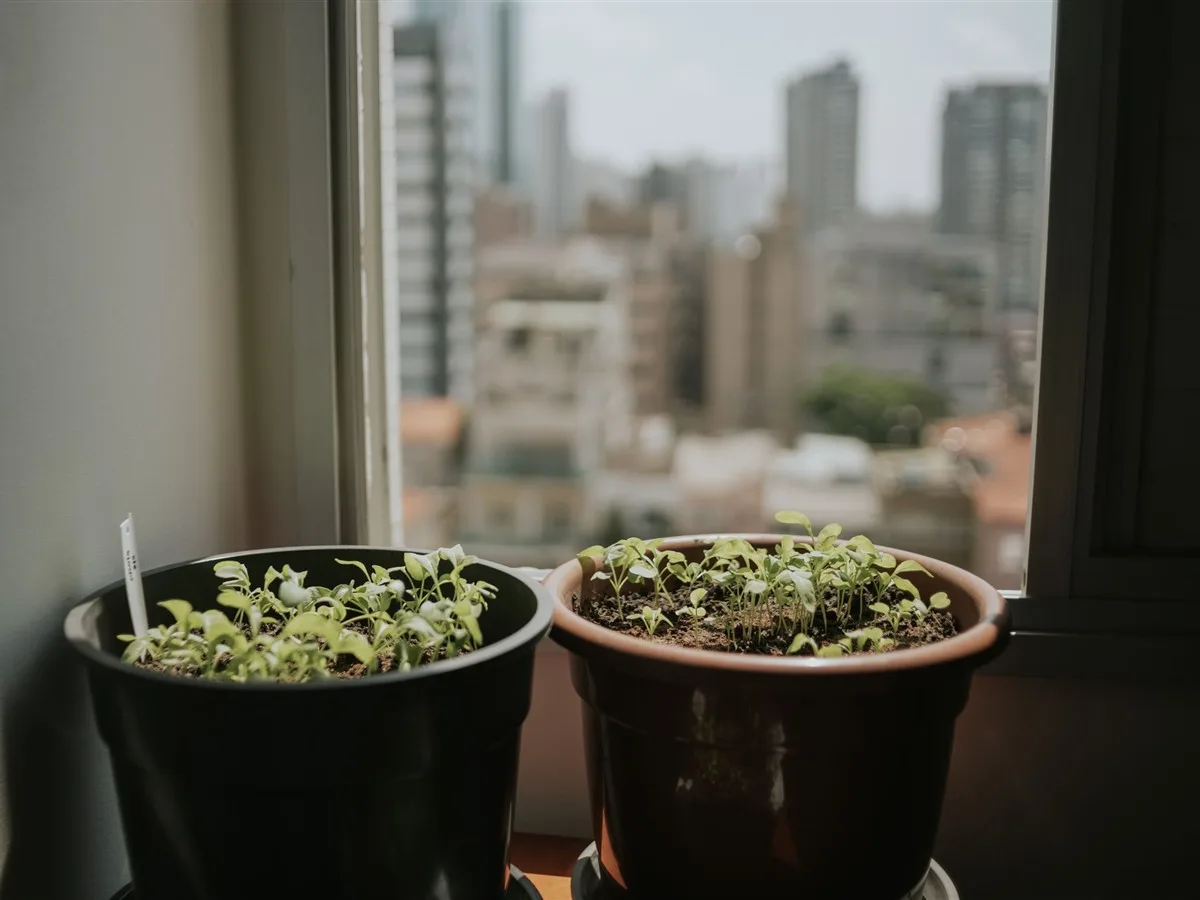
With three or four containers, you can always have something sprouting. A simple routine:
- A permanent green onion jar: every time you buy a bunch, save the bases and add them to the jar.
- A shallow dish for bases: romaine, celery or bok choy, one at a time.
- A glass of cuttings: basil or mint rooting to become new plants.
- A pot of soil: where plants go once they have roots.
If you want to harvest all the time without replanting, the next step is herbs that live for years in the same pot. See which ones in perennial herbs. And to plan the whole garden, check out the complete kitchen herb garden guide.
Common mistakes when regrowing scraps
- Covering the whole base with water, which makes it rot.
- Forgetting to change the water for a whole week.
- Keeping it far from the window, with no light for the leaves.
- Expecting a new carrot from a carrot top.
- Cutting green onions too low, without leaving an inch above the white part.
- Keeping it in water forever instead of moving it to soil.
- Green onions, leeks, romaine, celery and bok choy regrow in a shallow dish with about half an inch of water.
- Ginger, potatoes and garlic go straight into soil.
- Sweet potatoes grow slips in water, which become new plants.
- Carrot and beet tops only grow greens, not a new root.
- Change the water every two or three days and toss anything mushy.
- In soil, almost everything produces more and for longer than in water.
Frequently asked questions about regrowing vegetables from scraps
Which vegetables can you regrow in water?
Green onions, leeks, romaine lettuce, celery, bok choy and lemongrass. Basil and mint cuttings also root in water, and sweet potatoes grow slips.
How long do green onions take to regrow in water?
New shoots usually appear within a week or two. The bulbs produce for a few months in water, and much longer if planted in soil.
How often should I change the water?
Every two or three days, or sooner if it turns cloudy. Stagnant water gets slimy and rots the base.
Will regrown lettuce become a full head?
Rarely as big as the one you bought. It grows new leaves from the center, enough for a few salads. It produces more in soil than in water.
Can you regrow a carrot from the top?
Not a new carrot. The top only grows greens, which you can use in small amounts in pesto or sauces.
Why won’t my ginger sprout?
It can take one to two months. It may also have been treated to prevent sprouting. Choose a firm piece with visible buds, ideally organic.
What is the easiest scrap to start with?
Green onions. All you need is the white part with roots in a glass with a little water, near a window.
Are regrown vegetables safe to eat?
Yes, as long as you change the water and the base isn’t mushy or smelly. Wash the leaves before using them, as you would with any produce.