How to Grow Oregano in a Pot: Indoor and Outdoor Care Guide
Oregano is the herb behind pizza, tomato sauce and roasted meats. The good news is that it’s also one of the easiest and toughest herbs to keep at home. In this guide, you’ll learn how to grow oregano in a pot, from planting to harvest, and how to keep it full and fragrant for years.
Let’s look at what oregano needs, three ways to plant it, how to water, prune, harvest and dry it, and what to do when it turns weak, leggy or yellow.
What does oregano need to grow well in a pot?
Oregano comes from the dry hills of the Mediterranean, where the sun is strong and the soil is poor and rocky. At home, it wants something similar: lots of light, soil that dries quickly and little water.
- Light: 6 or more hours of direct sun a day.
- Soil: light, gritty and very well drained.
- Water: little. Let the soil dry out between waterings.
- Fertilizer: very little. Rich soil makes the leaves bland.
- Pot: with drainage holes, ideally terracotta.
NC State Extension notes that oregano does best in sandy soil with good drainage and full sun, and tolerates heat and drought. In other words, it forgives neglect, but not soggy soil.
Oregano is a perennial. With good care, the same plant keeps giving you leaves for three years or more, unlike cilantro, which you have to resow every season.
What types of oregano are best for pots?
There are many kinds of oregano, and the flavor varies a lot. When you buy a plant, crush a leaf and smell it: the stronger the scent, the better it will be in the kitchen.
| Type | What it’s like | Best use |
|---|---|---|
| Greek oregano | Small, fuzzy leaves, white flowers and a strong aroma | Pizza, sauces, meats and infused oils |
| Common oregano | Larger leaves, pink or purple flowers and a milder flavor | General use and ornamental planters |
| Golden oregano | Yellow-green leaves and a low, spreading habit | Edges of planters, with a light flavor |
| Sweet marjoram | A close cousin with soft leaves and a sweeter scent | Meats, eggs, soups and stuffings |
University of Illinois Extension calls Greek oregano the true oregano, with excellent flavor. For cooking, it’s the best type to start with.
Golden and variegated types are beautiful, but they can scorch in hot afternoon sun. Give them a little shade during the hottest hours.
What size pot does oregano need?
Oregano spreads sideways over time, sending up new stems from the base. That’s why it prefers a wide pot over a deep, narrow one.
- Size: 8 to 10 inches deep and at least 8 inches wide for one plant. For two or three plants, use a window box 16 to 24 inches long.
- Material: unglazed terracotta is ideal, because it helps the soil dry faster.
- Drainage holes: a must. Without them, water collects at the bottom and the roots rot.
Plastic pots work too, as long as they have good holes. Just water a bit less, because plastic holds more moisture.
What is the best soil for oregano?
Oregano wants the same kind of soil as rosemary and thyme: lean and very well drained. A simple mix that works well:
- 2 parts quality potting mix;
- 1 part coarse sand;
- 1 part perlite or fine gravel.
A cactus and succulent mix blended half and half with regular potting mix is also a good shortcut. Avoid garden soil in pots. It packs down, holds too much water and leaves the roots without air.
Skip the layer of gravel at the bottom of the pot. A well-draining mix all the way down does more for the roots than a drainage layer.
How to grow oregano in a pot: 3 ways
1. From a nursery plant (the easiest)
A nursery plant is the fastest way to start. It also has a bonus: you can smell the plant before you buy it and pick the one with the strongest aroma.
- Fill the pot with your well-draining mix.
- Dig a hole the size of the root ball.
- Set the plant at the same depth it was growing, without burying the stem.
- Fill in around it and press gently.
- Water well once, then wait for the soil to dry before watering again.
For the first few days, keep the pot in bright light but out of strong afternoon sun. After a week, move it to the sunniest spot you have.
2. From a cutting
If a friend has a particularly tasty oregano plant, ask for a cutting. The new plant will have exactly the same flavor as the parent.
- Cut a young green stem about 4 inches long.
- Strip the leaves from the bottom half.
- Push the bare part into moist, light potting mix, or set it in a glass of water.
- Keep it in bright, indirect light, with the soil lightly moist.
- When new shoots appear, move it to its final pot.
Roots usually form in two to four weeks. If you root it in water, change the water every two or three days.
3. From seed (the slowest)
Oregano seeds are tiny and need light to germinate. That’s why you shouldn’t bury them.
- Scatter the seeds on top of moist potting mix.
- Press them in gently with your hand, without covering them.
- Mist with water and keep the surface moist until they sprout.
- When the seedlings are 2 inches tall, keep only the strongest, about 8 inches apart.
One thing to know: according to the University of Illinois, seed-grown oregano often doesn’t come true and may have less flavor. That’s why the extension recommends taking cuttings from plants with great flavor instead.
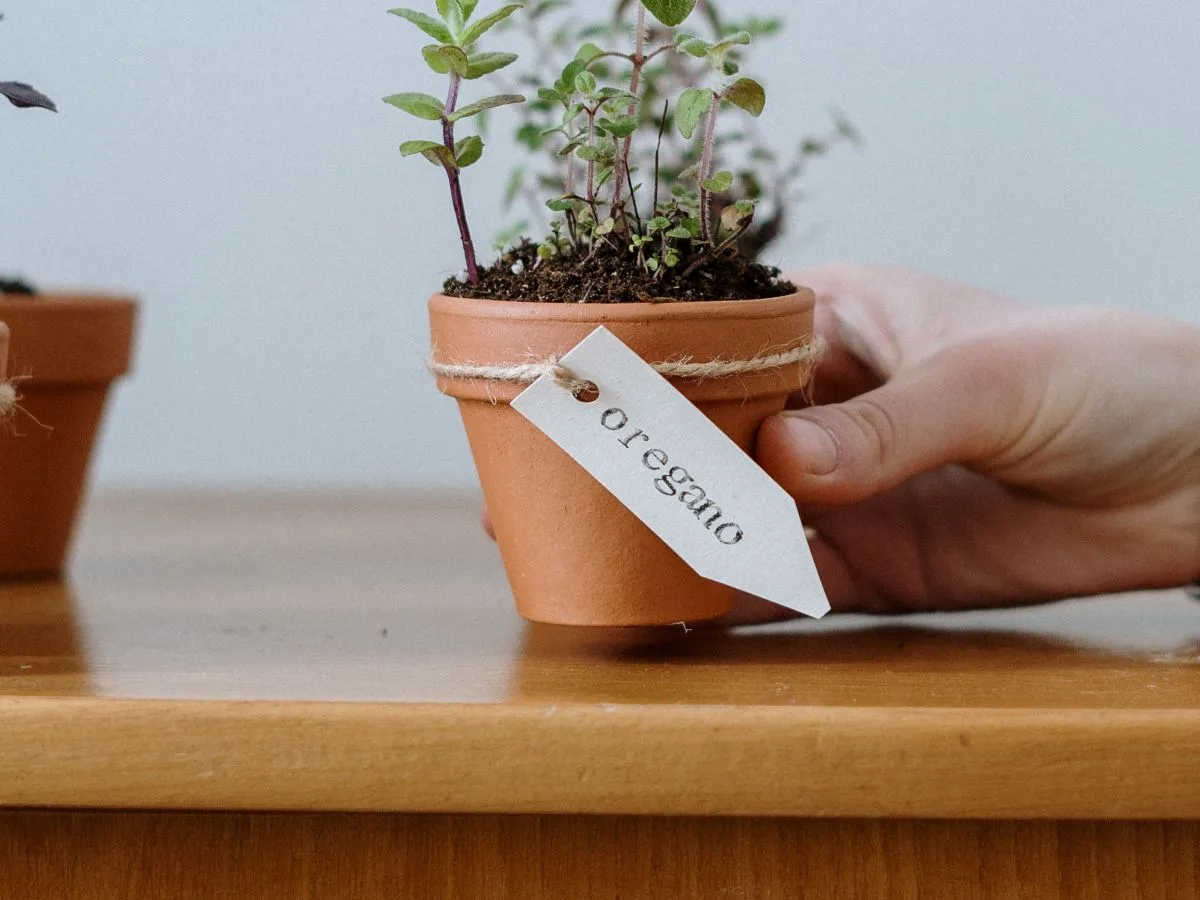
Can you grow oregano indoors?
Yes, but light is the challenge. Indoors, place it in your sunniest window, ideally facing south or west. An east-facing window usually isn’t enough on its own.
With too little light, oregano grows long, floppy stems with widely spaced leaves and almost no scent. If that happens, see how to fix it in leggy herbs. A small LED grow light, on for 12 to 14 hours a day, solves the problem in darker homes.
If you’re setting up herbs in the kitchen, our complete kitchen herb garden guide helps you find the best spot.
How often should you water oregano in a pot?
Oregano handles drought well, but it suffers badly from too much water. The most common mistake is watering it every day, as if it were basil.
- Do the finger test. Push your finger about 1 inch into the soil. If it’s dry, water. If it’s moist, wait.
- Water deeply but infrequently. Water until it drains from the holes, then wait for the soil to dry again.
- Empty the saucer about 15 minutes after watering.
- Water the soil, not the leaves, to prevent fungal problems.
In practice, that’s usually every two to three days in summer and about once a week in winter. But the soil decides, not the calendar.
Yellow, soft leaves with wet soil are the classic sign of too much water. See what to do in our guide to overwatered herbs.
How to harvest and prune oregano
Frequent harvesting is the best thing you can do for oregano. Every cut triggers new shoots, and the plant stays low, round and full of leaves.
- Start harvesting when the plant is about 4 to 6 inches tall.
- Cut stems from the tips, just above a pair of leaves.
- Leave 4 to 6 pairs of leaves on each stem so it branches out.
- Never remove more than a third of the plant at once.
- Use clean scissors and harvest in the morning, when the aroma is strongest.
The University of Illinois warns that letting the plant flower will reduce or completely stop growth. That’s why the best time for a big harvest is just before it blooms.
UF/IFAS Extension says the same thing in another way: for the best flavor, harvest the leaves just as the flower buds form.
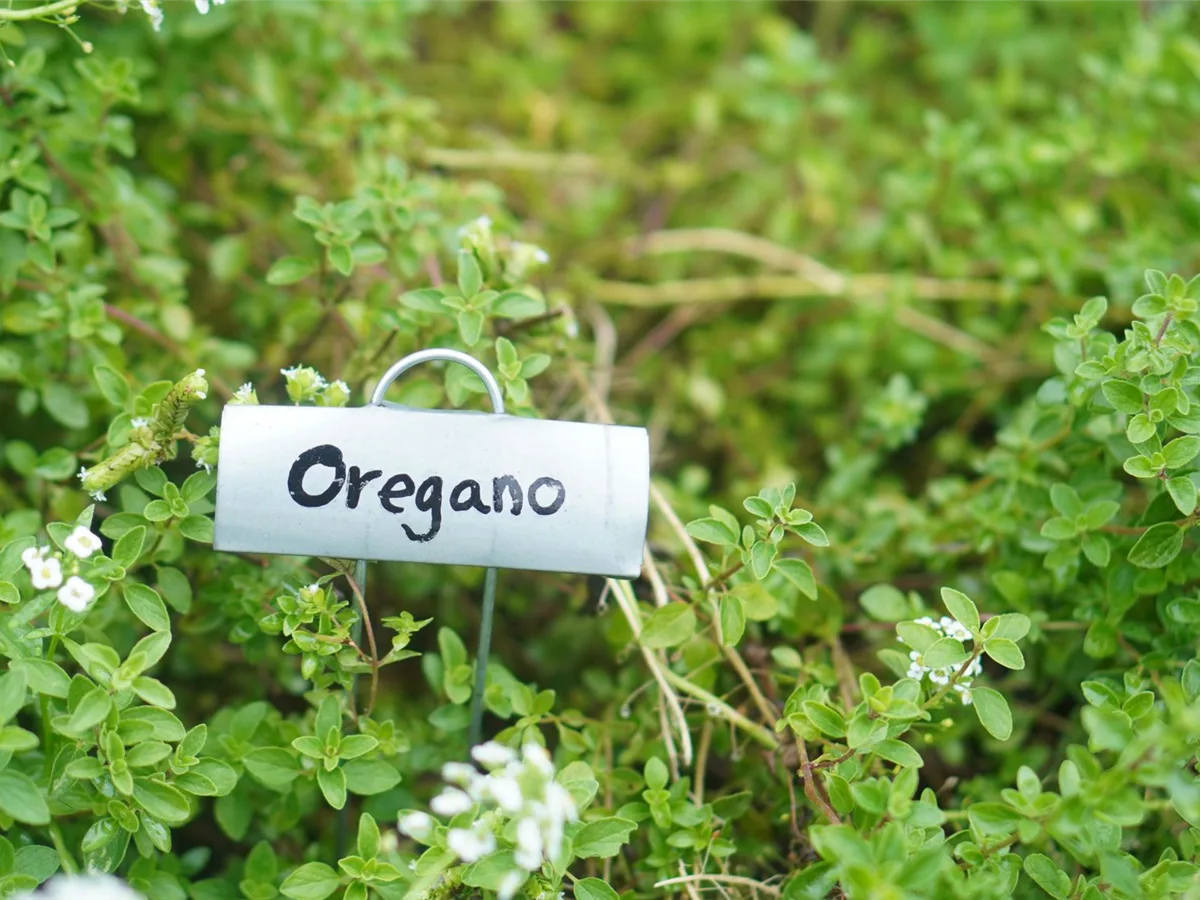
What if my oregano flowers?
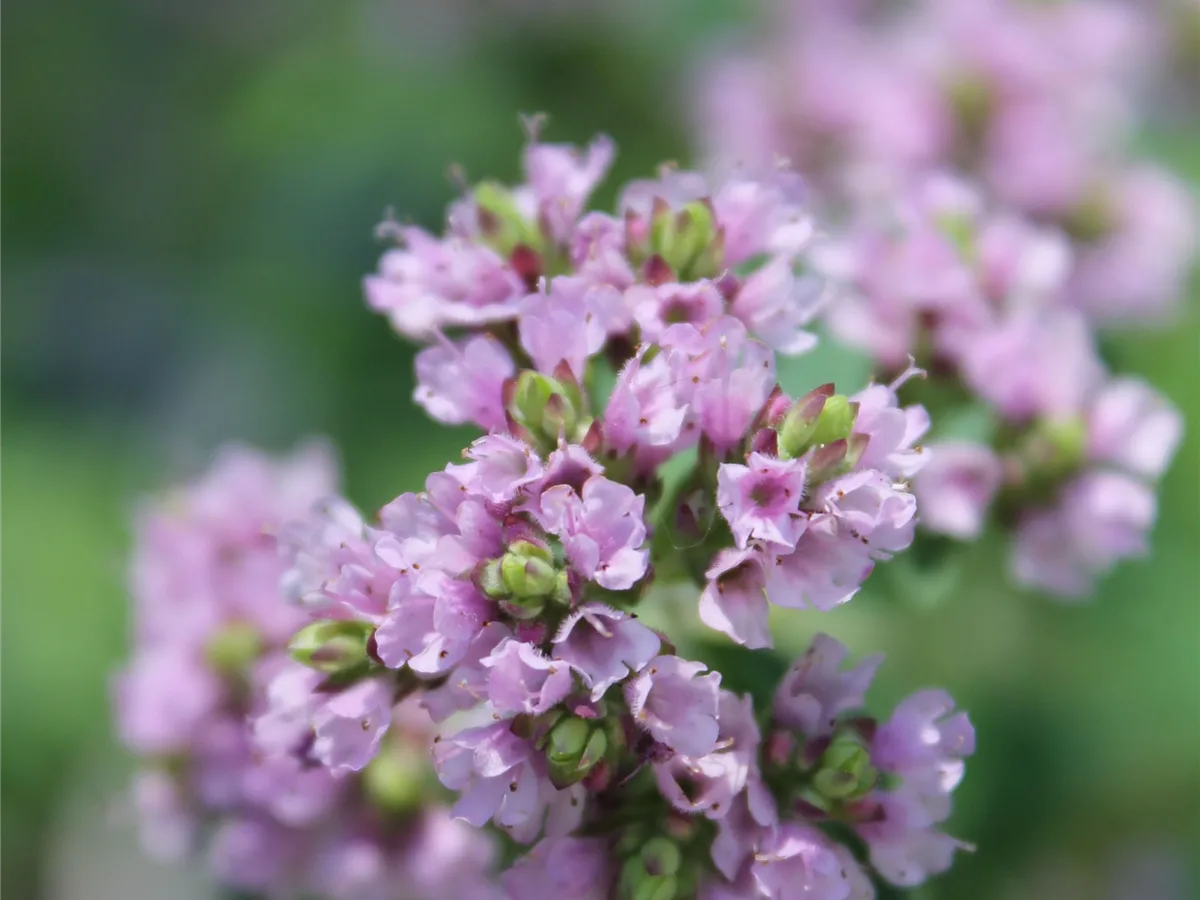
That’s fine. The flowers are pretty, edible and loved by bees. But after blooming, the plant tends to get woodier and produce fewer new leaves.
Once the flowers fade, cut the flowering stems back to about 2 inches above the soil, always leaving a few leaves on each stem. Within a few weeks, the plant sends up fresh shoots from the base.
How to dry oregano
Oregano is one of the few herbs that tastes even better dried. That’s why most recipes call for dried oregano rather than fresh.
- Cut the stems in the morning, after the dew has dried.
- Rinse only if they’re dirty, and pat them completely dry.
- Tie them into small bundles with string.
- Hang them upside down in a cool, dark, airy place.
- After one to two weeks, when the leaves crumble easily, strip them from the stems.
- Store them in a sealed glass jar away from light.
Fresh oregano has a milder flavor and works well in salads and cold sauces. For more ways to store your harvest, see how to dry and freeze herbs.
How to fertilize oregano
Oregano needs very little fertilizer. Rich soil makes it grow fast, with big, soft leaves and less of the essential oil that gives it its aroma.
A light top-dressing of worm castings or compost in spring, and again in late summer, is plenty. If you prefer liquid fertilizer, use it at half strength once a month during the growing season, and not at all in winter.
Oregano in winter
Greek and common oregano are fairly cold-hardy in the ground, but roots in a pot are more exposed to freezing. Where winters are harsh, bring the pot indoors to a sunny window before the first hard frost, or move it to a sheltered spot against the house.
Indoors in winter, oregano grows slowly and may drop some leaves. That’s normal. Water even less, since the soil takes longer to dry. For more tips, see how to grow herbs in winter.
In hot, humid summers, oregano does fine as long as drainage is good. What hurts it is humidity with poor airflow, so give the pot some space and keep it out of constant rain.
Common oregano problems in pots
| What you see | Likely cause | What to do |
|---|---|---|
| Yellow, soft leaves with wet soil | Too much water | Water less often and check the drainage holes |
| Wilted stems and a dark base | Root rot | Stop watering and repot if the soil smells bad |
| Long, thin stems with few leaves | Not enough light | Move to the sunniest spot and trim the tips |
| Weak aroma | Shade, too much fertilizer or a seed-grown plant | More sun, less fertilizer and plants from cuttings |
| Woody plant, bare in the middle | Lack of pruning or an old plant | Prune often and renew with cuttings |
| Fine webbing and pale speckles on leaves | Spider mites, common in dry air | Spray with water and raise humidity |
| Green or black bugs on new shoots | Aphids | Blast with water or use insecticidal soap |
To understand yellowing, see herb leaves turning yellow. For bugs, our guide to herb plant pests shows how to treat them without harsh chemicals. And if the tips are drying out, check the causes of herb leaves turning brown.
Can oregano be planted with other herbs?
Yes, and it pairs beautifully with herbs that also love strong sun and dry soil: thyme, rosemary, sage and marjoram. Together, they make a window box that smells like a Mediterranean kitchen.
Avoid pairing oregano with mint, parsley and cilantro, which want moister soil. With the same watering, one side always suffers. See the full chart in herbs that grow well together.
If you want to build the Mediterranean trio, also see how to grow rosemary in a pot. The care is almost the same as for oregano.
Common mistakes when growing oregano in a pot
- Watering every day, as if it were basil.
- Using a pot without holes or leaving water in the saucer.
- Planting in heavy soil or garden soil.
- Keeping it in low light, like the middle of the kitchen.
- Overfertilizing, which dulls the flavor.
- Harvesting too little and letting it flower with no pruning.
- Buying a plant without smelling it and ending up with a bland variety.
- Oregano needs 6 or more hours of direct sun a day.
- Use a wide pot with drainage holes and a mix with coarse sand or perlite.
- Water only when the soil is dry about 1 inch down.
- Start with a nursery plant or a cutting. Seed-grown plants may have less flavor.
- Harvest from the tips often, and do the big harvest just before it flowers.
- Dried oregano tastes even stronger. Store it in a glass jar away from light.
Frequently asked questions about growing oregano in a pot
Does oregano need full sun?
Yes. Oregano needs 6 or more hours of direct sun a day. Only golden and variegated types prefer a little shade during the hottest hours.
How often should I water oregano in a pot?
Only when the soil is dry about 1 inch down. In summer, that’s usually every two to three days. In winter, about once a week or less.
What size pot does oregano need?
About 8 to 10 inches deep and at least 8 inches wide for one plant. It spreads sideways, so it prefers a wide pot. Drainage holes are a must.
Can you grow oregano from a cutting?
Yes, and it’s the best way. Cut a 4-inch green stem, strip the lower leaves and plant it in moist mix or set it in water. Roots form in two to four weeks.
How long does oregano take to grow?
From a nursery plant, you can harvest within a few weeks. From seed, it takes about two to three months for the plant to reach 6 inches and handle its first cuts.
Why does my oregano have no flavor?
The most common reasons are low light, too much fertilizer or a bland seed-grown plant. Give it more sun, cut back on fertilizer and, if needed, replace it with a Greek oregano plant.
Is fresh oregano stronger than dried?
No. Dried oregano has a more concentrated flavor. Fresh is milder and great in salads and cold sauces. In recipes, use about three times as much fresh as dried.
How long does an oregano plant live?
In a pot, about three to four years with good care. After that, it gets woody and produces less. Take cuttings from green stems to start new plants.