Poinsettia Care: How to Keep It Alive and Make It Rebloom
Poinsettias are the classic Christmas plant: bright red “stars” on tables, porches and store shelves all December. Yet many people bring one home, watch the leaves drop within a few weeks and assume it was doomed from the start.
It doesn’t have to go that way. In this guide, you’ll learn poinsettia care step by step: light, watering, temperature, what to do after the holidays and how to make your plant turn red again next year.
Let’s go step by step: first, what this plant really is. Then daily care, why leaves fall, what to do after the holidays and the exact routine to get the red color back.
What is a poinsettia?
The poinsettia (Euphorbia pulcherrima) is also called Christmas star or painted leaf. North Carolina State University explains that the plant is native to Mexico and Guatemala and can reach up to 10 feet tall in the wild. Potted plants rarely grow past 2 to 3 feet.
The name comes from Joel Roberts Poinsett. The University of Florida notes that he brought the plant to the United States from Mexico around 1828. Today it’s one of the best-selling potted flowering plants in the country.
The red part isn’t a flower
Here’s the big surprise: the color doesn’t come from the flowers. The University of Florida explains that the colorful parts are bracts, which are modified leaves, not petals. The true flowers are the tiny yellow buds in the center of each “star.”
Besides red, you’ll find white, pink, cream, salmon and marbled poinsettias. Care is the same for every color.
What does a poinsettia need?
A potted poinsettia likes steady conditions: lots of bright light, mild temperatures and soil that dries slightly between waterings. Here’s the summary:
| Need | How much | Practical tip |
|---|---|---|
| Light | 6+ hours of bright, indirect light | A south, east or west window, with a sheer curtain if the sun is harsh |
| Temperature | 60–70 °F by day, mid-50s °F at night | Away from drafts, heat vents, fireplaces and cold glass |
| Water | When the soil surface feels dry | Water until it drains, then empty the saucer |
| Pot | With drainage holes | Poke holes in the decorative foil or remove it |
| Fertilizer | None while in color | Start again when new growth appears |
Light
Clemson University’s Home & Garden Information Center recommends a spot that receives at least 6 hours of bright, indirect light each day. The University of Maryland suggests bright natural light from a south, east or west window, but out of direct sun.
In a dim corner, the plant drops its lower leaves and the bracts fade sooner. If your home is dark in winter, choose the brightest window you have, even if it means moving the plant off the dining table between meals.
Temperature
The University of Maryland says poinsettias prefer daytime room temperatures between 60 and 70 °F and the mid-fifties overnight. Keep them away from drafts, heat vents, fireplaces and cold windows.
Cold is the classic winter problem. Clemson warns that leaves can drop when temperatures fall below 50 °F. Don’t let the leaves touch frosty glass, and protect the plant on the trip home from the store: even a few minutes in freezing air can damage it.
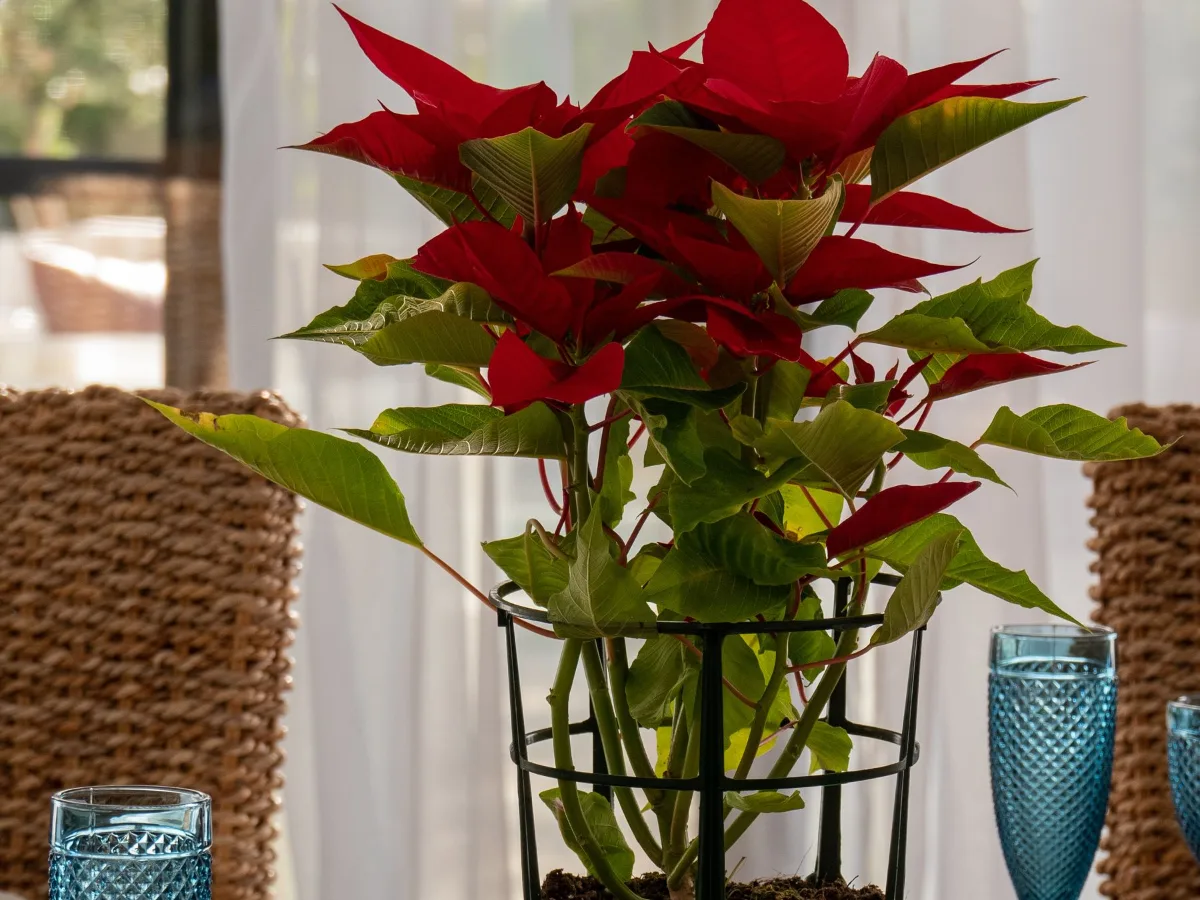
How often should you water a poinsettia?
Watering is where most poinsettias go wrong. More of them die from too much water than from too little. The University of Maryland advises to water only when the soil feels dry to the touch, then water thoroughly and let the excess drain.
- Finger test: touch the soil. If it’s dry, water. If it’s still damp, wait.
- Water until it drains: water should run out of the holes at the bottom.
- Deal with the foil: decorative foil or plastic sleeves trap water. Maryland notes they need drainage holes, because too much water can drown the roots.
- Empty the saucer: never leave the pot sitting in water.
- Dry indoor air: with the heat on, small pots can dry out in two or three days. Check every day or two.
If the plant wilts even though the soil is wet, the roots may be rotting. The signs are the same as in overwatered herbs: see overwatered herbs to learn how to rescue a soggy plant.
Why are my poinsettia leaves falling off?
Leaf drop is the most common complaint, especially in the first weeks at home. The plant leaves a controlled greenhouse and lands in a very different room. Use this table to find the cause:
| Sign | Likely cause | What to do |
|---|---|---|
| Green leaves dropping suddenly | Cold drafts or a sudden move | Keep it in one bright, sheltered spot |
| Yellow lower leaves, wet soil | Overwatering | Let the soil dry and remove the foil that holds water |
| Wilting with dry soil | Underwatering | Water until it drains; it usually recovers within hours |
| Faded bracts, dropping leaves | Too little light | Move it next to your brightest window |
| Brown, crispy edges | Heat vent, fireplace or very dry air | Move it away from heat sources |
| Tiny white insects flying up | Whiteflies | Rinse the undersides of the leaves and check the pest guide |
To identify insects and treat them without harsh chemicals, see common plant pests, which works for flowering plants too. If tiny black flies hover over the soil, the soil is staying too wet: see fungus gnats.
For leaf color problems in general, the guide to yellow leaves helps you tell low light, overwatering and hunger apart.
Are poinsettias poisonous?
Much less than their reputation suggests. The University of Florida cites a review of 22,793 reported exposures with no fatalities, and no signs of adverse effects in 92.4% of them.
That doesn’t make them a snack. Clemson explains that eating the leaves can cause stomachache, diarrhea or vomiting, and that the milky sap can irritate skin and eyes. NC State adds that people with latex allergies may react to the sap.
- Kids and pets: keep the pot out of reach of anyone who likes to nibble leaves.
- When pruning: wear gloves and don’t rub your eyes.
- If someone eats it: rinse the mouth and call your doctor, poison control or vet if symptoms appear.
What to do with a poinsettia after Christmas
Many people toss the plant in January. You don’t have to. With some care, a poinsettia can live for years. After the holidays, the bracts slowly lose color. That’s normal.
- January to March: keep it in bright light and water when the soil is dry. The bracts will fade or turn greenish.
- Prune in spring: Clemson recommends cutting back around March or April, to about 8 inches in height. Maryland suggests early May, leaving 3 to 4 inches above the soil. Wear gloves because of the sap.
- Repot: in early June, move it to a pot 2 to 4 inches larger, with fresh potting mix.
- Feed: once it’s growing, fertilize every 2 to 3 weeks through fall. A balanced fertilizer or a light dose of homemade fertilizer works well.
- Summer outdoors: once nights stay above 50 °F, it can go outside in partial shade. Bring it back in before nights drop below 55 to 60 °F.
- Pinch: pinch the tips of new shoots to keep it bushy. Clemson’s rule: don’t pinch back after September 1, or the bracts won’t form in time.
Can a poinsettia grow outside?
Only in mild climates. NC State says poinsettias are winter hardy in USDA zones 9 to 11. In those areas, they can become large shrubs in the garden. Everywhere else, they’re houseplants in winter and patio plants in summer.
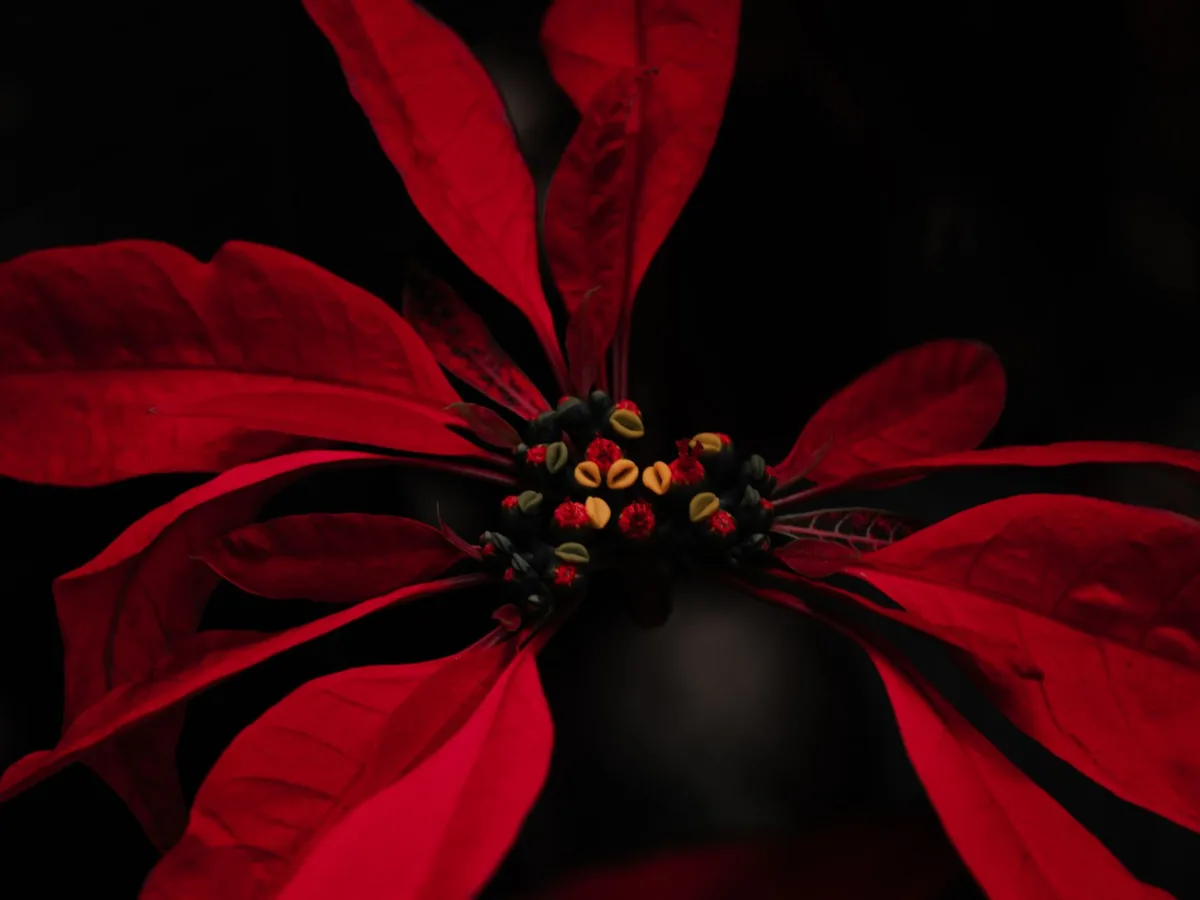
How to make a poinsettia turn red again
The secret is darkness. Poinsettias only form colored bracts when nights are long. The University of Florida explains that dark periods of 11 hours and 45 minutes start flowering in most varieties, and flowering is fastest at 14 to 14.5 hours.
Indoors, lamps and TVs keep the plant from ever getting a truly long night. That’s why a poinsettia kept in the living room rarely reblooms on its own.
Step-by-step rebloom routine
- Start in early October. Clemson says to begin the first week of October and continue for 8 to 10 weeks.
- Give 14 hours of total darkness every night. Maryland recommends no more than 10 hours of daylight and at least 14 hours of darkness, from about 5 PM to 7 AM, through Thanksgiving.
- Use a box or a closet. Cover the plant with a thick cardboard box or put it in a closet that nobody opens at night.
- No light leaks. A lamp switched on for a minute or a streetlight through the window can be enough to delay color.
- Bright light by day. Bring it out each morning for 6 to 8 hours of bright light.
- Keep watering when the soil is dry, and cut back on fertilizer.
- When the bracts show color, stop the routine and display the plant in a bright room.
It takes discipline, and a home-grown plant is rarely as full as a greenhouse one. But watching the same plant turn red again is a real reward. If it’s too late this year, set a calendar reminder for October 1.
How to pick a healthy poinsettia at the store
- Check the center: choose plants whose tiny yellow flowers are still tight or just opening. They last longer.
- Leaves all the way down: a bare lower stem means the plant has already been stressed.
- Not soggy, not bone dry: both extremes stress the roots.
- No insects: shake it gently. If white flies rise, leave it.
- Avoid plants by the door: displays near automatic doors take cold blasts all day.
- Wrap it for the trip: a paper sleeve or bag protects it from cold wind on the way to the car.
Decorating with poinsettias
Poinsettias look great alone, but they also pair well with other holiday plants. A pot next to a rosemary plant looks like a tiny Christmas scene and makes the room smell like herbs.
Another holiday favorite with similar needs is the Christmas cactus. See Christmas cactus care to keep it blooming year after year.
For big, trumpet-shaped blooms on the holiday table, an amaryllis is another easy choice. See amaryllis care to plant it and get it to rebloom. And if you want to give a plant as a present, check these 20 gifts for gardeners.
To pair your poinsettia with other plants on the holiday table, see these Christmas centerpiece ideas with live plants.
If you also grow herbs indoors, the light and watering rules are similar. See the kitchen herb garden guide and the tips for growing herbs in winter.
Common poinsettia mistakes
- Watering on a schedule: watering every day without checking the soil is the top cause of root rot.
- Leaving the foil on: the roots end up sitting in a puddle.
- Placing it by a heat vent or a drafty door: both make leaves drop.
- Letting leaves touch cold glass: cold damage shows up within days.
- Keeping it in a dark corner: bracts fade and leaves fall.
- Fertilizing while in color: it doesn’t help and can burn the roots.
- Turning on a light during the dark treatment: even a little light can delay the color.
- The red parts are bracts (modified leaves). The flowers are the tiny yellow buds in the center.
- Give it 6+ hours of bright, indirect light a day.
- Keep it at 60–70 °F, away from drafts, heat vents and cold windows.
- Water only when the surface is dry and never leave water in the saucer.
- Don’t fertilize while it’s in color.
- Poinsettias are only mildly toxic, but the sap irritates skin and eyes.
- After the holidays, prune in spring, repot in June and feed while it grows.
- To rebloom, give it 14 hours of total darkness every night from early October.
With good light, careful watering and a little patience, your poinsettia can brighten many holidays, not just a few weeks in December.
Poinsettia care FAQ
Do poinsettias need sun?
They need bright light: about 6 hours of bright, indirect light a day. A south, east or west window works well, with a sheer curtain if the sun is harsh.
How often should I water my poinsettia?
Only when the soil surface feels dry to the touch. Then water until it drains and empty the saucer.
Why is my poinsettia dropping leaves?
The usual causes are cold drafts, overwatering, low light or a sudden change of place. Check the soil and keep the plant in one bright, sheltered spot.
Are poinsettias toxic to cats and dogs?
They’re only mildly toxic, but eating leaves can cause vomiting or diarrhea, and the sap irritates skin and eyes. Keep them out of reach.
How do I get my poinsettia to turn red again?
Give it 14 hours of total darkness every night for 8 to 10 weeks, starting in early October, and bright light during the day.
How long do poinsettias last?
The color usually lasts through the holidays and into winter. With proper care, the plant itself can live for years.
What temperature is too cold for a poinsettia?
Leaves can drop below 50 °F. Keep it at 60–70 °F by day and around the mid-50s at night, away from cold glass.
When should I prune my poinsettia?
In spring, after the color fades, cutting it back to about 8 inches. Pinch new tips through summer, but stop by September 1.