Growing Herbs From Seed: Complete Guide for Beginners
Want to learn how to grow herbs from seed and fill your home with pots for next to nothing? A seed packet costs less than a single nursery plant and can give you dozens of plants.
In this guide, you’ll see which herbs grow well from seed, which ones are better started another way, the step-by-step sowing process and how to care for seedlings until they go into their pots.
Let’s take it step by step: first, which herbs are worth starting from seed. Then the supplies, the step-by-step process, seedling care, transplanting and the most common mistakes.
Which herbs grow well from seed?
Almost any herb can grow from seed, but some are much easier than others. Short-lived herbs like basil and cilantro grow fast and are almost always started from seed. Woody herbs like rosemary are slow and do better from cuttings.
| Herb | From seed | Note |
|---|---|---|
| Basil | Easy | Sprouts in about a week if it’s warm |
| Cilantro | Easy | Best sown directly in its final pot |
| Parsley | Medium | Slow to sprout; soak seeds first |
| Chives | Medium | Slow at first, then very tough |
| Dill and arugula | Easy | Fast growers that can go straight into the pot |
| Thyme and sage | Medium | Fine seeds and slow growth |
| Oregano | Medium | Flavor can vary from plant to plant |
| Rosemary | Hard | Germinates very slowly; use cuttings instead |
| Mint | Not worth it | Spreads easily from stem or root cuttings |
University of Illinois Extension says thyme, rosemary, basil, sage, chives and tarragon are great choices to start indoors. The same article notes that herb seeds are often very fine and take a fair amount of time to germinate.
The same source warns about oregano: plants grown from seed may not be true to type, and the flavor will vary. That’s why experts recommend propagating strong-flavored herbs by division or cuttings. For those, see how to propagate herbs from cuttings.
On rosemary, University of Illinois Extension is blunt: seed germinates very slowly, and the plants may take years to become usable. If you can get a sprig from an existing plant, a cutting will root in a few weeks.
What you need to grow herbs from seed
You don’t need anything expensive. You probably have most of these at home already:
- Packaged seeds: check the date. Old seed sprouts poorly.
- Containers with holes: yogurt cups, egg cartons, paper cups or seed trays. Poke holes in the bottom.
- Fine, light mix: a seed-starting mix, or sifted potting mix with a little worm castings.
- Spray bottle: waters without washing seeds away.
- Clear plastic bag or dome: holds in moisture until the seeds sprout.
- Labels: popsicle sticks with the herb name and date. Herb seedlings look alike at first.
Avoid plain garden soil. It’s heavy, crusts over and can carry fungi that kill seedlings. If you compost, well-finished, sifted compost makes a nice addition: see how to use compost in pots.
Step by step: how to grow herbs from seed
- Moisten the mix first: dampen it until it feels like a wrung-out sponge, moist but not dripping. Fill the cups nearly to the rim.
- Sow several seeds per cup: University of Illinois Extension suggests planting at least five seeds per container, because not all of them will sprout.
- Get the depth right: the same source says to plant a seed two times its thickness under the soil. Very fine seeds, like thyme, go on the surface with a light sprinkle of mix.
- Press gently: firm the surface with your fingertips so the seeds make good contact with the mix.
- Mist with water: spray the surface instead of pouring.
- Cover: slip the cups into a clear plastic bag or under a dome to hold in warmth and moisture.
- Keep warm and bright: near a bright window, but out of direct sun on the plastic.
- Uncover as soon as they sprout: when the first seedlings appear, remove the cover and move them into the light.
Why remove the plastic so quickly? Penn State Extension warns that plastic covers may trap heat and kill seedlings, and that sunlight should never shine directly on plastic-covered containers. Once the seeds are up, the cover only gets in the way.
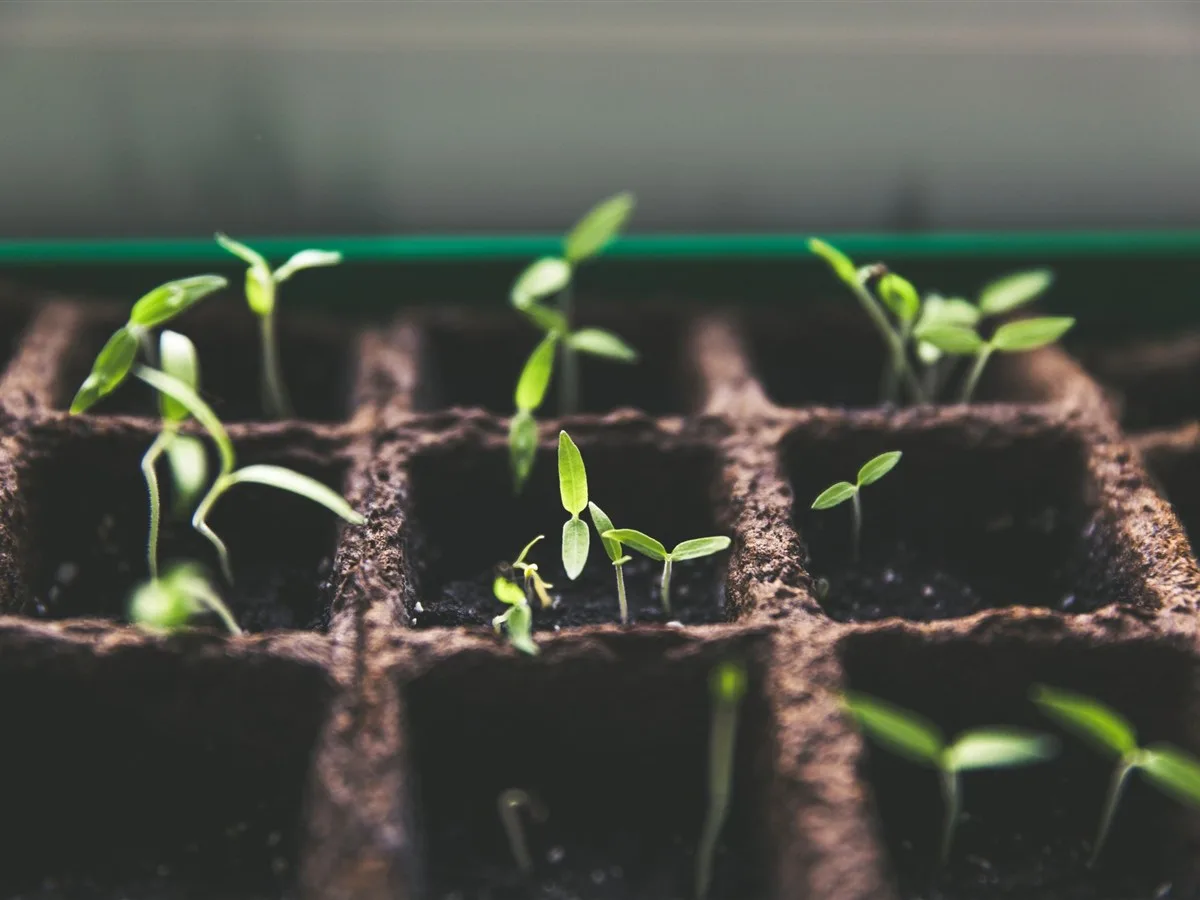
What temperature do herb seeds need to sprout?
Most herb seeds like warmth to germinate. University of Illinois Extension explains that basil seeds germinate and grow best when the media temperature is at least 70 degrees, and sprout in about 5 to 7 days.
In practice, that means a cool windowsill in early spring can slow everything down. Put the cups in the warmest spot in your home, such as the top of the refrigerator, or use an inexpensive seedling heat mat, and move them into the light as soon as they sprout.
Cilantro, parsley and dill handle cooler temperatures than basil, so they’re great choices for fall and early spring. For keeping herbs going in the cold months, see how to grow herbs in winter.
How long do herb seeds take to sprout?
It depends on the herb and the temperature. Here are rough timelines in warm conditions:
- Basil: 5 to 7 days.
- Arugula: a few days, usually under a week.
- Cilantro: 1 to 2 weeks.
- Chives: 1 to 2 weeks, with slow early growth.
- Parsley: 2 to 4 weeks. It’s the slowest of the common herbs.
- Thyme, oregano and sage: 1 to 3 weeks.
University of Illinois Extension says herb seeds generally germinate in 10 to 14 days. If a month goes by with nothing, the seed was probably old, the mix dried out or it was too cold. Start over with fresh seed.
The parsley trick
Parsley is famously slow. University of Illinois Extension recommends soaking the seeds overnight before planting, because parsley is slow to germinate. Soaking softens the seed coat and speeds things up. See the full guide on how to grow parsley in a pot.
How to care for seedlings after they sprout
The seedling stage is the most delicate. The three things that matter most are light, water and space.
1. Light: as much as possible
Seedlings without enough light grow tall, thin and floppy. University of Illinois Extension recommends about six hours of sunlight per day, from a south- or west-facing window.
If your home is dim, a simple LED grow light makes a huge difference. The same source says grow lights work better than natural sunlight for seedlings, as long as they’re on at least 10 hours a day and placed no more than 4 inches away. Turn window-grown cups every day so the seedlings don’t lean toward the glass.
2. Water: moist, never soggy
Utah State University Extension advises keeping the mix evenly moist but not waterlogged, and letting the soil dry out between waterings to reduce disease. Mist the surface or water from below: set the cup in a dish of water for a few minutes, then take it out.
Constantly wet soil invites fungus and the tiny flies that hover around pots. If they show up, see how to get rid of fungus gnats.
3. Space: keep only the strongest
When the seedlings have their first true leaves, it’s time to thin. The first little leaves are seed leaves; the true leaves come next and already look like the adult plant. University of Illinois Extension advises thinning to one plant per pot, keeping the strongest and most compact.
Snip the extras at soil level with small scissors instead of pulling them. Pulling can tear the roots of the one you’re keeping. Chives and cilantro are exceptions: you can leave a small clump of several plants together.
What is damping-off and how do you prevent it?
Damping-off is when a seedling looks fine one day and the next it has collapsed, with a thin, dark stem at the soil line. It’s caused by soil fungi. University of Illinois Extension describes damping-off as a common soil-borne fungal disease that ultimately kills young seedlings, and links it to overwatering.
- Use fresh, light seed-starting mix, not garden soil.
- Don’t overwater: let the surface dry slightly between waterings.
- Don’t crowd the seeds: Penn State Extension notes that sowing seeds at the right spacing helps reduce damping-off.
- Give them air: remove the plastic as soon as the seeds sprout.
If damping-off appears, remove the fallen seedlings, let the mix dry more between waterings and improve airflow. Seedlings that have already collapsed won’t recover. If a white fuzzy layer shows up on the surface, see white mold on potting soil.
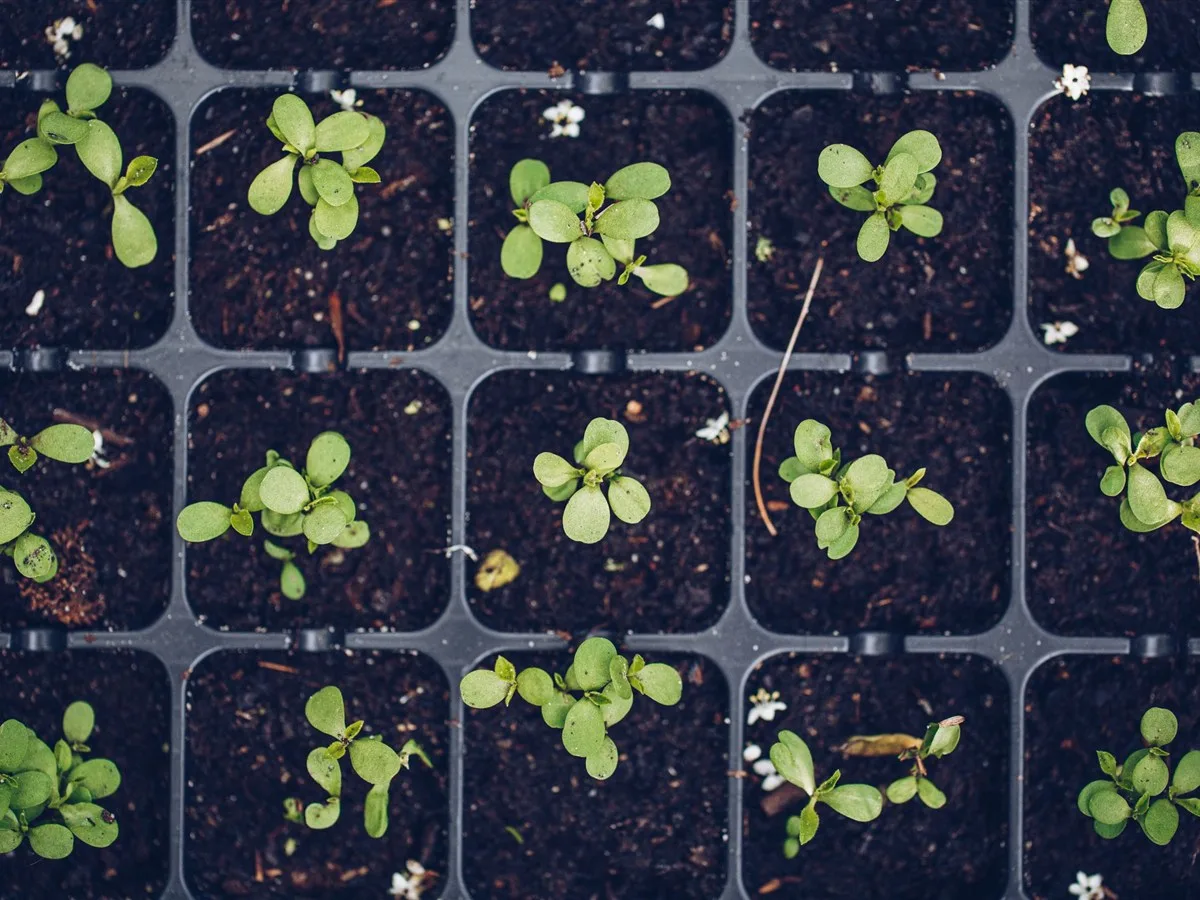
When should you move seedlings into their final pot?
A seedling is ready when it has four to six true leaves and the roots hold the soil together. For basil, University of Illinois Extension says it takes about 3 to 4 weeks to produce transplants. Chives are slower: the same university says 4 to 6 weeks.
- Water the seedling an hour before, so the root ball slides out in one piece.
- Prepare the final pot with drainage holes and loose potting mix with compost.
- Ease the seedling out, squeezing the cup from the outside, and hold it by a leaf, not the stem.
- Plant it at the same depth it was growing and firm the soil gently around it.
- Water well and keep it in bright light without harsh sun for two or three days before moving it into the sun.
If the plant is heading outdoors, ease it in gradually. Utah State University Extension suggests starting about two weeks before transplanting, with short periods outside in the shade and more sun each day. To decide which herbs can share a pot, see herbs that grow together.
Sowing straight into the final pot: when it’s worth it
Some herbs dislike being moved. Cilantro is the best-known example: its roots are sensitive, and transplanted seedlings may wilt or bolt early. University of Illinois Extension names cilantro, arugula and basil among the plants that do well when sown directly.
To sow directly, fill the final pot, scatter the seeds with some space between them and cover lightly. Then thin, keeping the strongest plants. See the details in how to grow cilantro in a pot.
A tip so you never run out: sow a little basil or cilantro every two to three weeks. University of Illinois Extension suggests sowing basil again every two weeks for a steady supply. That way, when one pot slows down, the next is ready.
Common mistakes when growing herbs from seed
- Planting too deep: tiny seeds buried deep can’t reach the surface.
- Letting the mix dry out before sprouting: a single dry spell can kill germinating seeds.
- Overwatering: leads to damping-off, mold and gnats.
- Forgetting the plastic: once seeds are up, the cover traps too much heat and moisture.
- Too little light: seedlings get tall, thin and flop over. See leggy herbs.
- Not thinning: crowded seedlings compete and all stay weak.
- Using old seed: germination rates drop a lot over time.
- Expecting rosemary from seed: it’s possible, but very slow. Use cuttings instead.
- Basil, cilantro, parsley, chives, dill and arugula are great from seed.
- Rosemary and mint are easier from cuttings.
- Plant seeds twice as deep as they are thick; very fine seeds go almost on the surface.
- Sow several seeds per cup and cover with plastic until they sprout.
- Most sprout in one to two weeks in a warm spot.
- After sprouting, give maximum light and keep the mix moist but not soggy.
- Keep only the strongest seedling and transplant at four to six true leaves.
- Cilantro does best sown directly in its final pot.
A seed packet is the cheapest way to build a whole herb garden. To choose pots and spots for each herb, see the kitchen herb garden guide.
Frequently asked questions about growing herbs from seed
What is the easiest herb to grow from seed?
Basil. It sprouts in about a week when it’s warm and grows fast. Cilantro and arugula are also very easy.
How deep should I plant herb seeds?
About twice as deep as the seed is thick. Very fine seeds, like thyme, go almost on the surface with a light sprinkle of mix on top.
How long do herb seeds take to germinate?
Most sprout in 1 to 2 weeks in warm conditions. Basil takes about 5 to 7 days; parsley can take up to 4 weeks.
Should I soak herb seeds before planting?
Usually not. Parsley is the best-known exception: soaking overnight softens the seed coat and speeds up germination.
Why are my herb seedlings tall and falling over?
It’s almost always too little light. Move them to your brightest window or use an LED grow light. If the stem turns thin and dark at the soil line, it’s damping-off.
Do herb seeds need sunlight to germinate?
Before sprouting, they need warmth and moisture more than direct sun. After sprouting, they need lots of light, or the seedlings will stretch.
When should I transplant herb seedlings?
When they have four to six true leaves and the roots hold the soil together. For basil, that’s about 3 to 4 weeks.
Can I plant herb seeds from the spice aisle?
Seeds sold as spices, like coriander, sometimes sprout, but they may be old or treated. Seed packets meant for planting give more reliable results.