Herbs That Grow in Low Light: 5 Best for Indoors
Live in an apartment where the windows barely get any sun, and your herbs always end up weak? You’re not the only one. The good news is that some herbs grow in low light much better than others. Here’s which ones they are, how much light your home really has and how to help them thrive.
Let’s look at what “low light” really means, the list of herbs from most to least tolerant, which window to choose, the signs of too little light and how to use a grow light without spending much.
What does “low light” mean for an herb?
To us, a bright room looks well lit. To a plant, it’s a different story. Just a few steps away from the window, light drops sharply, even if the room still looks bright to our eyes.
Iowa State University Extension explains that indoors, light is typically the most limiting factor for growing herbs. Most need around six to eight hours of direct light a day.
In practice, you can sort the spots in your home into three types:
- Direct sun: sunlight falls right on the plant. Ideal for almost every herb.
- Bright indirect light: close to the window, you see the sky, but the sun doesn’t hit the plant. Tolerant herbs do well here.
- Low light: far from the window, in a hallway or a windowless kitchen. No herb thrives here without a grow light.
The shadow test
An easy way to measure light: around midday, hold your hand about a foot above the spot where the pot would sit. If your hand casts a crisp shadow, the light is strong. A fuzzy shadow means medium light. If you can barely see a shadow, it’s low light.
Repeat the test at different times and count how many hours the sun actually reaches the spot. That number tells you which herbs to choose.
Chart: herbs and the light they need
| Herb | Minimum light | Tolerates low light? |
|---|---|---|
| Mint | 2 to 4 hrs of sun or a bright window | Yes, the most tolerant |
| Chives | 2 to 6 hrs of sun | Yes |
| Lemon balm | 2 to 6 hrs of sun | Yes |
| Parsley | 3 to 4 hrs of sun | Yes, grows more slowly |
| Cilantro | 3 to 4 hrs of sun | Yes, and bolts less in heat |
| Basil | 6 hrs of sun | Somewhat: gets leggy and less fragrant |
| Oregano and thyme | 6 hrs of sun | Barely: prefer a sunny window |
| Rosemary, sage and bay | 6 to 8 hrs of sun | No |
| Lemongrass | 6+ hrs of sun | No |
These numbers are a guide. A very bright window without direct sun can be as good as two hours of weak sun. What matters most is watching the plant.
The 5 best herbs for low light
Penn State Extension notes that most herbs need 6 hours of direct sun, but lemon balm, chives and cilantro can tolerate low light, with 2 to 6 hours. Combined with what other universities say, these are the five best picks for your least sunny window.
1. Mint
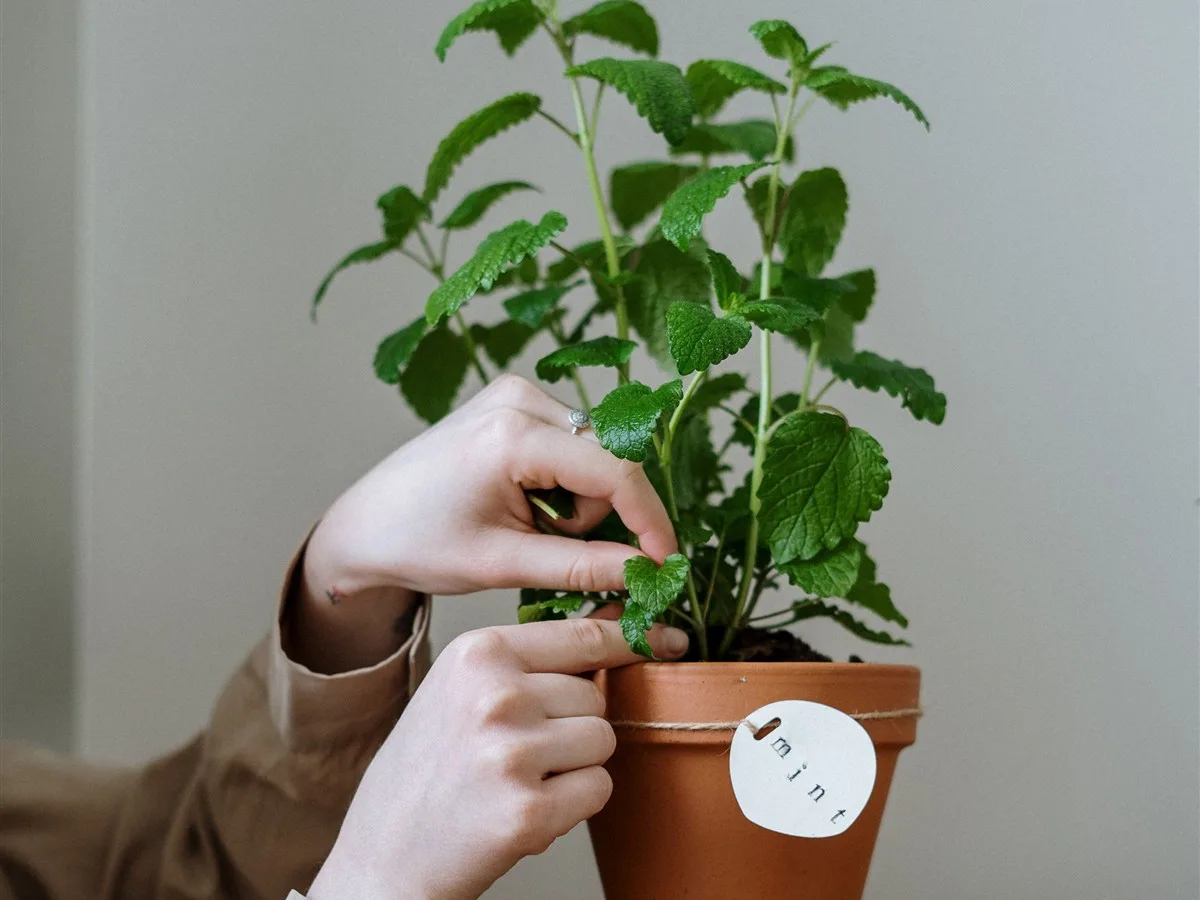
Mint is the low-light champion. University of Illinois Extension says that mints can tolerate less light and more water. It grows a bit looser in partial shade but stays fragrant and productive.
Always plant it on its own, because it spreads and takes over the pot. See the step-by-step in how to grow mint in a pot.
2. Chives
Chives handle a bright window with only a few hours of sun. With less light, the leaves get a little thinner, but they keep regrowing after every cut. Green onions behave much the same, and you can even start them from the roots of store-bought ones.
See all the care tips in how to grow green onions in a pot.
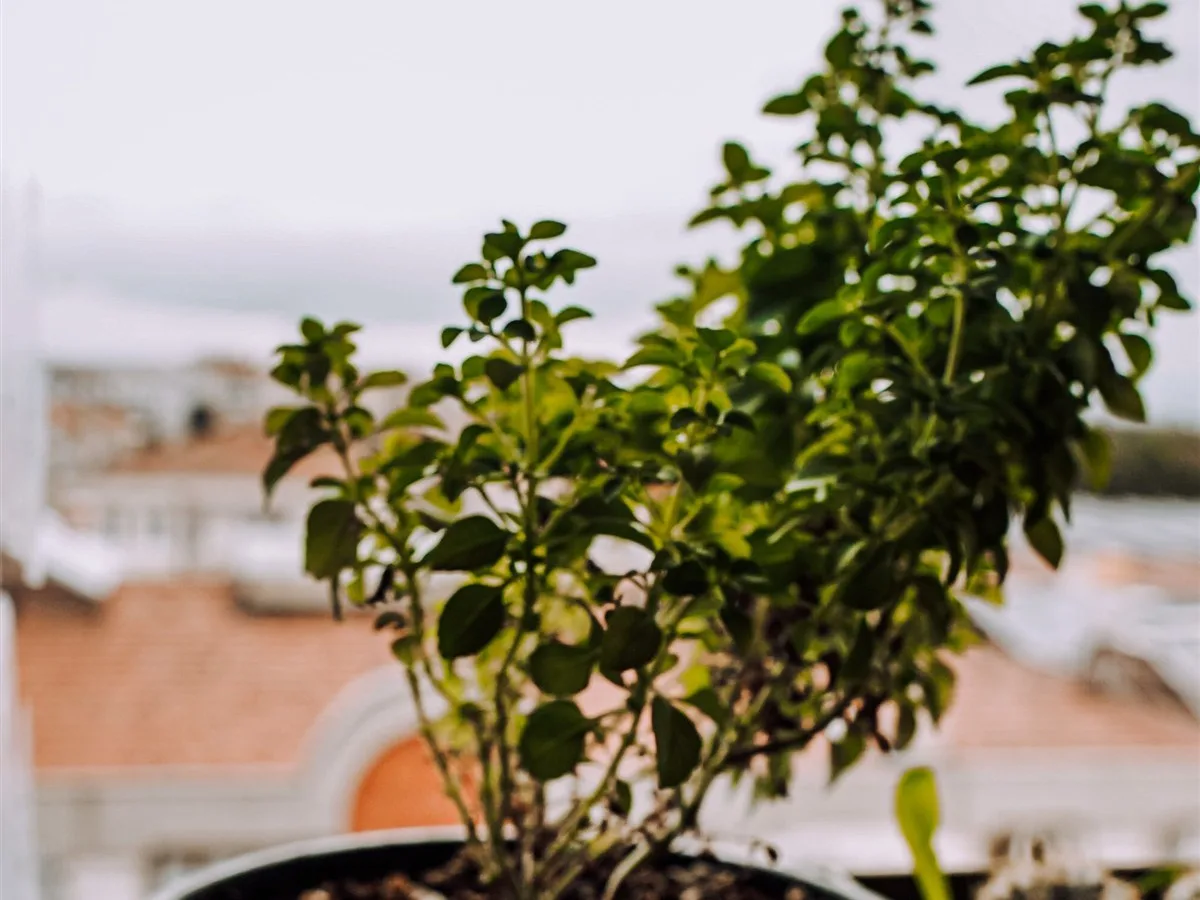
3. Parsley
Parsley grows more slowly in partial shade, but it copes well. It even appreciates being spared the harsh afternoon sun. Keep the soil lightly moist and always harvest the outer stems, letting the center keep growing.
Learn more in how to grow parsley in a pot.
4. Cilantro
Cilantro is an interesting case. In strong sun and heat, it bolts quickly and stops producing leaves. With a little less light and a cool spot, it takes longer to flower. That’s why a bright window with morning sun is often a great place for it.
The step-by-step is in how to grow cilantro in a pot.
5. Lemon balm
Lemon balm is a mint relative with broad, lemon-scented leaves, popular for tea. Like mint, it handles partial shade and likes slightly moist soil. Don’t confuse it with lemongrass, which has long, grassy leaves and needs lots of sun.
Herbs that don’t do well in low light
Some herbs simply can’t adapt to shade. They come from sunny places like the Mediterranean, and without light they get spindly, lose their scent and eventually die.
- Rosemary: needs full sun and dry soil. In shade, the soil stays wet too long and the roots rot. See how to grow rosemary in a pot.
- Sage and bay: Iowa State lists both among herbs that can grow indoors but have higher light requirements.
- Lemongrass: produces thin, weak stalks without direct sun. See how to grow lemongrass in a pot.
- Oregano and thyme: they may survive with less light, but they lose much of their flavor. Give them your sunniest window.
- Basil: sits in the middle. It grows, but stretches and loses scent. If it’s your only option, prune it often.
Which window is best for herbs?
In the Northern Hemisphere, a south-facing window gets the most sun. Iowa State notes that a south-facing sunny window is a great candidate, but a bright east or west-facing window can be good as well.
| Window faces | Light | Best herbs |
|---|---|---|
| South | Sun most of the day, especially in winter | Rosemary, thyme, oregano, basil |
| East | Gentle morning sun | Parsley, cilantro, chives, basil |
| West | Hot afternoon sun | Oregano, thyme, chives |
| North | Little or no direct sun | Mint, lemon balm, chives, parsley |
To find your window’s direction, use your phone’s compass or just watch: the sun rises in the east and sets in the west. Nearby buildings, trees and balconies above you also cast shade, so always confirm with the shadow test.
Signs your herbs aren’t getting enough light
Plants let you know when light is short. Penn State explains that without the light they need, herbs become thin and spindly, with smaller leaves and less aroma. Watch for these signs:
- Long, floppy stems with big gaps between leaves.
- The plant leaning toward the window.
- Small, pale green leaves, sometimes yellowish.
- Less scent when you crush a leaf.
- Soil that takes days to dry, which raises the risk of mold and gnats.
If your herbs look like this, see what to do in leggy herbs.
How to make the most of the light you have
Before you buy anything, a few simple tweaks can give your herbs a lot more light.
- Put the pot right against the window. Every few inches count. The windowsill is the best spot.
- Turn the pot. Penn State advises to rotate pots often so that each side gets enough light for uniform growth. Every two or three days is plenty.
- Clean the glass. Dirty windows and dark films block part of the light.
- Open the window during sunny hours when the weather allows. Glass filters some light.
- Use light surfaces. A white wall or a sheet of foil behind the pot bounces light back onto the shaded side of the plant.
- Swap heavy curtains for sheer ones that let light through.
- Give them a sunny break. If you have a balcony or a sunnier window, move the pots there for a few hours each week.
Grow lights: when they’re worth it
If your home really is dim, or you want to grow rosemary and basil somewhere without sun, a grow light solves the problem. And it doesn’t have to be expensive. University of Illinois Extension points out that it is not essential to buy expensive lights: what matters most is knowing how to use them.
Which light to use
Choose a full-spectrum LED grow light. It gives plants the mix of colors they need to grow. For a few pots, a desk lamp with an LED grow bulb is enough. For a whole shelf, an LED strip or shop light works well.
How close and how long
Iowa State recommends to hang lights 6 to 12 inches above the leaves and run them 12 to 16 hours a day on a timer. A plug-in timer is cheap and keeps you from leaving the light on all night. Plants need some hours of darkness too.
Start at the higher distance and move the light closer over time. If the top leaves look bleached or scorched, the light is too close.
Watering and feeding in low light
This is where most people slip up. In low light, plants grow slowly and use less water. If you water at the same pace as a plant in full sun, the soil stays soggy.
- Water only when the soil is dry in the top inch. Check with your finger first.
- Use pots with drainage holes and empty the saucer after watering.
- Feed less. A spoonful of worm castings every two or three months is enough. A plant in low light can’t use more than that.
- Harvest less at a time. It takes longer to replace its leaves.
Wet soil plus low light is a recipe for white mold on soil. Learn how to prevent it in overwatered herbs.
How to set up a low-light kitchen herb garden
If your kitchen is where you want your herbs, but the window gets little sun, set it up like this:
- On the windowsill: mint, chives and parsley, each in its own pot.
- In a spot with a few hours of sun: cilantro and basil.
- Under an LED grow light: rosemary, thyme or oregano, if you really want them.
- Once a week: turn the pots, check the soil and harvest from the tips.
For more layout ideas, see our kitchen herb garden guide and, for tight spaces, the vertical garden for apartments.
Common mistakes with herbs in low light
- Putting rosemary in the darkest window: it wants the sunniest spot you have.
- Watering as if it were in full sun: in low light, soil takes longer to dry.
- Leaving the pot in the middle of the kitchen, far from the window, because “the room is bright”.
- Never turning the pot, so the plant grows lopsided.
- Running the grow light 24 hours a day: plants need darkness too.
- Overfeeding to make up for low light. Fertilizer doesn’t replace light.
- Mint, chives, parsley, cilantro and lemon balm are the herbs that best tolerate low light.
- Rosemary, sage, bay and lemongrass need 6 hours of sun or more.
- In the Northern Hemisphere, a south-facing window gets the most sun.
- Long stems, small leaves and weak scent are signs of too little light.
- Keep pots against the window, turn them every few days and water less.
- A full-spectrum LED grow light, 6 to 12 inches above the leaves for 12 to 16 hours a day, works where there’s no sun.
Herbs for low light: frequently asked questions
What herbs grow in shade?
No herb likes full shade, but mint, chives, parsley, cilantro and lemon balm tolerate partial shade and bright windows with little sun.
Can you grow herbs in a kitchen with no window?
Only with a grow light. A full-spectrum LED grow light on a timer for 12 to 16 hours a day lets you grow even rosemary and basil.
How many hours of sun do herbs need?
Most need about 6 hours of direct sun. The most tolerant, like mint and chives, can manage with 2 to 4 hours or a very bright window.
Can basil grow in low light?
It can, but it gets leggy and less fragrant. If it’s your only option, keep it right against the window and pinch the tips often.
Can herbs grow in a north-facing window?
Some can. Mint, lemon balm, chives and parsley handle a bright north-facing window. Sun-loving herbs like rosemary will struggle there.
Do regular LED bulbs work for herbs?
They help a little, but a full-spectrum LED grow light is far more effective. It doesn’t need to be expensive.
How do I know if my herbs need more light?
They grow long, floppy stems, small pale leaves and a weak scent, and they lean toward the window.
Do herbs in low light need less water?
Yes. In low light, plants grow slowly and use less water. Water only when the top inch of soil is dry.