How to Prune Basil: Where to Cut, When and How Often
Is your basil tall, thin, sparse and covered in little flowers? That’s almost always a pruning problem. In this guide, you’ll learn how to prune basil the right way: where to cut, when to start and how often, so you get a short, bushy, fragrant plant that keeps producing for months.
Let’s look at why pruning works, the step-by-step cut, the difference between harvesting and pruning, what to do when basil has already flowered, and how to save a leggy, woody plant.
Why should you prune basil?
Basil grows upward, toward the light. If no one cuts it, it forms a single long, thin stem with leaves only at the top. After a few months, it flowers, turns woody and starts to decline.
Pruning changes that path. When you cut off the tip of a stem, the plant stops growing only upward and starts pushing out side shoots. Every good cut turns into two new stems.
- More leaves: more stems mean more leaves to harvest.
- A shorter, sturdier plant: it won’t flop over or go bare at the bottom.
- A longer life: pruning delays flowering, which is the beginning of the end for basil.
- Better flavor: young leaves are more tender and less bitter.
UF/IFAS Extension sums it up well: pinching out the growing points keeps the plant compact, encourages branching and extends the harvest.
Where do you cut basil?
This is the whole secret of pruning. Look at a basil stem: the leaves always grow in pairs, facing each other. The spot on the stem where each pair grows is called a node.
Right in the little angle between each leaf and the stem, there are two tiny buds, almost invisible. Those are what turn into new stems after you prune.
- Cut just above a node, about 1/4 inch above it.
- Don’t cut through the node, or you’ll damage the buds.
- Don’t leave a long stub above the node. It dries out and can rot.
- Leave at least two pairs of leaves below the cut.
University of Minnesota Extension confirms it: when you harvest whole stems, cut just above a pair of leaves, and new growth should be visible within a week.
How to prune basil step by step
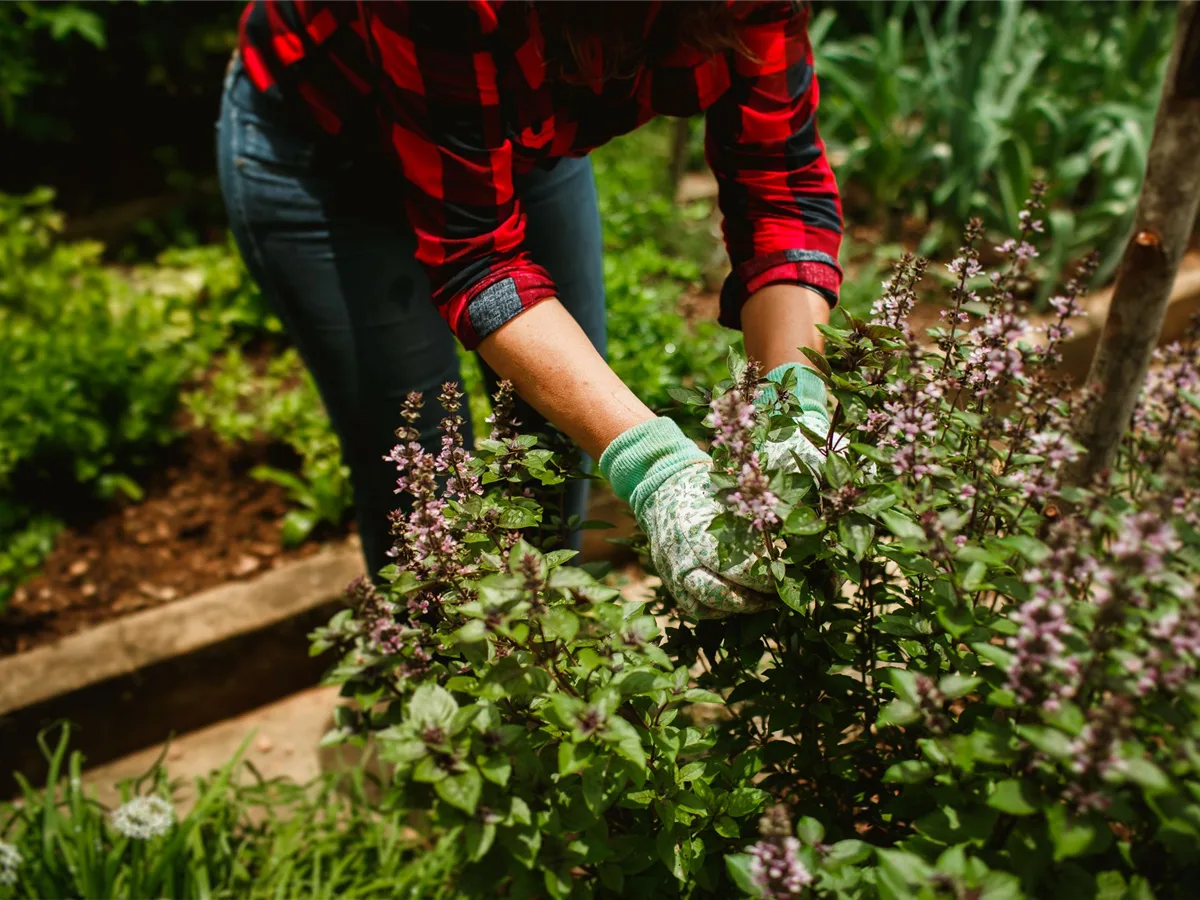
All you need is a pair of clean, sharp scissors, or just your fingernails for young, soft stems. Wipe the blades first so you don’t spread disease from one plant to another.
- Pick the tallest stem. Always start with the main stem or the stems that have outgrown the rest.
- Count the leaf pairs from the bottom up. You’ll cut above the second or third pair.
- Find the node and look for the two tiny buds where the leaves meet the stem.
- Cut about 1/4 inch above the node, with a clean, straight cut.
- Repeat on the other tall stems, without removing more than a third of the plant.
- Water as usual and keep the pot in the sun. New shoots should appear in about a week.
Don’t throw away what you cut. The tips are the most tender, fragrant leaves on the plant. Use them in sauce, pesto or salad.
When should you start pruning basil?
The first prune is the most important, because it sets the shape of the plant. Do it early, while the plant is still young.
- Height: when the plant is 6 to 8 inches tall.
- Leaves: when it has at least three or four pairs of true leaves.
- Where to cut: above the second or third pair, counting from the bottom.
It feels harsh to cut such a small plant, but that’s what turns it into a bush. If you wait too long, the main stem hardens and the plant has already grown tall and thin.
If you’re just getting started, first see how to grow basil in a pot, with the right pot, soil and watering.
How often should you prune basil?
After the first prune, the rhythm is simple: every two to three weeks in warm weather, when basil grows fast. In cooler months, it grows slowly, and once a month is usually enough.
A good sign that it’s time: when the new stems have three or four pairs of leaves, cut above the second pair again. Each stem then splits in two, and the plant keeps getting fuller.
| Plant stage | What to do | How often |
|---|---|---|
| Young plant, 6 to 8 inches | First prune, above the 2nd or 3rd leaf pair | Once |
| Growing plant | Cut stem tips that have 3 or 4 leaf pairs | Every 2 to 3 weeks |
| Mature plant in summer | Harvest from the tips and pinch off flower buds | Every week |
| Plant indoors in winter | Light trims, tips only | Once a month |
| Leggy or woody plant | Renewal prune, leaving leaves below | Once, then wait for regrowth |
What’s the difference between harvesting and pruning basil?
With basil, harvesting and pruning can be the same thing. The difference is how you take the leaves.
- Harvesting that prunes: cutting the stem tip above a pair of leaves. The plant branches and gets fuller.
- Harvesting that weakens: plucking the big lower leaves one by one. The plant goes bare at the bottom and keeps growing only upward.
So whenever you need basil for a recipe, harvest from the tips. You get the most tender leaves and prune the plant at the same time. Only remove single lower leaves if they’re yellow or damaged.
Should you remove basil flowers?
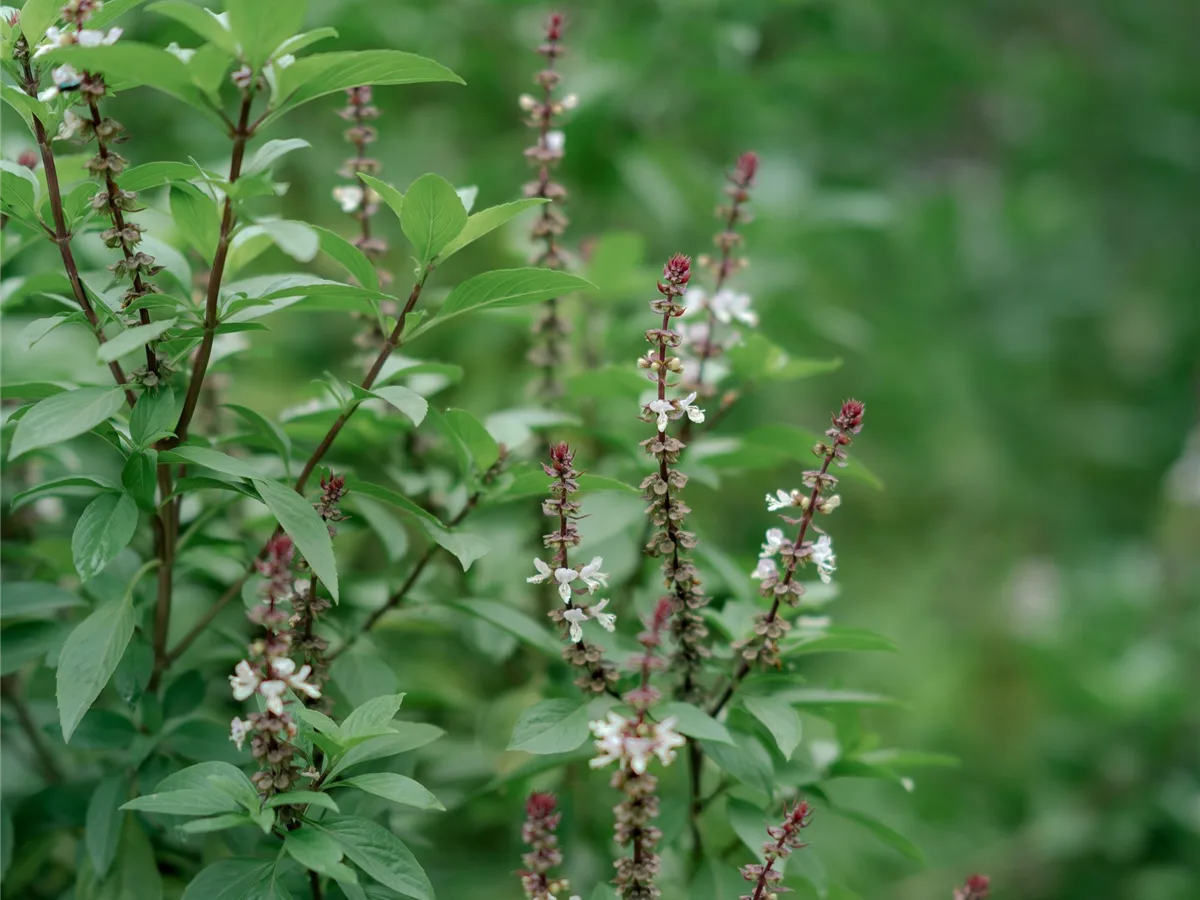
Flowers appear at the top of the stems, on spikes with small white or purple blooms. They’re a sign the plant is changing gears: instead of leaves, it starts making seeds.
According to the University of Minnesota, if you let basil flower and set seed, it becomes woody, yields drop considerably and the flavor turns more bitter.
University of Illinois Extension recommends pinching off flower buds as soon as you see them form. In practice:
- Look for the flower spike at the top of the stem.
- Cut it off along with the first or second pair of leaves below it, always just above a node.
- Check every week in summer, when basil flowers the most.
The flowers are edible and mild. You can toss them into a salad or use them as a garnish.
What if my basil has already flowered?
You can still save it, as long as the plant has green leaves. Cut off all the flower spikes plus about 2 inches of each stem, always above a node with leaves. Then keep up the watering and sun.
In two or three weeks, the plant usually pushes out new shoots. The leaves from this stage may be a bit smaller, but the flavor improves. If the plant looks very weak, see our guide on how to save a dying basil plant.
How to fix leggy, woody basil
Leggy basil has long stems, widely spaced leaves and almost nothing at the bottom. Woody basil has a hard, brown base that looks like wood.
Both have the same fix: a renewal prune. But it has to be done carefully, because the woody part rarely regrows.
- Look at each stem from the bottom up and find the lowest pair of green leaves.
- Cut just above that pair, even if not much plant is left.
- Never cut below the last green leaves. A stem with no leaves rarely sprouts again.
- Move the pot to the sunniest spot you have.
- Wait for new growth before harvesting again.
If the main problem was lack of light, pruning alone won’t fix it. See how to get the light right in leggy herbs.
Root your basil cuttings
The stems you cut can become new plants. Basil roots very easily in water, and it’s a great way to always have a young plant in reserve.
- Pick a stem about 4 inches long, with no flowers.
- Strip the leaves from the bottom half.
- Set it in a glass of water, with the top leaves above the water.
- Keep it in bright, indirect light and change the water every two days.
- When the roots are 1 to 2 inches long, plant it in a pot with potting mix.
Roots usually appear in one to two weeks. It’s a perfect way to replace an old, woody plant.
Basil care after pruning
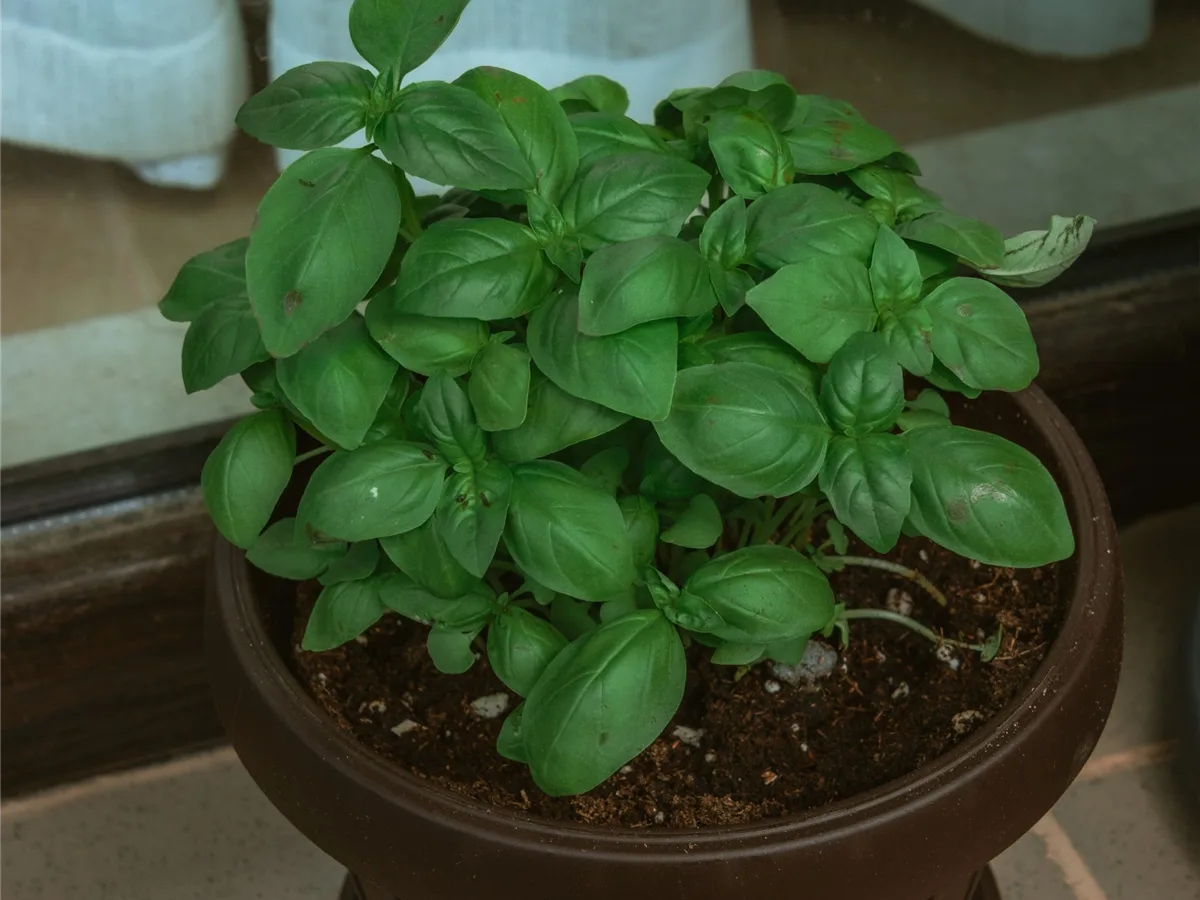
Pruning uses up some of the plant’s energy. For quick regrowth, the rest of its care needs to be on point.
- Sun: at least 6 hours of direct light a day.
- Water: lightly moist soil, never soggy. Water when the surface feels dry.
- Fertilizer: a balanced liquid fertilizer at half strength about once a month during the growing season.
- Cold: basil suffers below about 50 °F. Bring it indoors before cool nights.
Leaves yellowing after a prune usually point to overwatering or a lack of nutrients. See the causes in herb leaves turning yellow. And if the soil stays wet, read about overwatered herbs.
To keep the extra leaves from your pruning, see how to dry and freeze herbs. Basil freezes beautifully in olive oil.
Common basil pruning mistakes
- Plucking the big lower leaves instead of cutting the tips.
- Waiting until the plant is tall to do the first prune.
- Cutting below the last green leaves, leaving a bare stem.
- Removing more than a third of the plant at once.
- Letting the flowers open and go to seed.
- Using dirty scissors, which can spread disease.
- Pruning and leaving it in the shade, with no light to regrow.
Basil shares a pot happily with parsley and green onions, which also like moist soil and frequent cutting. See which herbs pair well in herbs that grow well together. And to plan the whole garden, check out our complete kitchen herb garden guide.
- Always cut just above a pair of leaves, about 1/4 inch above the node.
- Every good cut turns into two new stems.
- Do the first prune when the plant is 6 to 8 inches tall.
- Prune every two to three weeks in warm weather and never remove more than a third.
- Pinch off flower buds as soon as they appear so the leaves don’t turn bitter.
- Harvest from the tips, not by plucking the lower leaves.
Frequently asked questions about how to prune basil
Where do you cut basil so it grows back fuller?
Just above a pair of leaves, about 1/4 inch above the node. The two tiny buds where the leaves meet the stem grow into two new stems.
When should you first prune basil?
When the plant is 6 to 8 inches tall and has at least three or four pairs of leaves. Cut above the second or third pair, counting from the bottom.
How often should you prune basil?
Every two to three weeks in warm weather, when it grows fast. In winter, a light trim once a month is usually enough.
Should I pinch off basil flowers?
Yes, if you want leaves. Once basil flowers, it turns woody, produces less and the leaves get more bitter. Pinch off the buds as soon as they appear.
Can I just pick the bottom leaves?
It’s not ideal. Plucking the lower leaves leaves the plant bare and tall. The right way is to harvest from the tips, cutting the stem above a pair of leaves.
How much basil can I cut at once?
No more than a third of the plant. Bigger cuts leave it without enough leaves to recover.
Will basil grow back after cutting?
Yes, as long as you cut above a node with green leaves. New shoots appear in about a week. Below the last leaves, the stem rarely regrows.
Can you root basil cuttings in water?
Yes. Set a 4-inch stem, with the lower leaves removed, in a glass of water. Roots appear in one to two weeks.