Herb Leaves Turning Brown? 9 Causes and How to Fix Them
Crispy tips, scorched edges, dark spots: herb leaves turning brown are one of the most common scares in an indoor herb garden. The good news is that, most of the time, the plant is simply telling you something in its care needs to change. In this guide, you’ll find the 9 most common causes and how to fix each one.
Let’s look at how to read the signs, a table to pin down the cause, what to do in each case and the specific issues for basil, rosemary, mint, parsley, chives and cilantro.
Why do herb leaves turn brown?
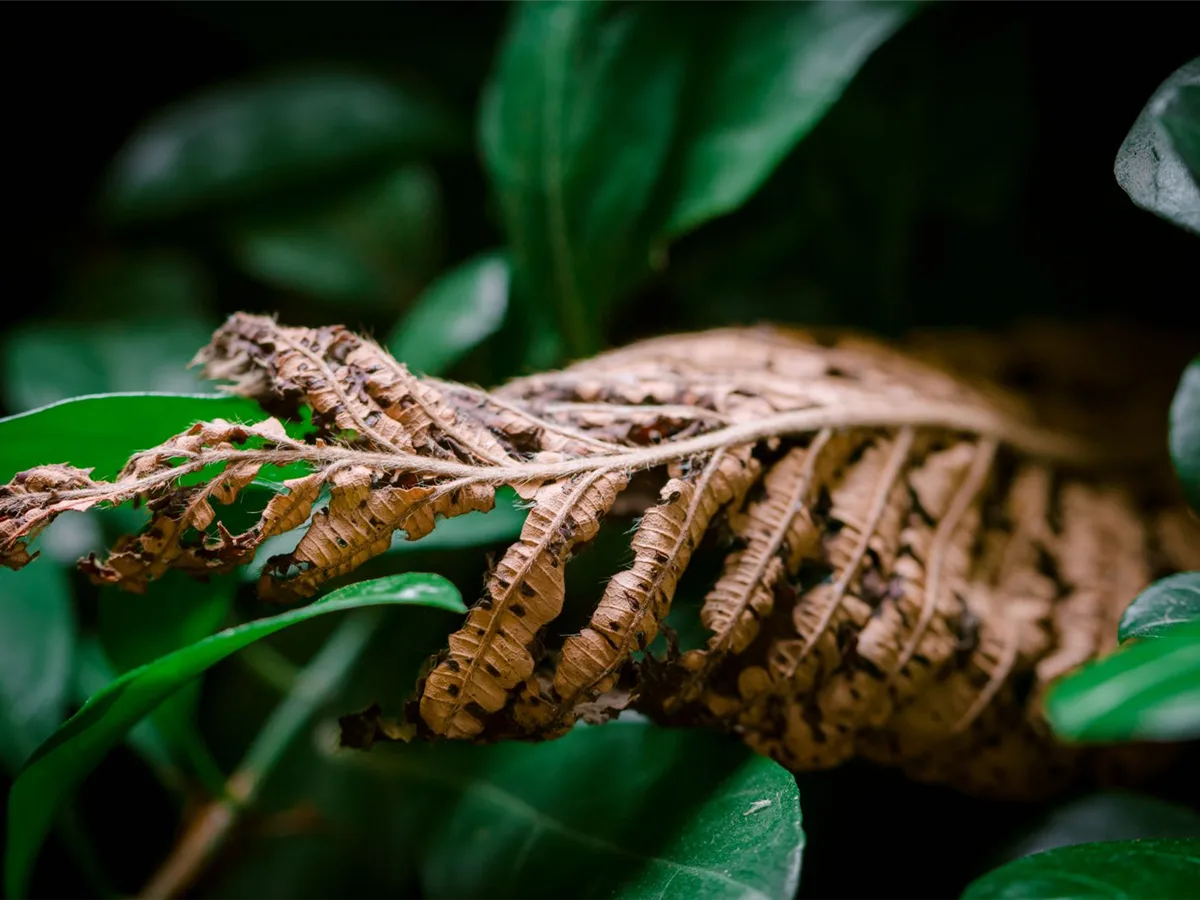
When part of a leaf turns brown, those cells have died. That happens when water can’t reach the end of the leaf, when something burns the tissue or when a fungus or pest attacks the plant.
Tips and edges are the first to suffer because they sit at the end of the water’s path. If the roots can’t send up enough water, whether from drought, rot or too much salt in the soil, that’s where the damage shows first.
Iowa State University Extension explains that brown leaf tips and edges usually come from low humidity, inconsistent watering, fertilizer buildup or chemicals in tap water. It also notes that the brown parts won’t recover: only new growth will show whether you’ve fixed the problem.
How to read the type of browning
Before you change anything, take a close look. The way a leaf turns brown says a lot about the cause.
- Dry, crispy tips: underwatering, dry air, fertilizer salts or harsh sun.
- Soft, mushy brown leaves that droop: overwatering and root rot.
- Large scorched patches in the middle of the leaf: sunburn, especially on leaves facing the window.
- Dark, almost black, limp leaves: cold, drafts or contact with cold glass.
- Small brown spots with a yellow ring: fungal or bacterial leaf spot.
- Tiny brown or orange bumps under the leaves: rust, a fungus common on mint.
- Only the lower, older leaves: often just natural aging.
Chart: what brown leaves are telling you
| What you see | Likely cause | What to do |
|---|---|---|
| Crispy tips and soil dry for days | Underwatering | Water until it drains from the bottom and keep watering consistent |
| Soft brown leaves and wet soil | Overwatering and root rot | Stop watering, check the roots and repot if needed |
| Scorched patches on sun-facing leaves | Sunburn | Introduce sun gradually or add afternoon shade |
| Brown tips near an AC unit or heater | Dry air | Move the pot and group plants together |
| White crust on the soil and burned edges | Too much fertilizer (salts) | Flush the soil with plenty of water and feed less |
| Dark leaves after a cold night | Cold or drafts | Move away from the window at night and block drafts |
| Brown spots with yellow halos | Fungal or bacterial disease | Remove sick leaves and improve airflow |
| Pale speckles, webbing or tiny bugs | Pests such as spider mites and aphids | Rinse the leaves and use insecticidal soap |
| Roots poking out of the drainage holes | Pot too small | Move to a bigger pot |
The 9 causes of brown herb leaves and how to fix them
1. Underwatering
This is the simplest cause. When the soil dries out too much, the plant can’t push water to the leaf tips, which dry up and turn crispy. It’s common with small pots, terracotta and hot summer sun, all of which dry out fast.
How to fix it: water slowly until it drains from the holes. If the soil is so dry that water runs down the sides without soaking in, set the pot in a bowl of water for about 20 minutes. After that, do the finger test every day.
2. Overwatering and root rot
It sounds backward, but too much water also turns leaves brown. Soggy soil pushes the air out, and roots start to rot. Rotten roots can’t take up water, so the plant dries out on top even though the soil is wet.
The difference is in the feel: here the leaves turn brown and soft, and the base of the stem may darken. The soil often smells sour. You’ll find the rescue steps in our guide to overwatered herbs. And if you’ve spotted white fuzz on the soil, see our guide to white mold on soil.
3. Inconsistent watering
Letting the soil dry out for days and then flooding it stresses the plant. The finest roots die in the dry spells and rot in the wet ones. The result is brown tips that show up gradually, leaf by leaf.
How to fix it: build a routine. Check the soil at the same time each day, ideally in the morning, and water only when it’s dry to the right depth for that herb.
4. Too much sun (sunburn)
A plant that lived in shade and suddenly moves into full sun will scorch. Dry brown or bleached patches appear in the middle of the leaves facing the light. The same thing happens behind window glass in summer, which gets very hot.
How to fix it: introduce sun gradually, starting with an hour or two of morning sun and increasing over a week. On very hot days, a sheer curtain or shade cloth helps.
5. Dry air
Air conditioning, forced-air heating and dry winter weather pull moisture out of the air. Leaves lose water faster than roots can replace it, and the tips dry out.
How to fix it: keep pots away from vents, radiators and space heaters. Group pots together, since plants create a bit of humidity around each other. A tray of pebbles and water under the pot, with the water below the pot’s base, also helps.
6. Too much fertilizer and salt buildup
Overfeeding leaves salts behind in the soil. They pull water away from the roots and build up in the leaf tips and edges, which look burned. A telltale sign is a hard white crust on top of the soil or around the rim of the pot.
The University of Missouri explains that fertilizer salts accumulate at leaf margins and tips and cause salt burn, and that feeding in winter, when plants barely grow, makes it worse.
How to fix it: scrape off the crust and slowly run plenty of water through the pot, about four times its volume, letting it drain from the bottom. That flushes the salts out. Then feed less. See how to use compost in pots for a gentler option.
7. Cold, drafts and frost
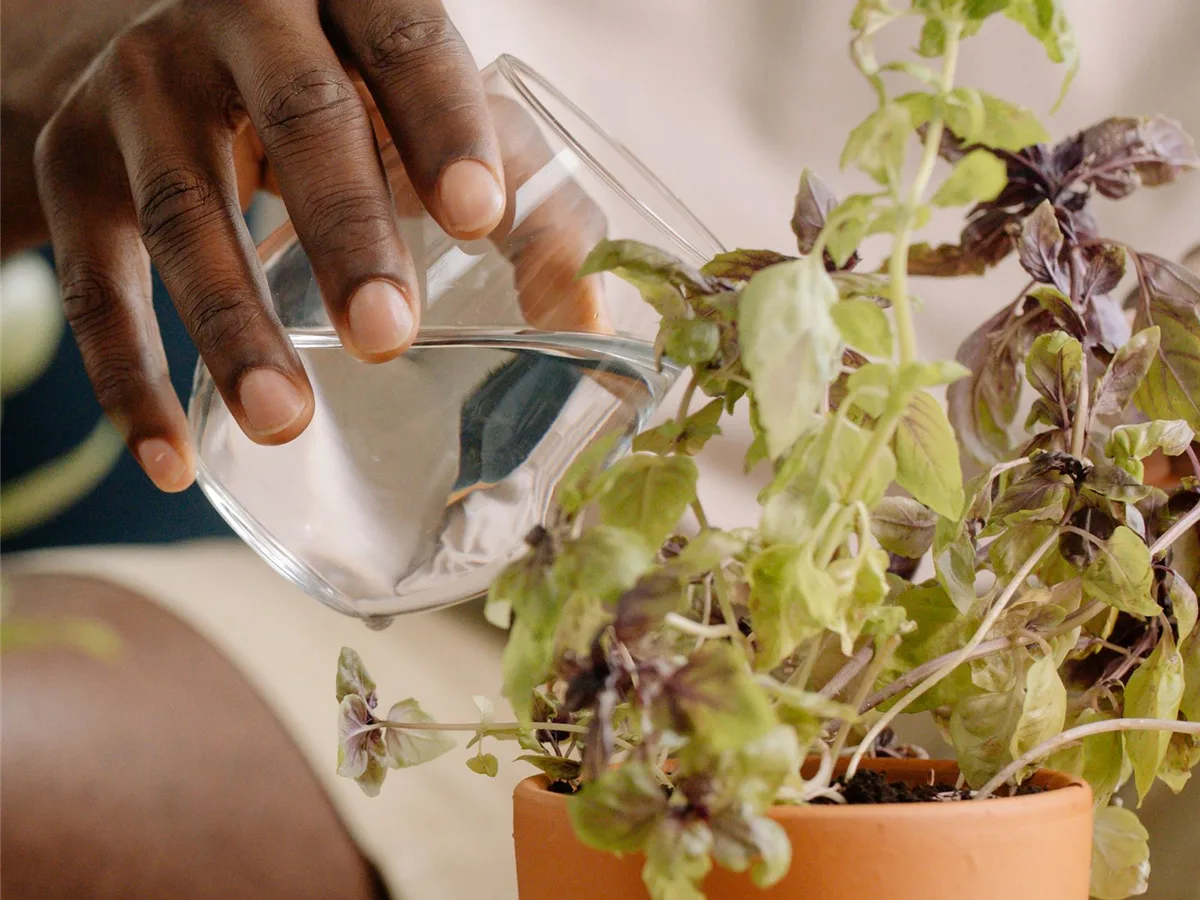
Tender herbs like basil suffer below about 50 °F. Leaves darken, turn almost black and go limp, especially those touching cold window glass overnight.
How to fix it: on cold nights, pull pots back from the window and away from drafty doors. Trim the cold-damaged leaves and water less, since the soil takes longer to dry. Find more tips in how to grow herbs in winter.
8. Fungi, bacteria and pests
Some diseases start as small brown spots, sometimes with a yellow ring around them, that grow and merge. Mint rust shows up as tiny orange or brown bumps on the undersides of leaves. Fungi love wet leaves and still air.
Pests like spider mites and thrips suck sap and leave leaves speckled, which later dry and turn brown. Check the undersides closely, ideally with a magnifying glass or your phone’s camera zoomed in.
How to fix it: remove and throw away sick leaves, and keep them out of the compost. Water the soil, not the leaves, and leave space between pots. To identify and treat each bug, see our guide to herb plant pests.
9. A pot that’s too small or root-bound
When roots fill the whole pot, there’s little soil left to hold water. The plant dries out fast even with frequent watering, and the tips turn brown. Roots poking out of the drainage holes are the clearest sign.
How to fix it: move the plant to a pot about 2 inches wider, with fresh mix. Gently loosen any roots circling the root ball before you replant.
What if only the lower leaves are brown?
Not every brown leaf is a problem. Older leaves near the base naturally dry out over time while the plant puts its energy into new growth up top. If the rest of the plant is green and growing, just pull off the dry leaves.
The same goes for annual herbs like basil and cilantro near the end of their life. After flowering, they gradually start to dry out. That’s not disease: it’s the plant finishing its cycle.
Should you cut off brown leaves?
Yes. The brown tissue is dead and won’t turn green again. Trimming it improves the look, keeps fungi from settling into dead tissue and helps you see whether the problem continues on new leaves.
- Whole leaf brown: snip the leaf stem right at the main stem.
- Only the tip brown: trim just the tip, following the leaf’s natural shape and leaving a thin line of brown so you don’t cut into healthy tissue.
- Leaves with fungus: use clean scissors and wash them afterward so you don’t spread it to other plants.
Leaves with tips browned by dry air or watering issues are fine to cook with once you trim the brown part. Leaves with fungus, spreading spots or pests should go in the trash.
Brown leaves on specific herbs: what’s most common
Each herb has its own weak spots. Knowing the most likely cause for yours helps you get it right faster.
- Basil: dark leaves almost always mean cold or waterlogged roots. It struggles below 50 °F. If it’s going downhill fast, see why your basil is dying and the basics in how to grow basil in a pot.
- Rosemary: brown, dry needles usually come from too much water, not too little. See how to grow rosemary in a pot.
- Mint: brown or orange bumps under the leaves may be rust. Crispy tips are usually thirst, because mint drinks a lot. See how to grow mint in a pot.
- Chives and green onions: brown tips are common and can come from heat, dry soil or overfeeding. Just snip them off. See how to grow green onions in a pot.
- Parsley: browning outer leaves are usually just old leaves. If the center darkens too, check your watering.
- Cilantro: brown tips appear with heat and strong afternoon sun, often right before it bolts. See how to grow cilantro in a pot.
Brown leaves vs. yellow leaves: what’s the difference?
They can show up together, but they usually have different causes. Yellowing generally means the leaf is gradually losing its color, from a nutrient shortage, low light or too much water.
Brown means that part of the leaf has already died. It’s common for a leaf to go yellow first and brown later. If your problem starts with yellow, see our guide to herb leaves turning yellow.
Can tap water turn leaves brown?
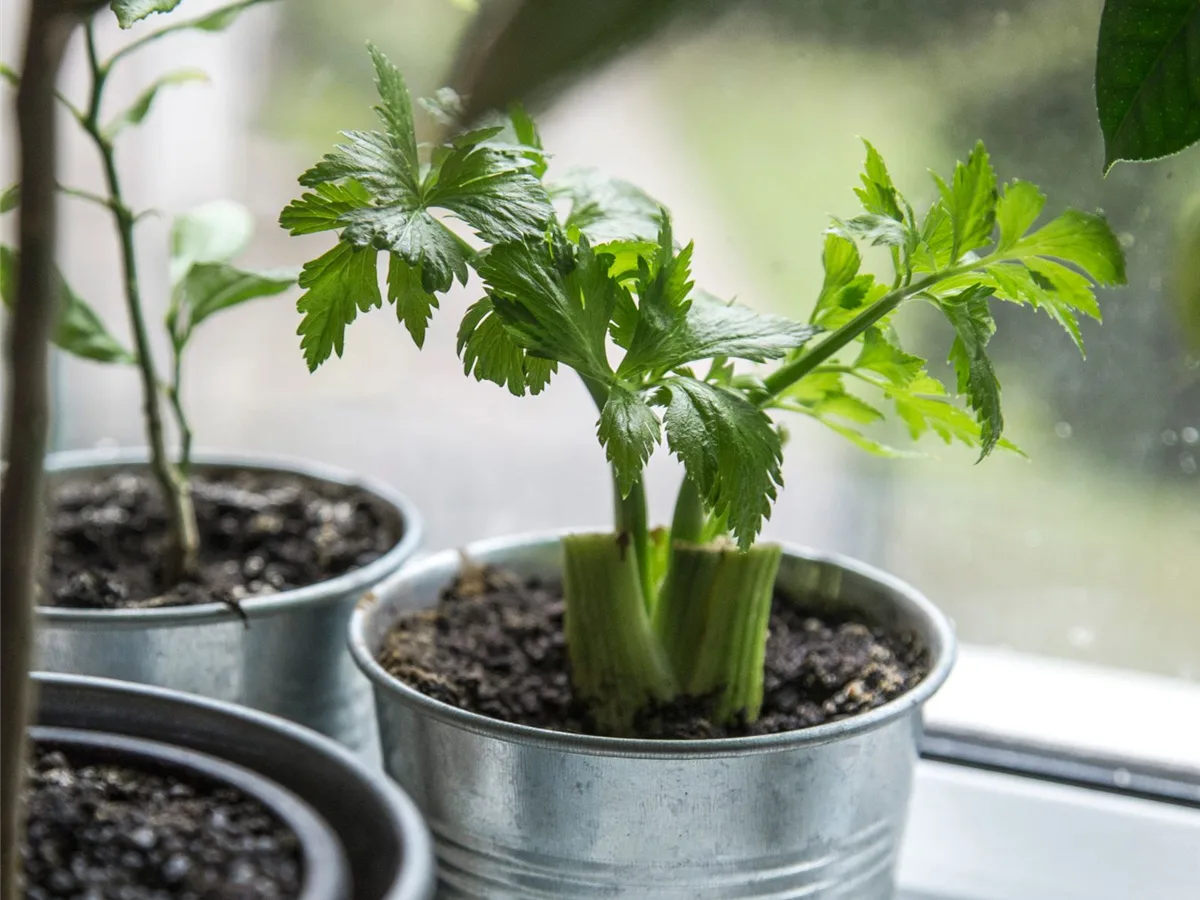
For some plants, yes. Chlorine and fluoride in treated water can build up in the leaf tips of sensitive species. Water from a salt-based softener can also cause trouble, because it adds sodium to the soil. Most herbs, though, handle regular tap water fine.
If you want to rule it out, let tap water sit in an open container overnight so some of the chlorine can escape, or use rainwater collected in a clean container. Colorado State University explains how salts from water and fertilizer form that whitish crust on potting mixes.
How to prevent brown leaves on herbs
- Water by the soil, not the calendar. Do the finger test first.
- Use pots with drainage holes and always empty the saucer.
- Introduce sun gradually after moving a plant.
- Keep pots away from AC units, heaters and drafts.
- Feed lightly, never on dry soil and rarely in winter.
- Pull pots back from cold glass on winter nights.
- Check under the leaves once a week to catch pests early.
- Repot when roots poke out of the drainage holes.
If you’re setting up your garden now, start by putting each plant in the right spot. Our complete kitchen herb garden guide shows which herbs suit each type of light. And if your plants are tall and weak as well as brown, see our guide to leggy herbs.
Common mistakes when treating brown leaves
- Watering more without checking the soil. If the cause is root rot, that will kill the plant.
- Fertilizing to “give it a boost.” If the cause is salt buildup, feeding makes it worse.
- Changing everything at once: location, pot, watering and feeding. Then you can’t tell what worked.
- Waiting for brown leaves to turn green. They won’t; watch the new growth instead.
- Composting diseased leaves, which can spread the problem.
- Using chemical pesticides on herbs you plan to eat.
- Brown leaves usually come from wrong watering, harsh sun, dry air, overfeeding, cold, pests or disease.
- Crispy tips suggest underwatering, dry air or salts; soft brown leaves suggest root rot.
- Check the soil and the type of browning before changing your care.
- Brown tissue won’t turn green again: trim it and watch the new growth.
- A white crust on the soil means salt buildup: flush the pot with plenty of water and feed less.
- Lower leaves drying while the rest stays green is usually natural aging.
Frequently asked questions about herb leaves turning brown
Why are the tips of my herb leaves turning brown?
The most common causes are underwatering, inconsistent watering, dry air and fertilizer salts building up in the soil. Check the soil with your finger and look for a white crust on the pot to figure out which one it is.
Can brown leaves turn green again?
No. The brown tissue is dead. Trim it with clean scissors and watch the new leaves: if they come in green and healthy, you’ve solved the problem.
Are brown leaves a sign of overwatering or underwatering?
It can be either. Crispy brown tips with dry soil point to underwatering. Soft, mushy brown leaves with wet, sour-smelling soil point to overwatering and root rot.
Should I cut brown leaves off my basil?
Yes. Snip off the leaves or dark sections with clean scissors. On basil, dark leaves usually come from cold or waterlogged roots, so adjust its spot and watering too.
Can too much sun turn herb leaves brown?
Yes, especially when a plant goes from shade to full sun all at once. Dry, scorched patches appear on the leaves facing the light. Introduce sun gradually over about a week.
Can fertilizer burn herb leaves?
Yes. Too much fertilizer leaves salts in the soil that burn leaf tips and edges. Flush the pot with plenty of water, letting it drain from the bottom, and feed less often.
Is it safe to eat herbs with brown leaves?
You can use the healthy green parts if the cause was watering, sun or dry air. Throw out leaves with fungus, spreading spots or pests, and rinse everything well before using it.
Does air conditioning cause brown leaf tips?
It can. Air from AC units and heaters is dry and makes leaves lose water fast, so the tips dry out. Move pots away from vents and group plants together to hold a bit more humidity.