How to Grow Cilantro in a Pot (and Keep It From Bolting)
Cilantro is one of the most popular kitchen herbs, and also one of the most frustrating: it sprouts, grows a little and then suddenly shoots up flowers and stops making leaves. In this guide, you’ll learn how to grow cilantro in a pot, from preparing the seeds to harvesting, and how to keep it producing leaves for longer.
Let’s look at what cilantro needs, a step-by-step planting guide, how to water and harvest it, why it bolts so fast and how to slow that down.
What does cilantro need to grow well in a pot?
Cilantro is a short-lived annual. It sprouts, makes leaves, flowers, sets seed and dies, all in a few months. That’s why caring for it is different from caring for rosemary or mint, which live for years.
- Light: 4 to 6 hours of sun a day. In hot climates, morning sun and afternoon shade.
- Temperature: mild weather. It grows best between about 60 and 75 °F.
- Soil: light, loose, with a little compost and good drainage.
- Water: evenly moist soil, never soggy and never bone-dry for days.
- Pot: deep, because the main root grows straight down.
Utah State University Extension notes that cilantro grows well in most soil types as long as they are well drained and moderately fertile. In other words, it doesn’t need extra-rich soil.
What size pot does cilantro need?
Cilantro grows a long main root called a taproot. It heads straight down, like a skinny little carrot. In a shallow pot, that root hits the bottom, the plant gets stressed and it bolts sooner.
So pick a container at least 8 inches deep. Long window boxes work very well too, because you can sow in rows and harvest a good bunch at once.
| Container | Minimum size | How many plants |
|---|---|---|
| Small round pot | 8 inches deep, 6 inches wide | 4 to 6 plants |
| Medium round pot | 10 inches deep, 10 inches wide | 10 to 15 plants |
| 24-inch window box | 8 inches deep | One or two rows, 20 to 30 plants |
| Shallow tray or cut-off bottle | Less than 6 inches | Not recommended: cilantro bolts early |
Whatever you choose, it needs drainage holes. Standing water rots cilantro roots in a matter of days.
What’s the best soil for cilantro?
Cilantro likes loose soil that lets its root grow down easily. A simple mix that works well:
- 2 parts potting mix made for vegetables or herbs;
- 1 part compost or worm castings;
- 1 part coarse sand, perlite or coco coir to keep it light.
Skip garden soil. Inside a pot it packs down, holds too much water and smothers the roots. If you compost at home, finished compost is perfect to mix in. See how to use compost in pots for the right amount.
How to grow cilantro in a pot: step by step
Cilantro doesn’t like being transplanted. When a seedling is pulled up and moved, its taproot gets damaged, and the plant tends to bolt soon after. That’s why it’s best to sow directly into the pot where it will grow.
The University of Wisconsin agrees: it says cilantro does not transplant well because of its long taproot and recommends direct sowing.
1. Prepare the seeds
Here’s a secret few people know: what’s sold as a cilantro seed is actually a small round fruit with two seeds inside. If you plant the whole husk, it takes longer to sprout.
- Place the seeds on a towel and press gently with the bottom of a glass until they split in half.
- Soak the halves in water for 12 to 24 hours.
- Drain and plant them the same day.
You can use seed packets from a garden center or even whole coriander seed from the spice aisle. Packet seed usually sprouts more evenly.
2. Sow
- Fill the pot with mix up to about an inch below the rim and water it well.
- Make shallow furrows or holes about a quarter to half an inch deep.
- Drop in the seed halves about an inch apart.
- Cover with a thin layer of soil and press lightly with your hand.
- Water gently with a spray bottle or a fine-rose watering can so the seeds stay covered.
3. Wait for germination
Seeds sprout in 7 to 21 days, depending on temperature and how you prepared them. During this stage, the soil must not dry out. If it’s hot, keep the pot somewhere bright but out of strong afternoon sun.
4. Thin the seedlings
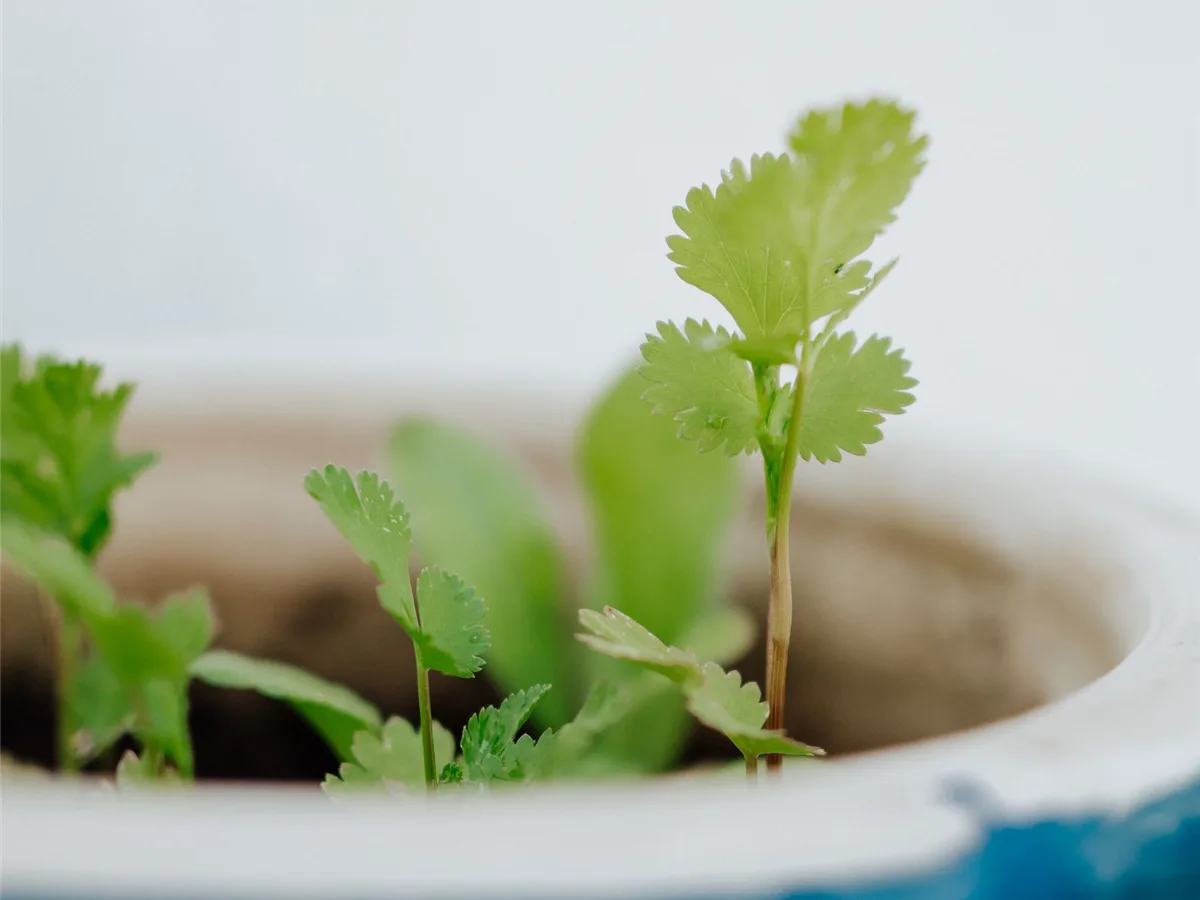
When seedlings are about 2 inches tall, pull the weakest ones and leave 2 to 3 inches between the rest. It feels wasteful, but crowded plants compete for water and bolt sooner. The thinnings make a great garnish.
Where should you put a cilantro pot?
Cilantro needs light, but it struggles in heat. The sweet spot is a window, balcony or patio with cooler morning sun and light shade in the afternoon.
In mild climates, it handles full sun just fine. In the South, the Southwest and during summer almost everywhere, afternoon sun speeds up bolting. A shade cloth, a taller plant nearby or simply moving the pot can help a lot.
Indoors, far from a window, cilantro gets thin, floppy and sparse. If that happens, see how to fix it in our guide to leggy herbs. And if your kitchen is on the dark side, check our complete kitchen herb garden guide.
When is the best time to plant cilantro?
In most of the US, cilantro does best when sown in early spring and again in late summer for a fall crop. Shorter, cooler days hold back flowering, so the plant keeps making leaves for longer.
In warm regions like Florida, Texas and Southern California, cilantro is a fall and winter herb. The University of Florida recommends growing it in the cooler months and sowing a few seeds every few weeks, because it flowers quickly when days get long and warm.
Indoors, on a bright windowsill or under a grow light, you can grow cilantro year-round. Just keep it away from heat vents and hot, sunny glass in summer.
How to water cilantro in a pot
Cilantro likes soil that stays lightly moist all the time. It suffers from both drought and soggy soil. And uneven watering, with dry days followed by a flood, is one of the main triggers for early bolting.
- Do the finger test. Push a finger about an inch into the soil. If it’s dry, water.
- Water in the morning, so the plant goes into the warm part of the day well hydrated.
- Water the soil, not the leaves, to avoid fungal problems.
- Empty the saucer about 15 minutes after watering.
In summer, that often means watering daily. In cooler months, every two or three days. If the soil is always wet and the leaves are turning yellow, you may be overdoing it. Learn the signs in our guide to overwatered herbs.
A thin layer of straw, shredded leaves or bark mulch on top of the soil helps hold moisture and keeps the roots cooler. It’s a simple trick that makes a real difference in hot weather.
Why does cilantro bolt so fast?
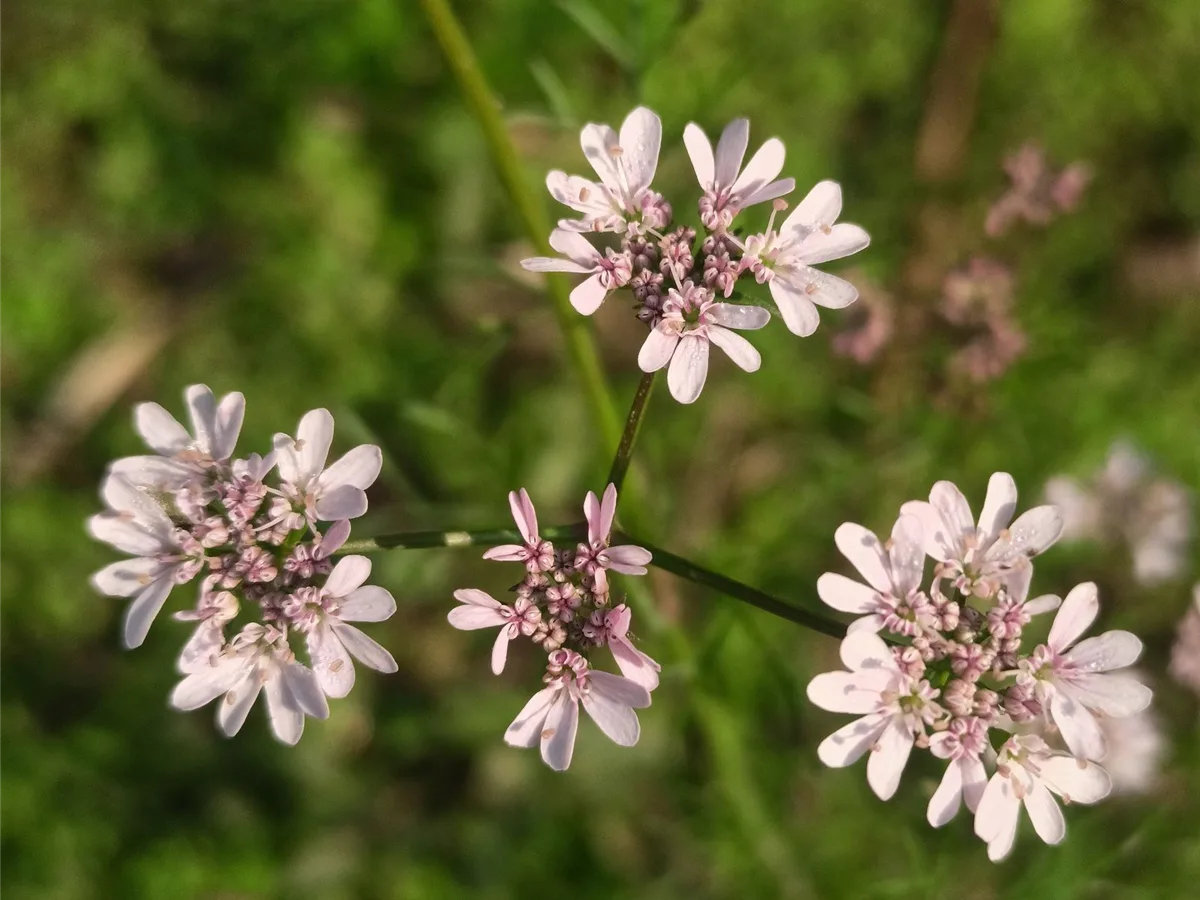
This is the most common cilantro problem. Bolting means the plant sends up a tall central stalk, the leaves turn thin and feathery like carrot tops, and small white flowers appear soon after.
Cilantro does this because it’s programmed to set seed before heat kills it. The main triggers are:
- Heat: temperatures above roughly 80 to 85 °F speed up bolting.
- Long days: in late spring and summer, the plant reads the daylight as a signal to flower.
- Stress: uneven watering, a shallow pot, root damage from transplanting and overcrowding.
- Age: even with perfect care, cilantro flowers after a few months. It’s its natural life cycle.
How to slow down bolting
- Plant in cool weather whenever you can.
- Choose slow-bolt varieties. Look for “slow bolt” or “bolt-resistant” on the packet, such as ‘Santo’, ‘Calypso’ or ‘Leisure’.
- Shade it from afternoon sun on hot days.
- Water consistently, without letting the soil dry out.
- Use a deep pot and sow directly, without transplanting.
- Harvest often, which encourages new leaves.
- Pinch off the central stalk as soon as it appears. That may buy you a few more days of leaves.
Utah State University Extension also recommends mulching to keep the soil cool, watering well and reseeding every few weeks to keep fresh leaves coming.
My cilantro bolted. Now what?
Once bolting starts, there’s no reversing it. The remaining leaves get stronger in flavor and fewer in number. You have three options:
- Harvest everything that still looks good and start a new pot.
- Let it flower. The blooms attract ladybugs, hoverflies and other insects that eat aphids.
- Wait for the seeds. Those are coriander seeds, a spice in their own right, and you can save some for your next planting.
How to harvest cilantro without killing the plant
Start harvesting when plants are about 6 inches tall, usually 40 to 60 days after sowing. Harvesting the right way keeps the pot productive for longer.
- Cut the outer leaves, the oldest ones, close to the base of the stem.
- Leave the center of the plant, where new leaves grow from.
- Never take more than a third of the leaves at once.
- Use clean scissors and harvest in the morning, when the leaves are crisp.
Another option is a cut-and-come-again harvest: cut the whole plant about an inch above the soil. Some plants regrow, but the second harvest is usually smaller. That’s why staggered sowing works best.
Fresh cilantro doesn’t last long in the fridge. To save a big harvest, see how to dry and freeze herbs. Tip: cilantro loses most of its flavor when dried, so freezing it chopped in ice cube trays with olive oil works much better.
Succession sowing: the secret to cilantro all year
Because cilantro is short-lived, anyone with just one pot ends up going weeks without it. The fix is succession sowing: planting a little at a time, at regular intervals.
Here’s how it works in practice: sow one pot today, another in two or three weeks and a third two or three weeks after that. By the time the first one starts to bolt, the second is ready to harvest.
The University of Wisconsin suggests sowing again every 2 to 3 weeks for a longer harvest. Three medium pots on rotation are usually enough for a household that cooks with cilantro a few times a week.
How to fertilize cilantro
Cilantro needs very little fertilizer. Potting mix with some compost already holds enough for most of its short life. Too much feeding makes the plant soft and less aromatic.
If the leaves turn pale green after about four weeks, a tablespoon of worm castings sprinkled on the soil is enough. If the yellowing comes with constantly wet soil, the problem is something else. Check the causes in our guide to herb leaves turning yellow.
Common cilantro problems in pots
| What you see | Likely cause | What to do |
|---|---|---|
| Seeds don’t sprout | Whole husks, old seed, sown too deep or dry soil | Crack the seeds, soak them and sow shallow |
| Tall central stalk and feathery leaves | Bolting from heat or stress | Harvest what you can and sow a new pot |
| Thin, floppy seedlings | Not enough light | Move to a brighter spot or add a grow light |
| Yellow leaves and wet soil | Overwatering | Water less and check the drainage holes |
| Wilting leaves and dry soil | Underwatering | Water until it drains from the bottom |
| Brown leaf tips | Heat, harsh sun or dry air | Shade it in the afternoon and water consistently |
| Small green bugs on new growth | Aphids | Spray them off with water and use insecticidal soap |
If your cilantro’s tips are turning brown, see every cause in our guide to herb leaves turning brown. For bugs, our guide to herb plant pests shows how to treat them without harsh chemicals.
Can you grow cilantro with other herbs?
Yes. Cilantro pairs well with herbs that like moist soil and a bit of afternoon shade, such as parsley, green onions and chives. Together they make a handy salsa-and-garnish window box.
Avoid planting it with rosemary, thyme and oregano, which prefer dry soil. And always keep mint in its own pot, because its roots take over everything. See the full chart in our guide to herbs that grow together.
To build a full fresh-herb box, also check how to grow parsley in a pot and how to grow green onions in a pot.
Cilantro, parsley or culantro: what’s the difference?
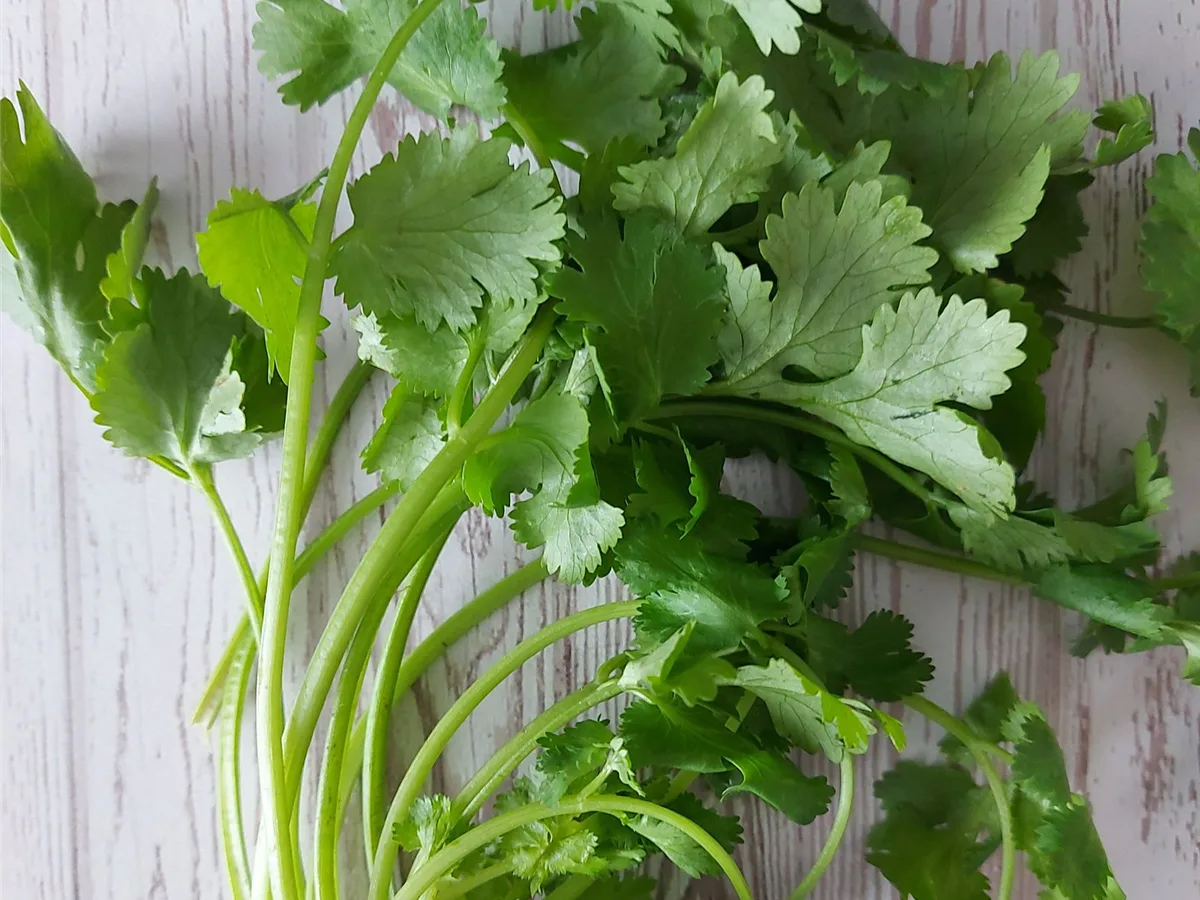
Cilantro and flat-leaf parsley look alike, but they’re easy to tell apart by smell. Rub a leaf between your fingers: cilantro has a strong, citrusy aroma; parsley smells milder and grassier.
Culantro is a different plant altogether. It has long leaves with serrated edges and a flavor like cilantro, only stronger. It handles heat much better and is popular in Caribbean and Latin American cooking.
And the name “coriander”? In the US, cilantro usually means the fresh leaves and coriander means the dried seeds. In the UK and many other countries, the whole plant is called coriander.
Common mistakes when growing cilantro in a pot
- Transplanting seedlings, which damages the taproot and triggers bolting.
- Using a shallow container, like a seed tray or a cut-off bottle.
- Sowing whole, dry seeds without cracking or soaking them.
- Planting too deep, more than half an inch.
- Leaving it in hot afternoon sun in summer.
- Letting the soil dry out and then flooding it.
- Expecting one pot to last all year, without succession sowing.
Cilantro often does great in the cooler months. If you live where winters get cold, see our tips on how to grow herbs in winter. And if space is tight, our ideas for a vertical garden in an apartment can help you fit in a few more pots.
- Use a pot at least 8 inches deep and sow directly, without transplanting.
- Crack the seeds in half and soak them for 12 to 24 hours before planting.
- Give it 4 to 6 hours of sun, ideally morning sun, and shade it from hot afternoon sun.
- Keep the soil lightly moist, never dry and never soggy.
- Heat, long days and stress make cilantro bolt early.
- Sow a new pot every 2 to 3 weeks for a steady supply.
Frequently asked questions about growing cilantro in a pot
How long does cilantro take to sprout?
Between 7 and 21 days. Cracking the seeds in half and soaking them for 12 to 24 hours speeds up germination. Keep the soil lightly moist the whole time.
Does cilantro need full sun?
It needs 4 to 6 hours of sun a day. But in hot climates and summer months, morning sun with light afternoon shade is best, because strong heat makes it bolt sooner.
Why is my cilantro flowering?
Heat, long days or stress, such as dry soil, a shallow pot or transplanting. Flowering is part of its natural cycle and can’t be reversed. Harvest what you can and sow again.
Can I grow cilantro from grocery store coriander seeds?
Yes. Whole coriander seed from the spice aisle usually sprouts, though less reliably than packet seed. Crack the seeds in half and soak them before planting.
How deep should a pot for cilantro be?
At least 8 inches deep, because cilantro grows a long taproot. Shallow containers make it bolt early. The pot also needs drainage holes.
How long until I can harvest cilantro?
About 40 to 60 days after sowing, when plants are around 6 inches tall. Pick the outer leaves and leave the center so the plant keeps producing.
Does cilantro grow back after cutting?
Sometimes. If you only cut the outer leaves, it keeps putting out new ones. If you cut the whole plant down near the soil, it may regrow, but the second harvest is usually small.
Can I grow cilantro indoors in winter?
Yes, and it often does better than in summer. Give it your brightest window or a grow light, keep it away from heat vents and water when the top inch of soil feels dry.