White Mold on Soil: What It Is and How to Get Rid of It
You went to water your herbs and found a fluffy white layer on top of the potting mix. White mold on soil is very common in indoor herb gardens, and it almost always has a simple fix. Here’s what it is, whether it hurts your plant and how to get rid of it.
Let’s look at how to tell mold apart from other white stuff, why it shows up, a step-by-step fix and how to keep it from coming back.
What is white mold on potting soil?
That white fuzz is made of very thin fungal threads called mycelium. These fungi live naturally in potting mix and feed on organic material such as pine bark, coco coir, peat, worm castings and compost.
They were always there in small numbers. What changes is the environment. When the soil stays wet for days, without sun or moving air, the fungi find perfect conditions and grow until you can see them.
That’s why mold works like an alarm. It isn’t the disease itself, but it warns you that the pot has too much water and too little air. And that extra moisture is what can actually damage your herbs’ roots.
Is white mold on soil harmful to plants?
In most cases, no. The surface fungus eats the dead organic matter in the soil, not the living plant. Basil, parsley or green onions can live with that white layer without showing any symptoms.
The problem is what comes with it. Soil that stays soggy all the time leaves roots without oxygen. Over time they rot, and the plant starts to wilt, turn yellow and drop leaves.
So here’s the honest answer: the mold itself is harmless, but its cause isn’t. If you only scrape off the white layer and keep watering the same way, the fungus will return and the roots will keep suffering.
Is it harmful to people?
For most people, soil mold isn’t a problem. But anyone with a mold allergy, asthma or hay fever may feel some irritation, because scraping the soil releases spores into the air.
If that’s you, take the pot outside or to the sink, wear a mask or ask someone else to do the cleanup. Wash your hands afterward.
Mold or something else? How to tell
Not everything white on soil is mold. Take a close look before you act, because each problem needs a different fix. The table below will help you figure out what’s in your pot.
| What you see | What it is | What to do |
|---|---|---|
| Soft, fluffy white fuzz on top of the soil | Mold (a fungus that eats organic matter) | Scrape it off, let the soil dry and improve light and airflow |
| Hard white crust, like salt, on the soil or pot rim | Mineral salts from water or fertilizer | Scrape off the crust and flush the soil with plenty of water |
| White powder on top of the leaves | Powdery mildew, a fungus that attacks the plant | Remove affected leaves and improve airflow |
| White cottony clumps on stems or roots | Mealybugs, a pest | Dab them off with a cotton swab and use insecticidal soap |
| Tiny white bugs that jump | Springtails, which live in damp soil | Let the soil dry more between waterings |
| Small yellow or white mushrooms | Fungi that also feed on organic matter | Pull them out and toss them, away from kids and pets |
| Green film on the soil surface | Algae, a sign of moisture and light | Scrape it off and water less |
A simple tip: mold is soft and falls apart when you touch it. Salt crust is hard, rough and looks like dried coarse salt. Pests, on the other hand, cling to the plant instead of spreading across the soil.
What causes white mold on soil?
Mold needs three things to grow: moisture, food and mild temperatures. The food, meaning organic matter, is always in potting mix. Indoor temperatures almost always suit it too. So moisture is what decides whether mold shows up.
1. Overwatering
This is the number-one cause. Watering every day out of habit, without checking the soil, keeps the mix constantly wet. Fungi love it. Learn how to get the amount right in our guide to overwatered herbs. Constantly wet soil also attracts tiny black flies: see how to get rid of fungus gnats.
2. A saucer full of water
Standing water in the saucer wicks back up into the soil through the drainage holes. So even if you water lightly, the pot never truly dries out. Empty the saucer about 15 minutes after every watering.
3. Low light
Without sunlight, water in the soil evaporates very slowly. Light also helps keep fungi in check. Pots at the back of the kitchen or far from a window tend to get moldy more often.
4. Poor airflow
Still air keeps the soil surface damp for longer. This happens a lot in closed corners, on shelves pushed against a wall and with pots crowded together.
5. Cold weather and cloudy days
In winter and during rainy weeks, the soil takes much longer to dry. If you keep watering like it’s summer, mold appears fast. See how to adjust your routine in how to grow herbs in winter.
6. New or very rich potting mix
Freshly opened bags with lots of bark, coir or compost that isn’t fully finished give fungi plenty to eat. It’s common for mold to appear in the first few weeks after planting and fade on its own once the soil settles.
7. Food scraps or coffee grounds on top
Putting coffee grounds, peels or kitchen scraps straight onto the soil surface is an open invitation to mold. Those scraps need to go through a compost bin before they go to your plants. Here’s how to use compost in pots the right way.
How to get rid of white mold on soil, step by step
- Take the pot somewhere open. A balcony, patio or the sink works. If you have allergies, wear a mask.
- Scrape off the top layer. With a spoon, remove about half an inch to an inch of soil, along with all the visible mold. You don’t need to disturb the roots.
- Throw the scraped soil away. Bag it and put it in the regular trash.
- Check the moisture. Push a finger about an inch into the soil. If it’s wet, don’t water. Wait until the surface is dry.
- Top up with fresh mix a few days later, once the pot is drier.
- Empty the saucer and make sure the drainage holes aren’t blocked.
- Move the pot closer to your brightest window, where air can circulate.
- Watch it for two weeks. If the mold comes back within days, move on to repotting.
Sprinkling a teaspoon of ground cinnamon over the soil is a popular tip among gardeners. Cinnamon contains compounds with antifungal activity, but there’s little research on using it in pots. It may help, but it won’t replace fixing your watering and light.
What not to do
- Don’t pour bleach on the soil. It also kills roots and the beneficial microbes in the mix.
- Don’t use straight vinegar. It makes the soil acidic and can burn roots.
- Don’t use chemical fungicides on herbs you’ll eat.
- Don’t mix the mold into the soil. Stirring the white layer in just spreads the fungus.
When to replace all the soil
Scraping the surface solves most cases. But sometimes it’s better to replace the whole potting mix. Repot when:
- the mold returns a few days after scraping, even with better watering;
- the soil smells rotten or strongly musty;
- the plant is wilting even though the soil is wet;
- the base of the stem is dark and mushy;
- there are lots of mushrooms or little flies buzzing around the pot.
How to repot without killing the plant
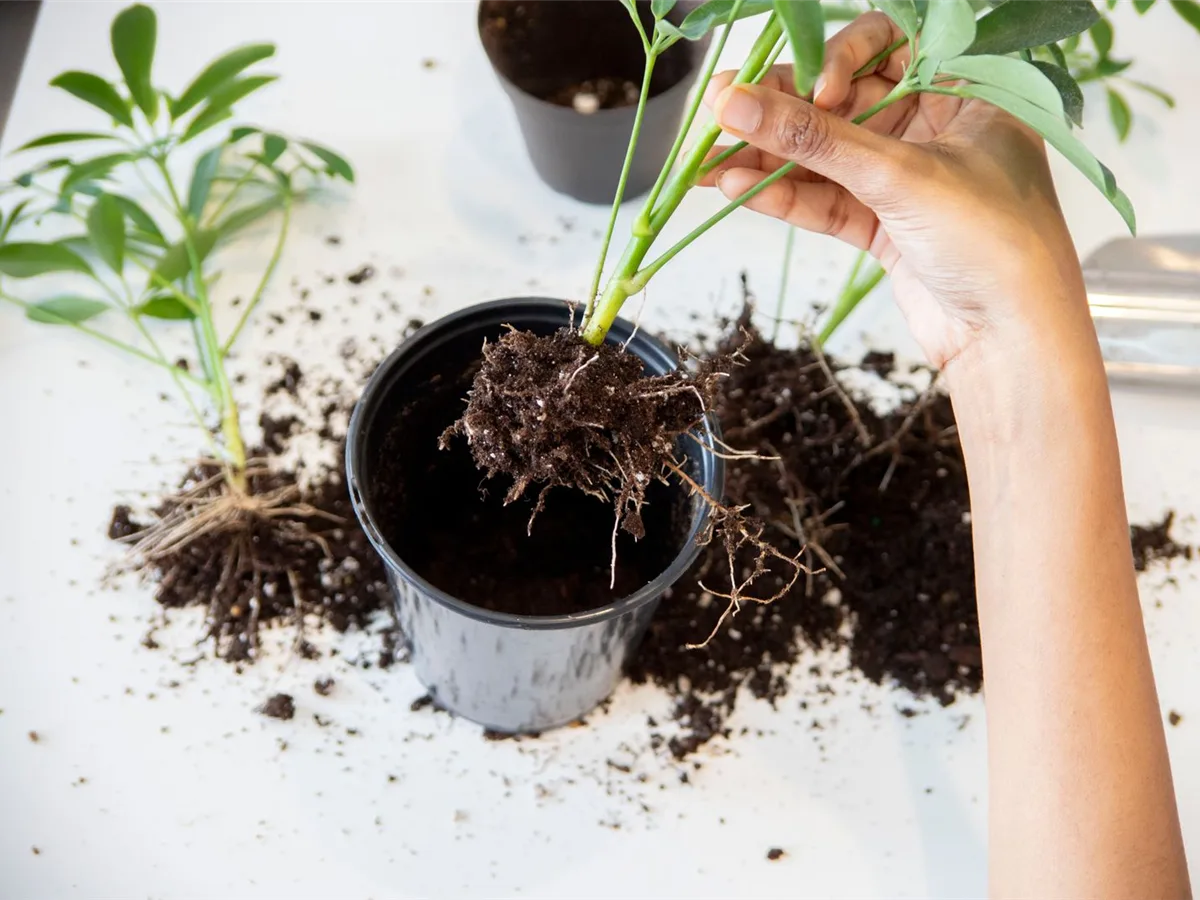
- Ease the plant out of the pot, holding it by the base.
- Gently loosen the old soil from the roots with your fingers.
- Check the roots. Healthy ones are pale and firm. Rotten ones are dark, mushy and slough off their outer layer.
- Trim the rotten roots with clean scissors.
- Wash the pot with soap and water. If you like, rinse it with 1 part bleach to 9 parts water, then with clean water.
- Replant in fresh, light, well-draining potting mix.
- Wait a day or two before watering so the trimmed roots can heal.
Can you eat herbs from a pot with moldy soil?
Yes, as long as the leaves are healthy. Surface mold stays in the soil and doesn’t climb onto the leaves. Harvest as usual and rinse well before using, as you would with any fresh greens.
It’s different if there’s mold, spots or powder on the leaves and stems themselves. In that case, discard the affected parts and don’t cook with them. If the whole plant is covered, the safest option is to start over with a new one.
Mushrooms in your herb pot: now what?
Sometimes, instead of white fuzz, you’ll see small yellow or white mushrooms. They’re relatives of mold and also feed on organic matter. In general, they don’t harm the plant.
The concern is different: some of these mushrooms are toxic if eaten. Pull them out and throw them away as soon as they appear, especially if you have kids or pets at home. Then cut back on watering, just as you would for mold.
The University of Florida extension service has a guide to the mushrooms most often found in potted plants, with photos to help you identify each one.
White salt crust: don’t confuse it with mold
A hard white crust on the soil or around the rim of the pot isn’t fungus. It’s mineral salts left behind when water evaporates. They come from tap water and, above all, from too much fertilizer.
This crust can burn leaf tips and harm the roots. To fix it, scrape off the top layer and slowly water the pot with plenty of water until it drains freely from the bottom. That flushes the salts out.
Colorado State University explains why that whitish crust forms on potting mixes and how it affects plants.
Soil mold and fungus gnats: what’s the link?
Wet, fungus-rich soil attracts fungus gnats. These tiny black flies lay eggs on the soil surface, and their larvae feed on fungi and fine roots.
That’s why mold and gnats often show up together. The fix is the same: let the soil dry out more between waterings. If you compost at home, you may also like our guide to fruit flies in a compost bin, another small-fly problem caused by moisture.
The University of California’s pest management program has a fact sheet on fungus gnats with tips for controlling them without pesticides.
How to keep mold from coming back
- Water only when needed. Do the finger test first. The surface should feel dry.
- Water in the morning. That gives the top of the soil all day to dry.
- Always empty the saucer. No standing water under the pot.
- Use pots with drainage holes and a light, fast-draining mix.
- Give them light. Keep herbs in the brightest spot you have.
- Let the air move. Space pots apart and away from the wall.
- Loosen the surface now and then with a fork so the soil can breathe.
- Use finished compost. Raw food scraps never go straight into the pot.
- Water less in cold weather. Plants drink less in winter.
If your herbs live on shelves or a wall, airflow deserves extra attention. Find ideas for arranging your pots in our complete kitchen herb garden guide.
Which herbs suffer most from wet soil?
Any herb pot can grow mold, but some herbs suffer more from the moisture that comes with it. Knowing this helps you water each pot the right way.
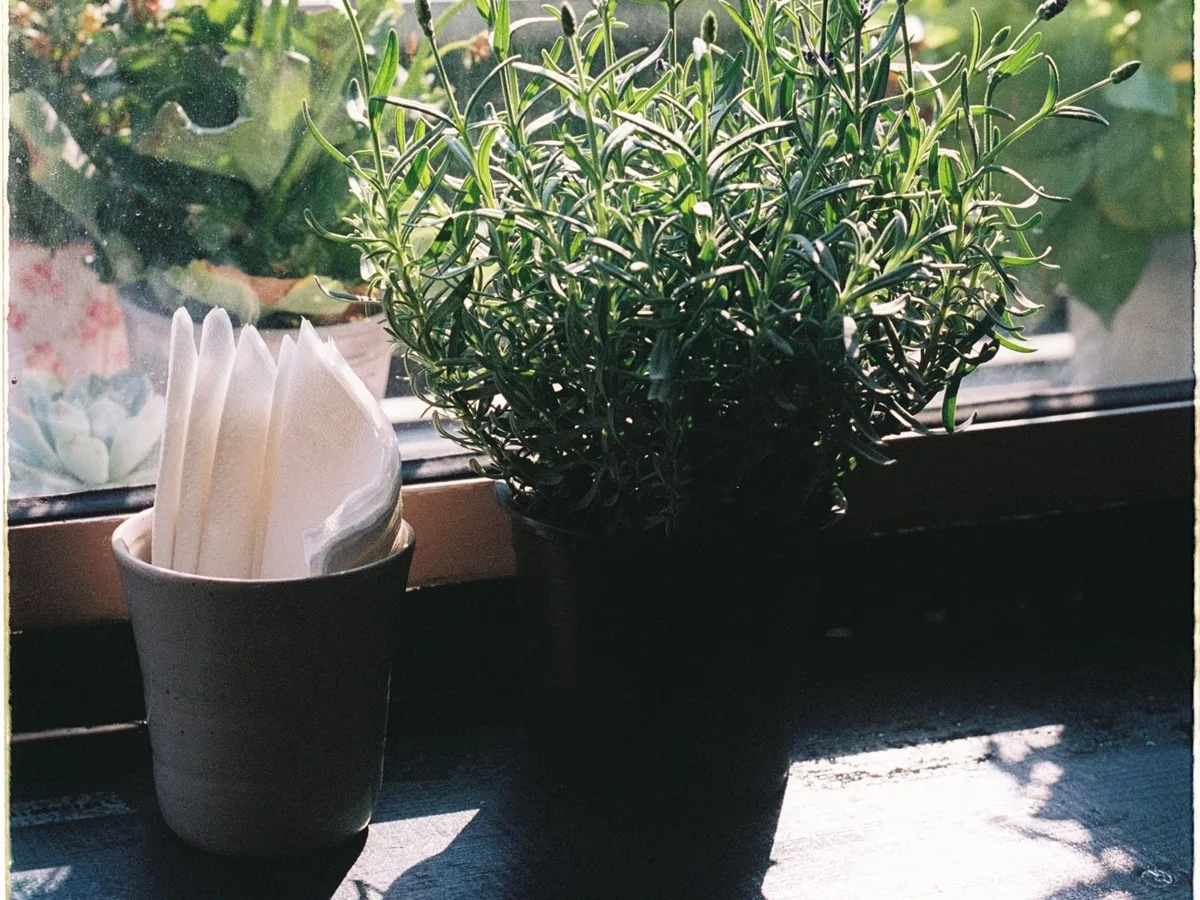
- Rosemary, thyme and oregano: like dry soil (see how to grow rosemary in a pot) and are the first to rot when the pot stays wet.
- Basil: likes moderate moisture, but waterlogged roots are the main reason for basil dying.
- Parsley and green onions: prefer lightly moist soil, never soggy.
- Mint: tolerates moisture best, but still gets moldy in a pot without drainage.
If you grow different herbs in one container, group the ones that like the same watering. That way, one doesn’t drown so another can thrive. See which ones pair well in our guide to herbs that grow together.
Common mistakes when dealing with soil mold
- Scraping off the mold and still watering every day. It comes back within days.
- Assuming the plant is thirsty because it’s wilting, when the soil is wet.
- Using household cleaners on herb soil.
- Repotting but leaving the pot in the same dark corner.
- Covering the soil with pebbles without fixing your watering. The top layer hides moisture and makes the finger test harder.
- Panicking. Most of the time, mold is just a warning, not a death sentence.
If your herb’s leaves are also turning yellow, the same moisture may be to blame. Check our article on herb leaves turning yellow to confirm. And if you’ve spotted bugs on the leaves, see our guide to herb plant pests.
- White mold on soil is a fungus that eats organic matter, not the plant.
- It’s a warning sign of soil that’s too wet, with low light and poor airflow.
- Scrape off the top inch of soil, let it dry and empty the saucer.
- A hard white crust is salt, not mold: flush the soil with plenty of water.
- Replace all the soil if mold keeps returning or the mix smells rotten.
- Never use bleach, vinegar or chemical fungicides on herb soil.
Frequently asked questions about white mold on soil
Will white mold on soil kill my plant?
Usually not. The surface fungus feeds on organic matter in the soil. What harms the plant is the excess water that makes mold appear, because it can rot the roots.
How do I get rid of white mold on potting soil?
Scrape off the top half inch to an inch with a spoon and throw it away. Then let the soil dry before watering again, empty the saucer and move the pot to a brighter, airier spot.
Does cinnamon work on soil mold?
It’s a popular tip, and cinnamon contains antifungal compounds. But there’s little research on using it in pots. It can help as an extra step, as long as you also fix your watering and light.
Can I use bleach to remove mold from soil?
Not on the soil. Bleach kills roots and the beneficial microbes in the mix. Only use it, well diluted and rinsed off, to clean an empty pot.
What’s the difference between mold and salt buildup?
Mold is fluffy, looks like cotton and falls apart when touched. Salt buildup is hard, rough and looks like dried salt. Mold calls for less water; salt crust calls for flushing the soil with plenty of water.
Can I eat herbs if the soil has mold?
Yes, if the leaves are healthy. The mold stays in the soil. Rinse the leaves well before using them. If there’s mold or spots on the leaves and stems, discard those parts.
Why does mold grow on new potting soil?
New mixes often contain lots of organic matter, like bark and compost, which feed fungi. When the soil is damp, mold shows up in the first few weeks and usually fades once you adjust your watering.
Is soil mold bad for your health?
For most people, no. But anyone with a mold allergy, asthma or hay fever may feel irritation when handling the soil. If that’s you, clean the pot outdoors, wear a mask and wash your hands afterward.