Why Is My Basil Dying? 9 Causes and How to Save It
Your basil looked great and then, almost overnight, it started wilting, turning yellow, or getting woody and full of flowers. If you are asking “why is my basil dying?”, the good news is that there is almost always a clear reason. In this guide, you will find out what is happening to your plant and how to save it.
Below, we will go through each cause, how to spot the signs, a step-by-step rescue plan, and when it makes more sense to start over with a new plant.
Why does basil die so easily?
Basil is a warm-weather plant. It loves sun, heat, and soil that drains well. When one of those three things is missing, it reacts fast: it wilts, turns yellow, and drops leaves.
Also, common sweet basil is an annual. Its natural cycle is to sprout, grow, flower, set seed, and die within a few months. With pruning and good care, you can stretch that cycle quite a bit, but not forever.
So when your basil is dying, the right question is: is it sick, poorly cared for, or simply getting old? The answer completely changes what you should do.
Signs your basil is dying
- Wilted, droopy leaves, even after watering.
- Yellow leaves, starting at the bottom.
- Leaves with dark spots or brown edges.
- Hard, dark stems that look like wood.
- Lots of flowers on top and few new leaves.
- A black, mushy stem base right at the soil line.
- Small leaves and a thin plant leaning to one side.
- Tiny bugs or powder under the leaves.
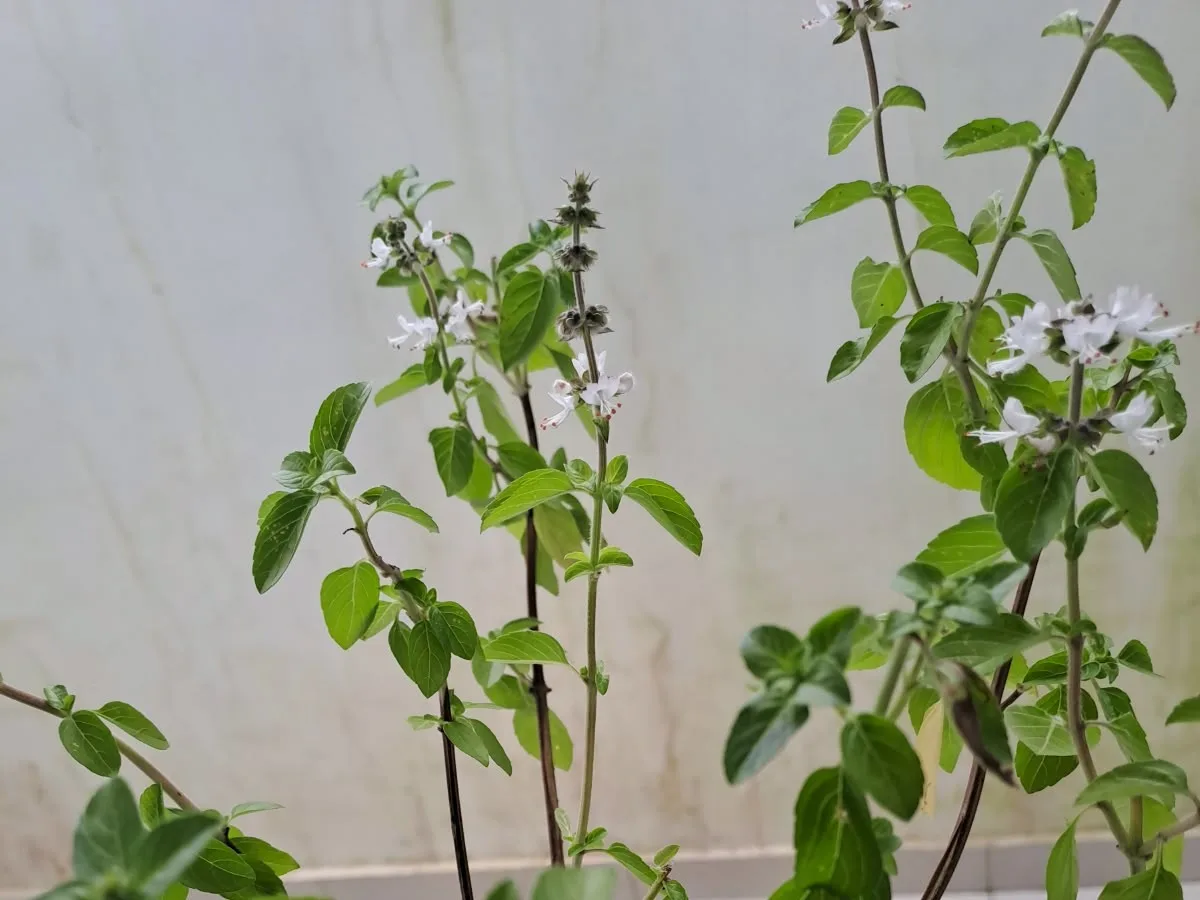
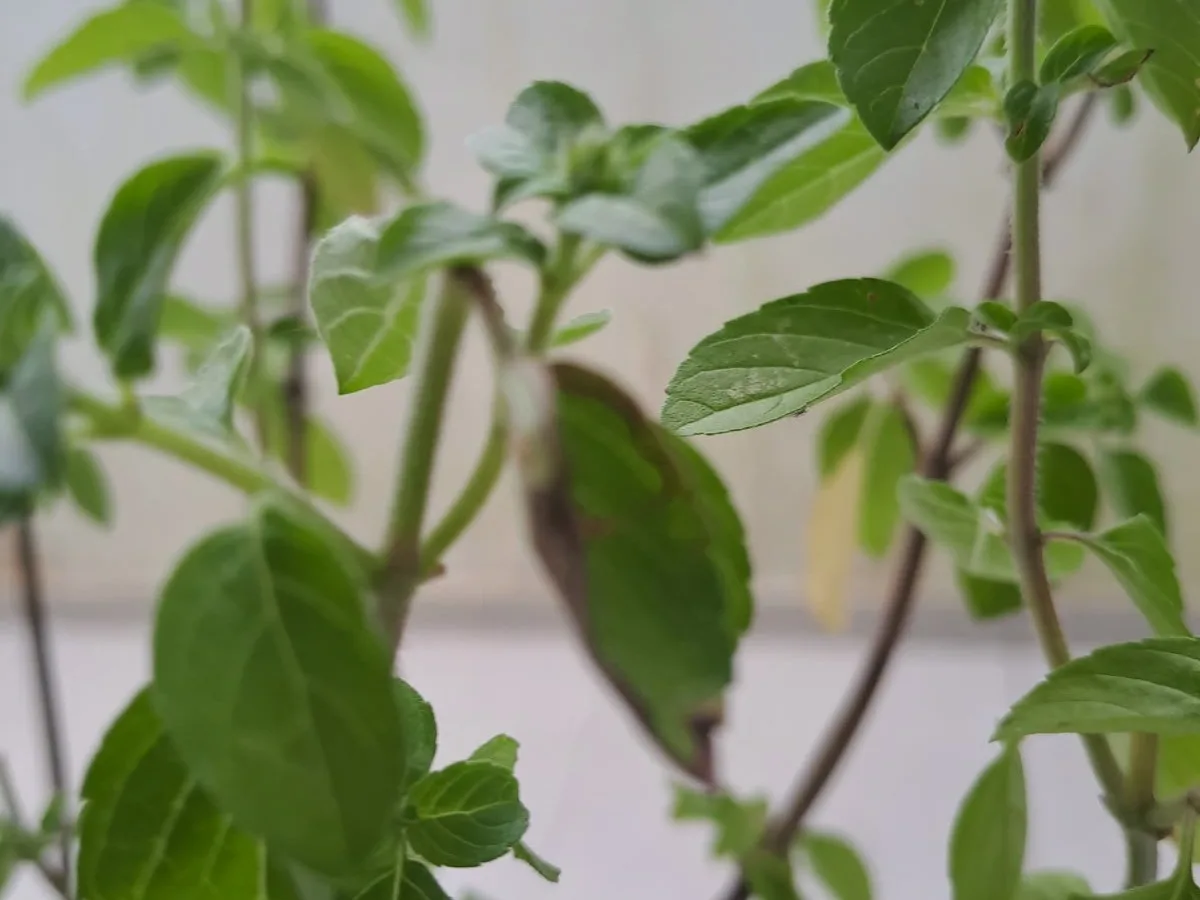
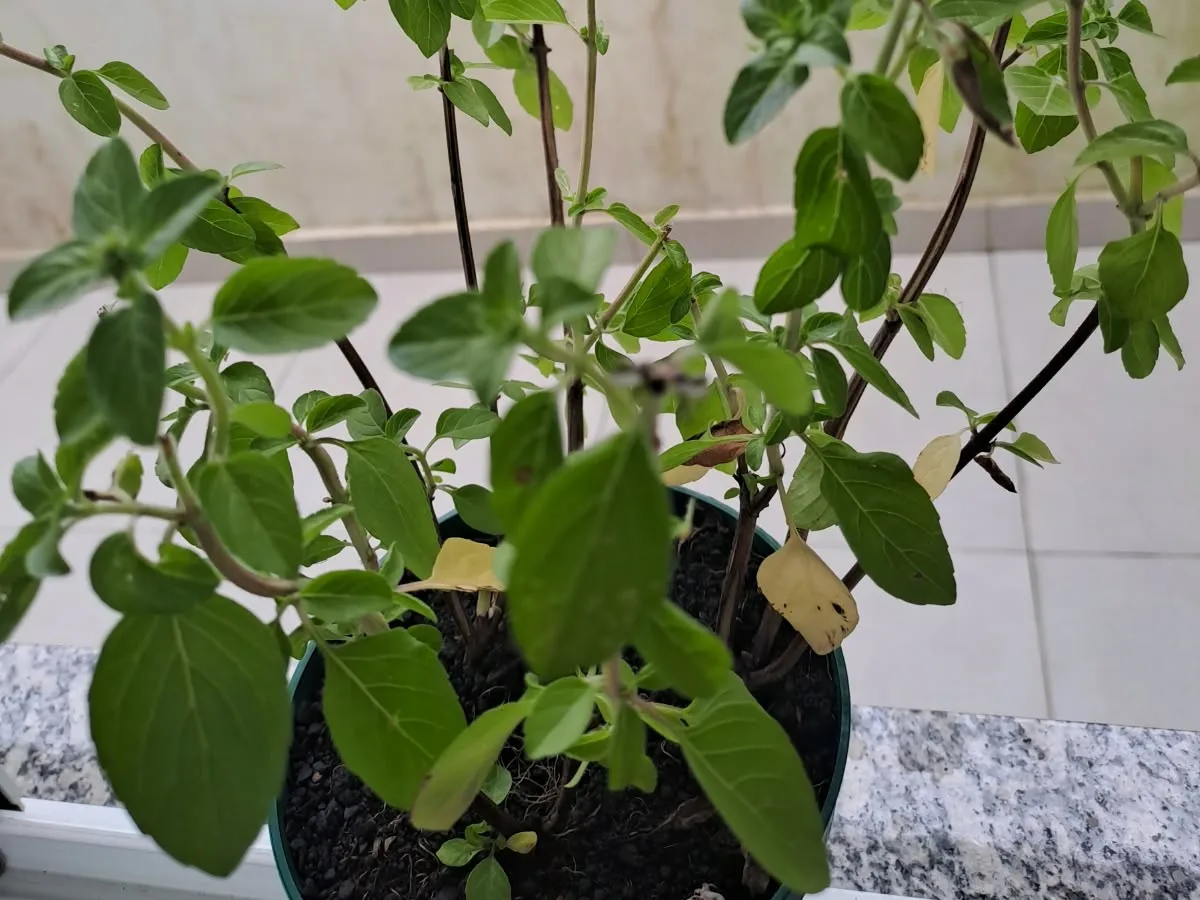
At home, I have seen almost all of these signs on a single basil plant. In the photos in this article, you can see my own plant with flowers on top, yellow leaves near the soil, and one darkened leaf. That was how it told me it was reaching the end.
Quick chart: symptom, likely cause, and fix
| What you see | Likely cause | What to do |
|---|---|---|
| Wilting with wet soil | Overwatering, root rot | Stop watering and check the roots |
| Wilting with dry soil | Underwatering | Water until it drains from the bottom |
| Yellow lower leaves | Too much water or low nutrients | Fix watering and feed lightly |
| Black leaves after a cold night | Cold damage | Move it away from cold glass |
| Flowers and woody stems | End of the life cycle | Pinch flowers and take cuttings |
| Tall, thin, few leaves | Not enough light | Move to the brightest window |
| Roots coming out of the hole | Pot too small | Repot into a bigger container |
| Gray or purple fuzz under leaves | Downy mildew | Remove leaves and improve airflow |
| Green bugs or fine webbing | Aphids or spider mites | Rinse leaves and use soapy water |
1. Too much water: the number one cause
Overwatering is the most common mistake. Soggy soil has no air, the roots cannot breathe, and they start to rot. With rotten roots, the plant cannot drink, so it wilts even though the soil is wet.
The signs are soft yellow lower leaves, soil that never dries out, a sour smell, tiny flies around the pot, and a dark stem base.
What to do: stop watering, empty the saucer, and only water again when the surface feels dry. If the soil smells bad, slide the plant out and check the roots. The full rescue plan is in our guide to overwatered herbs.
2. Not enough water
In summer, in a small pot on a hot windowsill, the soil can dry out in a single day. Basil wilts dramatically, with leaves hanging straight down.
The good news: if it is only thirsty, it bounces back within a few hours after a deep watering. Water slowly until it runs out of the drainage holes.
If this keeps happening, move it to a slightly bigger pot or a plastic one, which holds moisture longer than terracotta. On hot days, do the finger test every day.
3. Not enough light
Basil needs at least 6 hours of strong light a day. Indoors, far from a window, it gets thin and tall, with small leaves and a weak stem. Little by little, it fades away.
University of Minnesota Extension recommends six to eight hours of bright light a day and well-drained soil for basil.
What to do: put the pot in your brightest window, ideally one with morning sun. If the plant has already stretched, pinch the tips so it branches out. Learn more in our guide to leggy herbs.
4. Cold
Basil suffers below 50 °F (10 °C). One cold night next to icy window glass can turn the leaves black and limp, as if they had been cooked.
In winter, it also grows slowly and drinks less. That is why cold temperatures plus a summer watering routine are a dangerous combination for the roots.
What to do: at night, pull the pot away from the glass. Water less, and always in the morning. Trim the cold-damaged leaves. Find more tips in how to grow herbs in winter.
5. Basil flowering: the end of the cycle
When basil starts to flower, it changes priorities. Instead of making leaves, it spends its energy on flowers and seeds. The stems get woody, the leaves get smaller and more bitter, and the lower ones yellow and drop.
This is not a disease. It is the plant’s natural clock. But you can delay it a lot.
- Pinch off flower buds as soon as they show up at the tips.
- Always harvest from the top, just above a pair of leaves.
- Never cut more than one third of the plant at once.
If the plant is already covered in flowers with woody stems, like mine in the photos, recovery is hard. The best move is to use the stems that are still green to take cuttings.
6. A small pot and crowded roots
Basil grows fast and its roots fill the pot quickly. In a small container, the soil dries out too fast, nutrients run out, and the plant stops growing.
The signs are roots poking out of the drainage hole, soil that dries in a few hours, and water that runs straight through without soaking in.
What to do: move it to a pot at least 8 inches (20 cm) deep and wide, with drainage holes. Repot on a mild day and keep the plant in bright shade for two days. See more in how to grow basil in a pot.
7. Pests
Aphids, spider mites, mealybugs, and whiteflies love basil’s soft leaves. They suck the sap and weaken the plant, leaving curled leaves, tiny yellow dots, or fine webbing.
What to do: rinse the leaves with a gentle spray of water, top and bottom. Then use a mild soap spray, always late in the day. Since basil ends up in your food, skip harsh pesticides. Learn to identify each bug in our guide to herb plant pests.
8. Diseases: downy mildew and wilt
Basil downy mildew is caused by a fungus-like organism. It starts with leaves yellowing between the veins, and a gray or purplish fuzz appears underneath. It spreads quickly in humid weather with poor airflow.
Cornell University has a detailed fact sheet on basil downy mildew, with photos of the symptoms.
Another disease is fusarium wilt. The plant suddenly wilts, often on one side, and the stem shows dark streaks. There is no cure: throw out the plant and the soil, and wash the pot well before reusing it.
To prevent it: water the soil, not the leaves; leave space between pots; and remove sick leaves right away.
9. Shock after buying or moving it
Many grocery store basil plants come as dozens of seedlings crammed into one small pot, raised in a greenhouse. At home, with less light and humidity, they wilt in the first few days.
What to do: split the root ball into 3 or 4 clumps and plant each one in its own pot. Keep them in bright light without harsh sun for two or three days. Then move them into the sun gradually.
How to save a dying basil plant, step by step
- Check the soil. Push your finger in about an inch. Wet? Do not water. Dry? Water deeply.
- Look at the stem base. If it is black and mushy, skip to the cuttings section.
- Remove the damaged parts. Cut yellow, spotted, or black leaves with clean scissors.
- Pinch the flowers and the tallest tips, just above a pair of leaves.
- Move it to the brightest spot in your home, away from drafts and cold glass.
- Check for pests, especially under the leaves.
- Wait one or two weeks before feeding. A weak plant cannot use fertilizer.
- Feed lightly once new leaves appear. Homemade compost works well; see how to use compost in pots.
How to repot basil with root rot
Slide the plant out of the pot and rinse the soil off the roots. Cut away every dark, mushy root, keeping only the light, firm ones. Replant in fresh, light potting mix, in a clean pot with drainage holes. Wait two days before watering.
Be realistic: repotting does not always work. At home, when nothing else helped, I tried repotting my basil and it still did not make it. I ended up buying new plants. That is why, while there are still green stems, it is worth taking cuttings at the same time as a backup plan.
How to grow new basil from healthy stems
- Cut green stems 4 to 6 inches long, with no flowers.
- Strip the lower leaves, keeping only the ones on top.
- Place them in a glass of water in a bright spot, out of direct sun.
- Change the water every two or three days.
- In one to two weeks, roots will form. When they reach about an inch, plant them in a pot.
When it is better to start over
Sometimes, trying to save a plant is more work than starting fresh. It makes sense to start over when:
- the stem base is black and mushy;
- all the roots are dark and smell bad;
- the plant has fusarium wilt;
- the basil is fully flowered, woody, and has few leaves.
That is not failure. Basil is an annual, and replacing it from time to time is part of growing it. One tip is to start a new plant every two or three months, so you always have fresh leaves.
How to keep your basil from dying again
- Light: 6 or more hours of sun, ideally in the morning.
- Water: only when the soil surface is dry. Keep the saucer empty.
- Pot: with drainage holes and at least 8 inches wide.
- Soil: light, loose, and enriched with compost.
- Pruning: harvest from the tips every week and pinch flower buds.
- Temperature: away from cold, drafts, and icy glass at night.
- Neighbors: do not plant it with herbs that like dry soil, such as rosemary.
Harvesting the right way also helps the plant live longer. To know exactly where to cut, see how to prune basil. And if you want to save your basil before it flowers, learn how to dry and freeze herbs.
Iowa State University Extension also has a helpful guide on growing herbs in containers.
Common mistakes that kill basil
- Watering every day out of habit, without checking the soil.
- Picking only the big lower leaves, letting the top grow and flower.
- Keeping the store-bought pot as is, with dozens of crowded seedlings.
- Wetting the leaves at night, which invites fungus.
- Fertilizing a sick plant, thinking it is hungry.
- Moving it into strong sun suddenly after days in the shade.
If the leaves are yellow and you are still not sure why, read our guide to herb leaves turning yellow. To plan a whole herb garden that thrives, see the complete kitchen herb garden guide.
- Wilting basil with wet soil means too much water, not thirst.
- Basil needs 6 hours of strong light and suffers below 50 °F (10 °C).
- Flowers and woody stems signal the end of the cycle: pinch flowers early.
- A black, mushy stem base almost always means the plant cannot be saved.
- Take cuttings from green stems as a backup, because repotting does not always work.
- Starting a new plant every two or three months keeps fresh leaves all year.
FAQ: why is my basil dying?
Can wilted basil be saved?
Most of the time, yes. If it wilted from thirst, it recovers within hours of watering. If it is from overwatering, stop watering and check the roots. It can only not be saved when the stem base is black and mushy.
Why are my basil leaves turning yellow?
The most common causes are too much water, low nutrients, not enough light, and the end of the life cycle, when the plant flowers. Start by checking the soil: if it is always wet, watering is the problem.
Should I cut the flowers off my basil?
Yes. Pinch the buds as soon as they appear. This keeps the plant making leaves for longer. If you let it flower, the leaves get smaller and more bitter, and the plant heads toward the end of its cycle.
How long does a basil plant live?
Common basil is an annual and usually lives from a few months to about a year in a pot. With regular pruning, good light, and the right watering, it lasts longer. That is why it is worth starting new plants from time to time.
What do black leaves on basil mean?
Black, limp leaves after a cold night are cold damage. Dark patches with fuzz under the leaf may be downy mildew. A black stem base usually points to root rot from overwatering.
Can I repot a dying basil plant?
You can try, cutting away rotten roots and using fresh soil. But it does not always work, especially if the plant is already old and flowering. That is why you should root cuttings in water at the same time.
How often should I water basil?
There is no fixed schedule. In summer, it may be every day; in winter, every three or four days. Water when the soil surface feels dry, and always empty the saucer.
Why does grocery store basil die so fast?
It comes with many seedlings crammed into a small pot and was grown in a greenhouse with lots of light and humidity. Split the seedlings into separate pots, give them plenty of light, and get them used to the sun gradually.