
Eggshells for Plants: What Works and What’s a Myth
Eggshells for plants are one of the most popular kitchen-scrap tips in gardening. People say they feed plants, add calcium, save tomatoes and keep slugs away. Some of that is true, but a lot is exaggerated. Eggshells can help, just very slowly, and only when you use them the right way.
In this guide, you’ll learn what eggshells really do in a pot, which claims extension experts call myths, how to prepare shells so they actually work and the best ways to use them at home, from the compost bin to potting soil.
What’s in an eggshell
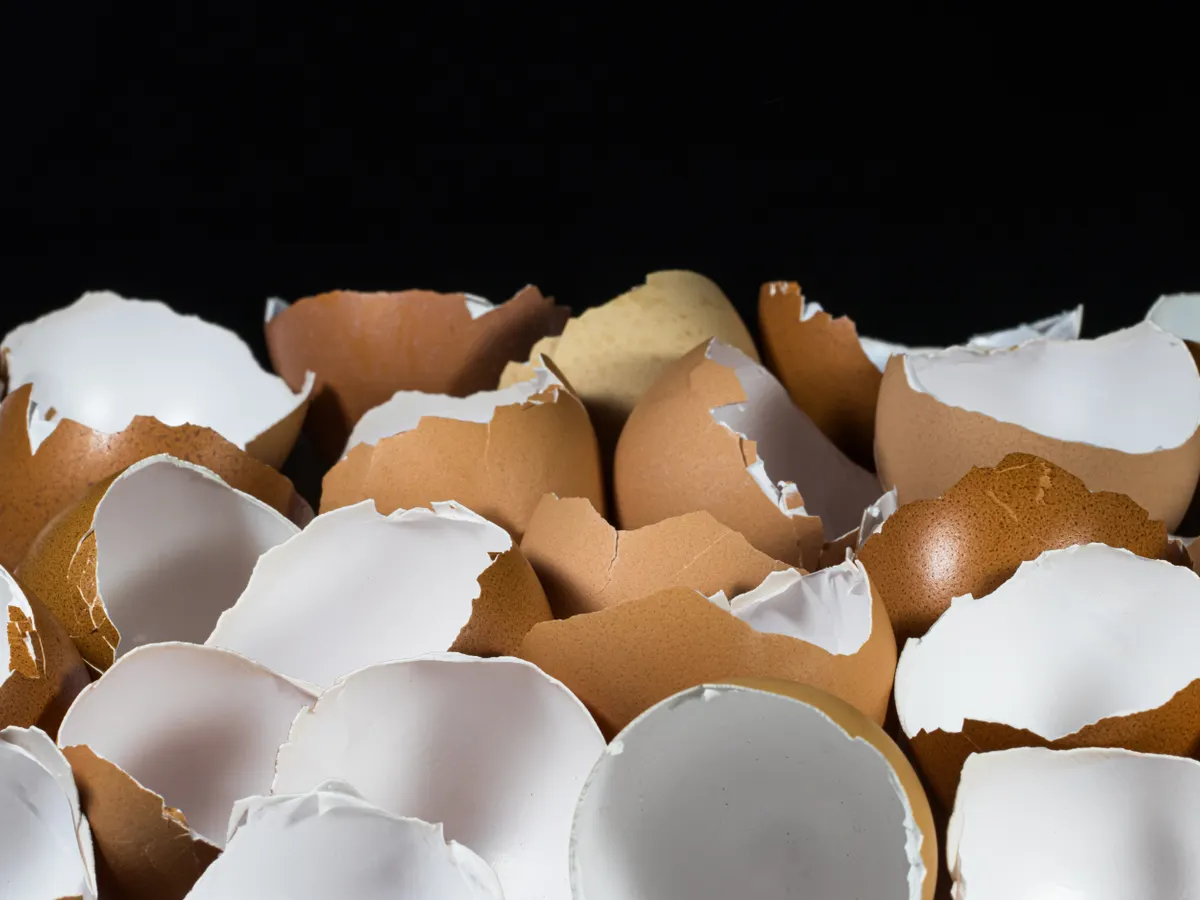
Eggshells are made mostly of calcium carbonate, the same compound found in garden lime. NC State Extension and Penn State Extension both describe shells as rich in this material.
Calcium matters to plants: it helps build cell walls, root tips and fruit. But there’s a catch that changes everything. Plants can’t “eat” a shell. The calcium only becomes available after the shell breaks down in the soil, and that’s slow.
Eggshells also aren’t a complete fertilizer. They supply almost no nitrogen, phosphorus or potassium, the nutrients plants need most. Think of them as a supplement, not a replacement for fertilizer.
Eggshell myths vs. facts
Before you scatter shells across your pots, here’s what extension research says:
| Popular claim | What extension experts say |
|---|---|
| “Whole or broken shells feed the plant” | Myth. Large pieces take over a year to break down and release little calcium |
| “Shells in the planting hole prevent blossom end rot” | Myth, in most cases. The problem usually comes from uneven watering |
| “Finely ground shells supply calcium” | Fact. In a trial, ground shells worked as well as pure calcium |
| “Shells are good in compost” | Fact, especially when crushed |
| “Shells keep slugs away” | Not proven. Handpicking works better |
Eggshells must be ground to work
Particle size decides whether eggshells help or not. University of Illinois Extension cites a trial by Alabama Cooperative Extension: coarse, hand-crushed shells were not much better than nothing at all.
In the same trial, finely ground shells performed just as well as pure calcium, and both did better than agricultural lime. The Illinois takeaway is simple: the smaller the particle size, the better.
Illinois also reports that whole chunks were still visible in compost and planting holes after a full season, and that large pieces take at least a year to break down. According to Penn State, whole shells can take decades, while pulverized shells start helping within a few years.
How to prepare eggshells, step by step
Prep is quick and prevents odors, pests and contamination:
- Rinse the shells under running water to remove leftover egg white.
- Let them dry. Keep an open container on the counter and collect shells for a few days.
- Sanitize them. Penn State notes that shells can carry salmonella and suggests baking at 200 to 250°F for 10 to 20 minutes, or pouring boiling water over them.
- Grind to a powder. A coffee grinder or a dry blender works well, as Illinois suggests. A mortar and pestle also works, with more patience.
- Store in a closed glass jar in a dry place.
Energy-saving tip: slide the shells into the oven right after baking something else, while it’s still warm.
How to use eggshells for plants
Mixed into potting soil
The most useful method is to mix eggshell powder into the soil when planting or repotting. About one level tablespoon for a medium pot, mixed in well, is plenty. No need to repeat often: the powder breaks down gradually.
Illinois recommends adding ground shells to garden beds when a soil test reveals a calcium deficiency. In pots filled with bagged potting mix, that’s rare, because most mixes are already balanced.
In the compost bin
Compost is a great home for eggshells. Penn State and Illinois both recommend crushing them first. Whole shells keep showing up in finished compost for a long time.
Eggshells belong on the list of compost-friendly scraps. See the details in what can go in compost and, if you don’t have a bin yet, our guide to apartment composting.
In a worm bin
Illinois also mentions worm bins as a good destination. Ground shells help balance the acidity of food scraps. Use a little, always powdered. See more in our guide to red wiggler worm care.
Eggshell water
There’s a homemade recipe that releases calcium faster. Illinois describes it: boil 10 to 20 shells, let them sit overnight and water with the cooled liquid. According to the post, each shell adds about 4 milligrams of calcium, which is a small amount.
It’s a gentle supplement, not a cure for a struggling plant.
Eggshells and blossom end rot
This is the most famous eggshell myth. Blossom end rot, the dark sunken patch on the bottom of tomatoes, is a calcium shortage inside the fruit. But calcium is usually present in the soil; what fails is getting it to the fruit.
Mississippi State University Extension explains that blossom end rot is normally caused by uneven water availability and that eggshells don’t really fix anything. NC State says eggshells won’t make calcium available in a timely enough fashion to help.
Illinois Extension, in another post, rates the idea that shells in the planting hole prevent blossom end rot as “fiction,” because shells take several months, often more than a year, to break down.
What actually helps:
- Water consistently, without letting the soil dry out hard and then flooding it.
- Mulch the soil with straw or shredded leaves to hold moisture.
- Use a pot large enough for the plant.
- Remove affected fruit: later ones usually come out normal once watering evens out.
See more care tips in our guide to cherry tomatoes in pots. The same logic applies to peppers in pots, which can also get blossom end rot.
Do eggshells change soil pH?
In theory, calcium carbonate lowers acidity, just like lime. In practice, the amount of shell used at home is small and acts too slowly to change pH in a noticeable way.
So don’t use eggshells to “fix” soil without knowing what it needs. NC State and Mississippi State both recommend a soil test before adding anything. For pots, the simplest approach is a good potting mix, refreshed every so often.
Be careful with acid-loving plants such as azaleas and blueberries: piling on calcium isn’t a good idea for them.
Do eggshells keep slugs away?
Many gardeners ring their plants with broken shells, hoping slugs won’t crawl over them. We didn’t find any trial from the extension services we consulted that proves this works. Slugs and snails cross shells without much trouble, especially when they’re damp.
If slugs are eating your leaves, the most effective approach is to handpick them at night, when they come out to feed, as the University of Nebraska recommends. For other natural options, see our guide to plant pests.
Starting seeds in eggshells: worth it?
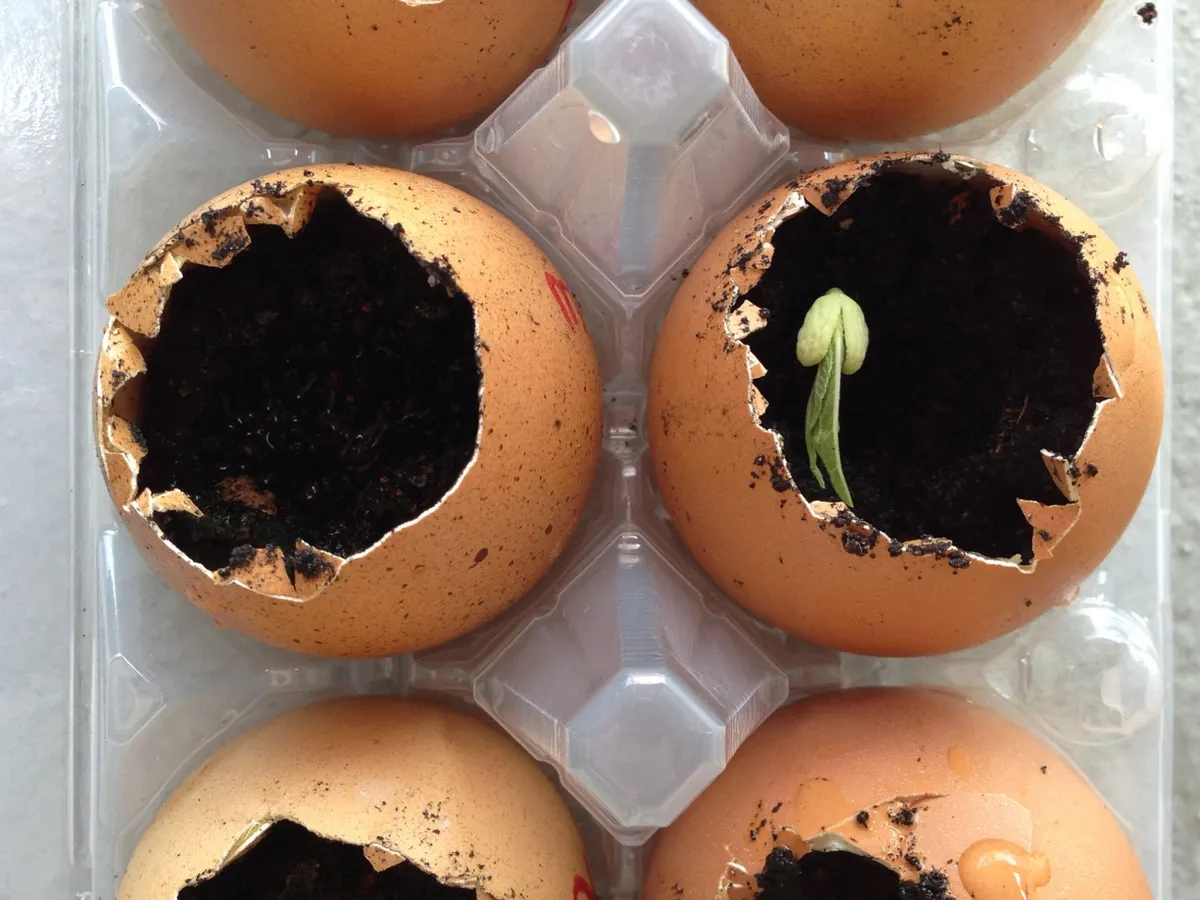
Using shells as tiny seed pots is cute, and seeds do sprout in them. But shells are small, dry out fast and need a hole poked in the bottom for drainage. Roots run out of room quickly.
Penn State says research doesn’t support any advantage to starting seeds in eggshells. If you try it, transplant early and crack the shell around the root ball before planting so roots can grow through. For other container ideas, see our guide on how to grow herbs from seed.
How much eggshell powder to use
There’s no official dose for pots, and more isn’t better. These are practical, conservative amounts for powdered shells mixed in at planting or repotting:
| Container | Eggshell powder | How often |
|---|---|---|
| Small pot (about 6 inches) | 1 level teaspoon | At planting or repotting |
| Medium pot (8 to 12 inches) | 1 level tablespoon | At planting or repotting |
| Long planter (about 24 inches) | 2 level tablespoons | When refreshing the soil |
| Compost or worm bin | Crushed shells from daily use | Mixed in with other scraps |
Because the powder breaks down slowly, one dose lasts a long time. Repeating it every few weeks only piles up shell in the pot.
Which plants benefit most from eggshells
Not every plant needs extra calcium, and a few don’t want it at all:
- Fruiting plants: tomatoes, peppers and strawberries use calcium to build fruit. Ground shells in the potting mix are a reasonable extra, as long as watering stays steady.
- Leafy greens: lettuce and other greens also use calcium, and powdered shells mixed into the soil are fine for them.
- Mediterranean herbs: lavender and rosemary handle less acidic soil well, so a little powder won’t hurt them. See our lavender plant care guide.
- Acid-loving plants: azaleas, blueberries and gardenias prefer acidic soil. Skip the eggshells for them.
Eggshells, coffee grounds and other scraps
Eggshells often show up alongside other kitchen-scrap tips. Each scrap does a different job:
| Kitchen scrap | Main nutrient | Best use |
|---|---|---|
| Eggshells | Calcium | Ground into soil or compost |
| Coffee grounds | Some nitrogen | In compost or as a thin layer |
| Banana peels | Potassium | In compost |
| Vegetable scraps | Many | In compost, to make a complete fertilizer |
Coffee grounds come with their own myths and cautions; see our guide to coffee grounds for plants. For recipes that combine several scraps, see homemade fertilizer for potted plants. And if you grow fruit in containers, eggshells are a small bonus in strawberry pots too.
Common eggshell mistakes
- Using shells with egg white left on: they smell and attract flies and gnats. See how to deal with those in fungus gnats.
- Adding big pieces: they sit in the soil for months or years without doing much.
- Treating shells as complete fertilizer: they don’t replace nitrogen, phosphorus and potassium.
- Using too much: more shell doesn’t mean a better plant. A tablespoon per medium pot is enough.
- Expecting a miracle on a sick plant: yellow leaves or blossom end rot almost always have another cause, like watering or light. See the causes of leaves turning yellow.
- Eggshells are rich in calcium carbonate but are not a complete fertilizer.
- They only work when finely ground: big pieces take over a year to break down.
- Rinse, dry, bake at low heat and grind before using.
- Mix about a level tablespoon into a medium pot at planting, or add to compost.
- Blossom end rot almost always comes from uneven watering, not a lack of eggshells.
- Shells won’t noticeably change pot pH, and there’s no proof they repel slugs.
- Test garden soil before trying to correct it.
Throwing eggshells in the trash is a waste, but tossing them whole into a pot is too. Ground and used in moderation, they become a useful extra for soil and compost.
Eggshells for plants FAQ
Are eggshells good for plants?
Yes, as a calcium supplement, as long as they’re finely ground. Whole or in big pieces, they do very little.
How do I use eggshells for plants?
Rinse, dry, bake at low heat, grind to a powder and mix about a level tablespoon into a medium pot.
Do whole eggshells in a pot work?
No. Large pieces take more than a year to break down and release very little calcium in that time.
Do eggshells prevent blossom end rot?
In most cases, no. The problem usually comes from uneven watering. Consistent watering works better.
Do I need to wash eggshells before using them?
Yes. Rinsing and baking at low heat prevents odors, pests and the risk of salmonella.
Do eggshells keep slugs away?
There’s no good proof. Handpicking slugs at night works better.
Can I put eggshells in compost?
Yes, it’s one of the best uses. Crush them first so they break down faster.
Do eggshells make soil less acidic?
In theory, yes, but in a pot the amount is far too small to change pH noticeably.