
Meyer Lemon Tree Indoors: How to Grow One in a Pot for Fruit
A Meyer lemon tree indoors can flower, fill the room with scent and give you real lemons, even in a cold climate. The secret is to combine four things: a grafted dwarf tree, a large pot that drains well, plenty of light and fertilizer at the right time. Get those right and the tree stays compact and productive for years.
In this guide, you will learn why the Meyer is the best lemon for pots, what size container and potting mix to use, how much light it needs, how to water and feed it, how to hand-pollinate the flowers and what to do when leaves drop or turn yellow.
Why the Meyer lemon is the best choice for pots
The Meyer stands out among lemons for containers. It stays small, blooms on and off through the year and its fruit is sweeter and less sour than a regular lemon. Mississippi State University calls the Improved Meyer the only lemon it recommends for containers, and notes that it tends to bloom and set fruit year-round.
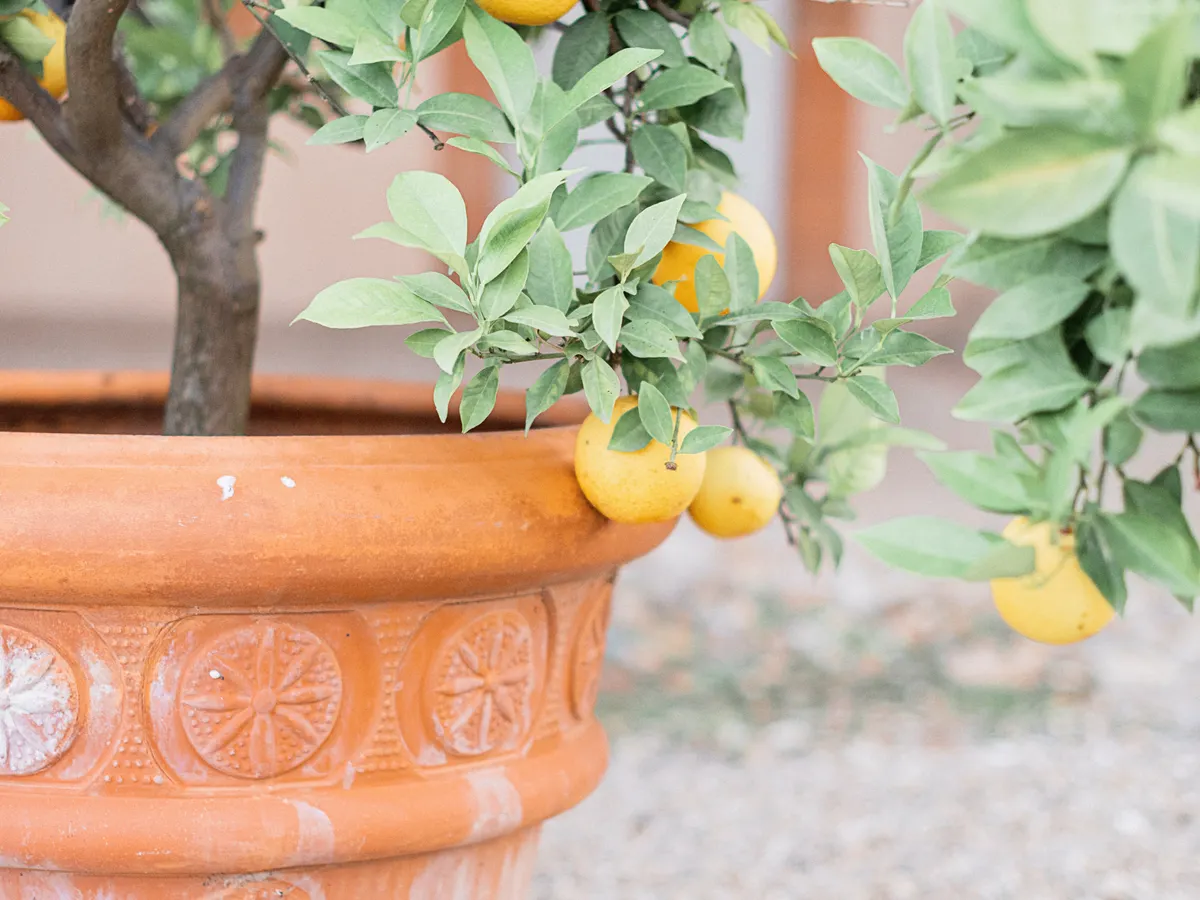
Look for a grafted dwarf tree from a nursery. The University of Maryland Extension explains that dwarf citrus is grafted onto a rootstock that limits its size, so it stays about 3 to 6 feet tall as a houseplant.
The University of Florida adds that ‘Improved Meyer’ has been the variety sold since the 1970s and resists a virus that hurt the original trees. It is also self-pollinating, so you only need one tree to get fruit.
| Lemon type | What it is like | For indoor pots |
|---|---|---|
| Improved Meyer | Sweeter, thin-skinned, fragrant | The best choice |
| Ponderosa | Very large, thick-skinned fruit | Good, but the fruit is large and very sour |
| Eureka or Lisbon | Classic grocery-store lemon | Possible, but grows larger and thornier |
| Grown from seed | Unpredictable | Not for fruit: takes many years to bloom |
Pot size and drainage
Nursery citrus usually comes in 2 to 3 gallon pots. Mississippi State advises moving the tree up to a bigger pot within a year of buying it, then repotting every 3 to 5 years, until it reaches a container of about 15 gallons.
- First pot: 7 to 10 gallons, about 14 to 16 inches wide.
- Final pot: 12 to 15 gallons for a mature tree.
- Drainage holes: a must. Citrus roots sitting in water start to rot.
- Material: plastic or resin is lighter than terracotta or ceramic, which helps when you move the tree.
- Plant caddy: a rolling stand makes it easy to turn the pot and take it outside.
Don’t jump from a small nursery pot to a huge one. Too much soil around a small root ball stays wet for days. Go up one size at a time.
Best potting mix for a Meyer lemon
Citrus likes a light mix that holds some moisture but drains quickly. Mississippi State is clear: don’t use garden soil in a pot, because it packs down. Use a bagged container mix, or blend your own:
- 2 parts quality potting mix;
- 1 part fine pine bark;
- 1 part perlite or coarse sand.
The University of Maryland also accepts general-purpose mix, cactus and succulent mix or a citrus mix, as long as it drains well. When planting, keep the root flare at the soil surface and the graft union, the bump on the lower trunk, well above the mix.
Light: the factor that matters most
A Meyer lemon is a sun plant. The University of Maryland asks for at least 6 hours of direct sun a day, preferably 8 to 12 hours. With less light, the tree survives but rarely blooms.
- Indoors: right next to your sunniest window, usually one facing south.
- Not enough sun: add a grow light for 12 to 14 hours a day. See how in our guide to grow lights for herbs.
- Summer: move the tree outdoors after the last spring frost, and bring it back in before the first fall frost.
The University of Florida is honest about this: a Meyer kept inside all year as a houseplant is unlikely to fruit. A summer outside makes a big difference.
Whenever you move the tree, do it gradually over about two weeks. Start in shade outdoors and slowly give it more sun. A sudden change in light is one of the most common reasons for leaf drop.
Temperature and humidity
The University of Maryland suggests daytime temperatures of 65 to 75°F and nights of 55 to 65°F for indoor citrus. Cooler nights help the tree start forming flower buds, so a spot a little away from the heater is ideal.
Frost is the big danger. Most citrus is damaged below 32°F, and Mississippi State warns that lemons can be badly hurt in the mid to high 20s. Bring the pot in before the first cold night.
Winter indoor air is also too dry for citrus. The University of Maryland recommends about 50% relative humidity, ideally with a humidifier. Grouping plants together and keeping the tree away from heating vents helps too.
How to water a Meyer lemon tree indoors
Watering is where most people go wrong. The University of Maryland suggests a simple test once or twice a week: push your finger 2 inches into the soil. If it feels dry, water. If it feels damp, wait.
- Water slowly until it runs out of the drainage holes.
- Let it drain and empty the saucer.
- Water again only when the top layer has dried.
In summer outdoors, a pot in full sun may need water almost every day. Indoors in winter, the tree drinks much less. Always check the soil instead of watering on a schedule.
Soggy soil is the fastest way to lose a citrus tree. If the mix stays wet for days, read our guide to overwatered plants and root rot to spot the signs early.
Fertilizer: what and when
Potted citrus runs out of nutrients quickly, and a Meyer lemon is a heavy feeder. The University of Maryland recommends a nitrogen-rich fertilizer, with an N-P-K ratio of 2-1-1 or 3-1-1, applied at least three times during the growing season.
| When | What to do |
|---|---|
| Early spring | First feeding, as new growth starts |
| Early summer | Second feeding |
| Late summer | Last feeding of the year |
| Fall and winter | No fertilizer |
Choose a citrus fertilizer, a slow-release granular product or liquid fish emulsion. Mississippi State advises picking one that also contains iron, manganese and zinc, which help prevent yellow leaves with green veins.
Always follow the label: too much fertilizer burns roots. For natural options, see our guide to homemade fertilizer for plants. And if you were thinking of using coffee grounds, read our guide to coffee grounds for plants first.
From flower to lemon: hand-pollination
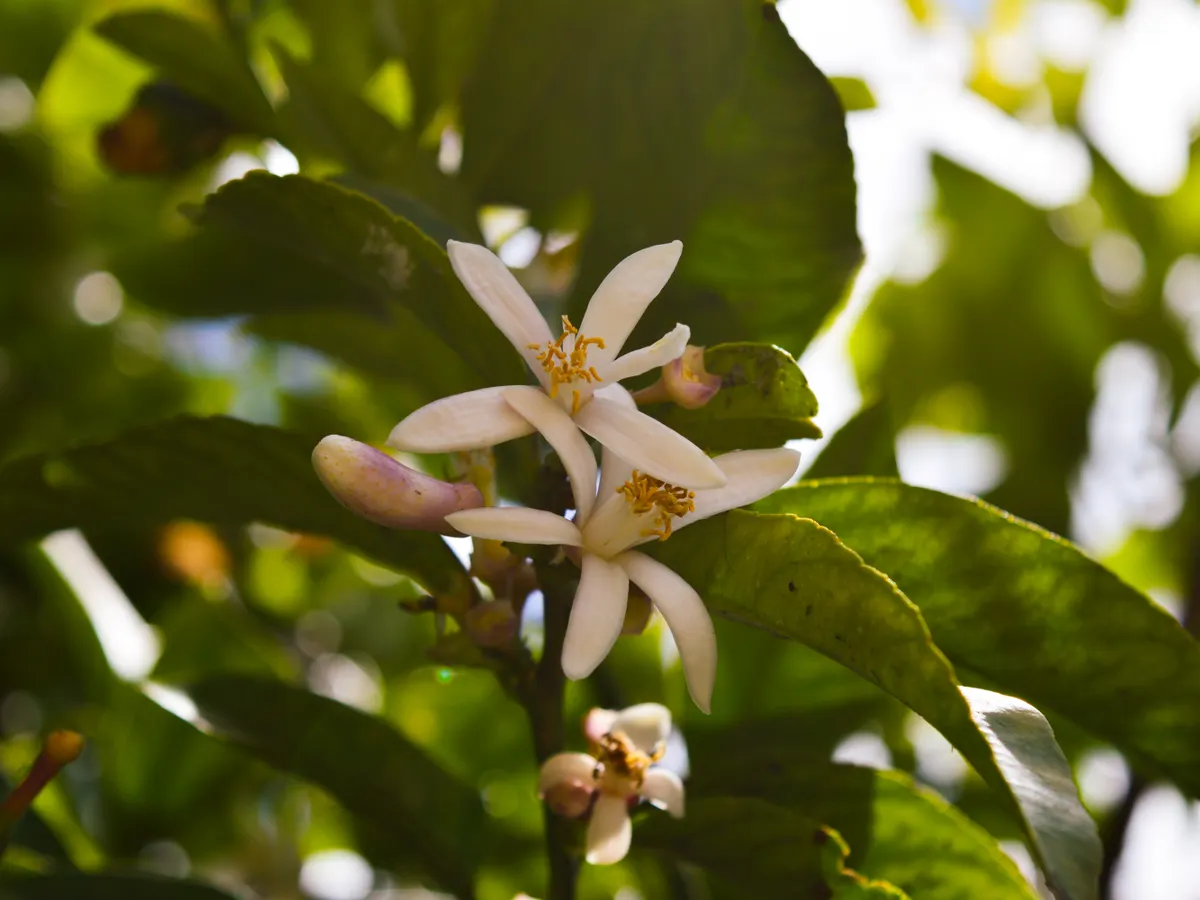
Meyer lemon flowers are white and very fragrant. The tree is self-fertile, but pollen still needs to move from flower to flower. Outdoors, bees do the job. Indoors, there are no bees, so you have to help.
The University of Maryland suggests touching the center of each open flower with a small, dry paintbrush, moving from one flower to the next. Repeat for several days while the tree is in bloom.
- Time to ripen: 6 to 9 months, according to NC State Extension.
- Fruit drop: normal. The University of Maryland says potted trees can shed up to 75% of their small fruit.
- Thinning: NC State suggests leaving only 1 or 2 fruits per cluster for bigger lemons.
- Young trees: may take a few years to bear well. Removing some flowers early on helps the tree grow.
Pruning and repotting
A potted Meyer lemon needs little pruning. Cut out dead, crossing or inward-growing branches so light and air reach the center. Also remove any shoots coming from below the graft: they belong to the rootstock and steal energy from the tree.
The University of Maryland says pruning can be done any time from fall, when the tree comes indoors, until new growth starts in spring. NC State adds that pruning keeps the tree smaller and improves airflow.
Refresh the potting mix every 3 years. If your tree is already in the biggest pot you can handle, root-prune it: shave 1 to 2 inches of roots off the outside of the root ball and put it back in the same pot with fresh mix. Late winter is the best time.
Common pests on indoor citrus
Mississippi State notes that pests become an even bigger problem once citrus comes indoors for winter. The most common are scale, spider mites, mealybugs, whiteflies and aphids.
- Scale: small brown bumps on stems and leaves. NC State says ants climbing the trunk in spring can be a sign of scale.
- Spider mites: tiny pale dots on leaves and fine webbing underneath.
- Mealybugs: white, cottony clumps in leaf joints.
- Sooty mold: a black film that grows on the sticky honeydew left by scale and aphids.
The University of Maryland suggests spraying horticultural oil or insecticidal soap before bringing the tree inside. For step-by-step treatments, see our guide to plant pests and how to get rid of them.
Common problems and fixes
| Problem | Likely cause | What to do |
|---|---|---|
| Sudden leaf drop | Moving indoors or overwatering | Acclimate slowly and check soil before watering |
| Flowers dropping | Soil too dry | Water more consistently |
| Yellow leaves | Low nutrients, too much water or low light | Feed in season and review water and light |
| No flowers | Not enough sun or a very young tree | More hours of direct light and patience |
| Tiny fruit falling | Natural drop or uneven watering | Partly normal; keep watering steady |
The University of Maryland sums it up: leaf drop can mean too much water, while flower drop usually means too little. To dig deeper into yellowing, see our guide to leaves turning yellow.
Keep it away from pets
The ASPCA lists the lemon tree as toxic to dogs and cats. Its oils can cause vomiting and diarrhea. If you have curious pets, keep the pot out of reach.
A Meyer lemon pairs well with other sun-loving plants on a summer patio, like peppers in pots and cherry tomatoes in pots. And if you are building an indoor garden from scratch, start with our kitchen herb garden guide.
- Choose a grafted dwarf Improved Meyer: it stays compact and fruits early.
- Start with a 7 to 10 gallon pot with drainage holes and move up slowly.
- Use a fast-draining potting mix, never garden soil.
- Give it at least 6 hours of direct sun, ideally 8 or more, or a grow light.
- Water when the top 2 inches are dry and empty the saucer.
- Feed with a nitrogen-rich citrus fertilizer from spring to late summer.
- Hand-pollinate indoor flowers with a small paintbrush.
- Some fruit drop is normal; lemons take 6 to 9 months to ripen.
With enough light, careful watering and a little patience, a Meyer lemon tree becomes one of the most rewarding plants you can grow indoors.
Meyer lemon tree indoors: FAQ
Can a Meyer lemon tree grow indoors?
Yes. It needs a grafted dwarf tree, a sunny south-facing window or a grow light, and ideally a summer outdoors to fruit well.
How much light does an indoor Meyer lemon need?
At least 6 hours of direct sun a day, and 8 to 12 hours is better. Add a grow light if your window can’t provide that.
What size pot does a Meyer lemon tree need?
Start with 7 to 10 gallons and move up to 12 to 15 gallons as the tree grows. The pot must have drainage holes.
How often should I water a Meyer lemon tree indoors?
Water when the top 2 inches of soil are dry. Check once or twice a week, and always empty the saucer.
Why is my Meyer lemon tree dropping leaves?
The most common causes are a sudden move indoors and overwatering. Acclimate the tree over two weeks and check the soil before watering.
Do I need to hand-pollinate a Meyer lemon?
Indoors, yes. The tree is self-fertile, but without bees you need a small paintbrush to move pollen between flowers.
How long until a Meyer lemon tree produces fruit?
A grafted tree usually starts bearing within a few years. After pollination, each lemon takes 6 to 9 months to ripen.
Is a Meyer lemon tree toxic to cats and dogs?
Yes. The ASPCA lists the lemon tree as toxic to dogs and cats. Keep it out of their reach.