
Coffee Grounds for Plants: When They Help and When They Hurt
Coffee grounds for plants are one of the most popular kitchen hacks, but the science says they only help in some cases. Used the right way, mostly after composting, spent grounds return nutrients to the soil. Dumped fresh and thick into a pot, they can slow plant growth, form a crust on the surface and even invite mold.
In this guide, you will learn what coffee grounds actually contain, which popular claims don’t hold up, how to use them in compost and in pots without hurting your plants, and when it is better to skip them.
What is in coffee grounds
A coffee bean is a seed, and seeds store nutrients for a new plant. Much of that stays behind after brewing. Washington State University, in a research review by Professor Linda Chalker-Scott, explains that nitrogen-rich proteins make up over 10% of the weight of coffee grounds.
- Nitrogen: comes from proteins and is released slowly as the grounds break down.
- Potassium: usually the largest mineral in the grounds.
- Phosphorus, magnesium and calcium: in smaller amounts.
- Oils and fiber: they don’t dissolve in water, so nearly all of them stay in the grounds.
- Some caffeine: small amounts may remain too.
The same publication notes that the carbon-to-nitrogen ratio of coffee grounds starts around 25:1 and drops to about 10:1 over time, which is ideal for soil. In other words, coffee grounds are a rich ingredient, but they need to break down before they become plant food.
Coffee grounds myths vs. facts
Online, coffee grounds are sold as a fix for almost everything. Here is what the research says:
| The claim | What the science shows |
|---|---|
| They make soil acidic | Myth. Spent grounds are close to neutral |
| They fertilize plants | True, once composted |
| You can add them fresh to pots | Not recommended: they can reduce growth |
| They repel slugs and pests | No published evidence |
| They attract earthworms | Worms eat them, but attraction isn’t proven |
| They prevent plant diseases | Only shown under controlled conditions in a few crops |
Myth 1: coffee grounds make soil acidic
Brewed coffee is acidic, but most of that acidity ends up in your cup. Penn State Extension reports that spent coffee grounds have a pH of about 6.8, close to neutral. That is why they won’t acidify soil for acid-loving plants like azaleas and blueberries.
The University of Arizona adds that in experiments, the pH of decomposing grounds ranged from 4.6 to 8.4 and shifted over time. Washington State also points out that any pH change happens only right around the grounds, not throughout the soil.
Myth 2: fresh coffee grounds are a great fertilizer
This is the biggest mistake. Washington State University says fresh grounds are demonstrably toxic to a variety of plants, so it does not recommend using them as a soil amendment or a mulch. A University of Melbourne study found that applying spent coffee grounds directly to soil greatly reduced plant growth.
The same review advises keeping grounds away from areas where you are starting seeds, because they can lower germination in many species. If you are sowing herbs, leave the coffee out of the seed trays. See the full process in our guide to growing herbs from seed.
Myth 3: coffee grounds keep slugs and bugs away
According to Washington State University, there is no published evidence that coffee grounds repel or kill any garden pests. There is also no research showing they attract beneficial creatures. For aphids, scale and other pests, use proven methods like the ones in our guide to plant pests and how to get rid of them.
The right way: compost them first
The best way to use coffee grounds is in your compost. There, bacteria and fungi break down the compounds that harm plants and release the nitrogen. Once composted, Washington State says coffee grounds become a rich supply of nutrients.
- Let them cool: hot grounds can kill the helpful microbes in your compost.
- Stay under the limit: no more than 20% of the total volume. The University of Arizona warns that more than 30% has often been harmful.
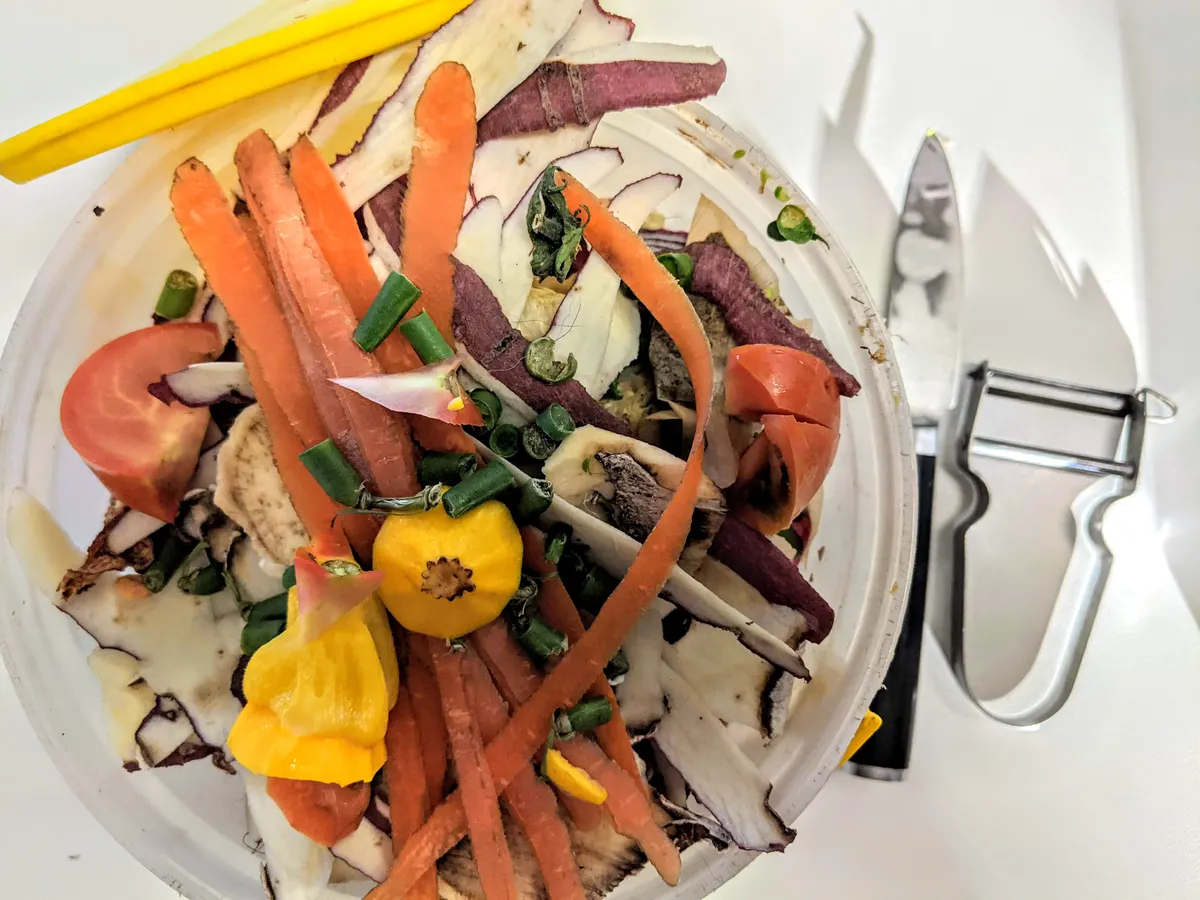
- Mix with other materials: fruit and vegetable scraps, dry leaves and shredded cardboard. Variety keeps the compost healthy.
- Paper filters can go in too: plain, unbleached filters help balance moisture.
- Wait for finished compost: dark, earthy-smelling and with no recognizable scraps.
In practice, one household’s daily coffee, mixed with the rest of the kitchen scraps, stays well within the limit. If you don’t compost yet, start with our apartment composting guide.
What about worm bins?
Many people add coffee grounds to worm bins because worms eat them. Washington State, however, advises against adding grounds to vermicomposting bins, because in a small, closed space they can injure or kill the worms. If you use them, add only a little, mixed with other scraps.
Learn more in our guide to red wiggler worm care.
What about bokashi?
In bokashi, coffee grounds go in like any other kitchen scrap, in small amounts and well mixed. See how the method works in our guide to bokashi composting in an apartment.
How to store coffee grounds until you use them
If you drink coffee every day, grounds pile up fast. Kept wet in a closed jar, they mold within days and start to smell. A few simple habits prevent that:
- Spread them out to dry: lay the grounds in a thin layer on a baking sheet or wide plate in an airy spot. Stir now and then.
- Store them dry: once dry and loose, keep them in a lidded container away from moisture.
- Or take them straight to the compost: if you compost, this is the easiest option, with no drying needed.
- Collect them with other scraps: if you keep a kitchen scrap bin, grounds can go in it until your next compost run.
Grounds with green or white mold should not go into a pot. They can still go into the compost, where they mix with other materials and break down.
How long coffee grounds take to become fertilizer
Washington State University explains that outdoors, bacteria and fungi take several months to break down the compounds in coffee grounds. The nitrogen-rich parts, like proteins and caffeine, break down faster and release nitrogen that plants can use.
In a well-kept home compost bin, grounds disappear into the mix along with other scraps. The more varied the materials and the more balanced the moisture, the faster everything turns into compost. To speed things up without bad smells, turn the pile now and then and keep it as damp as a wrung-out sponge.
How to use coffee grounds in pots
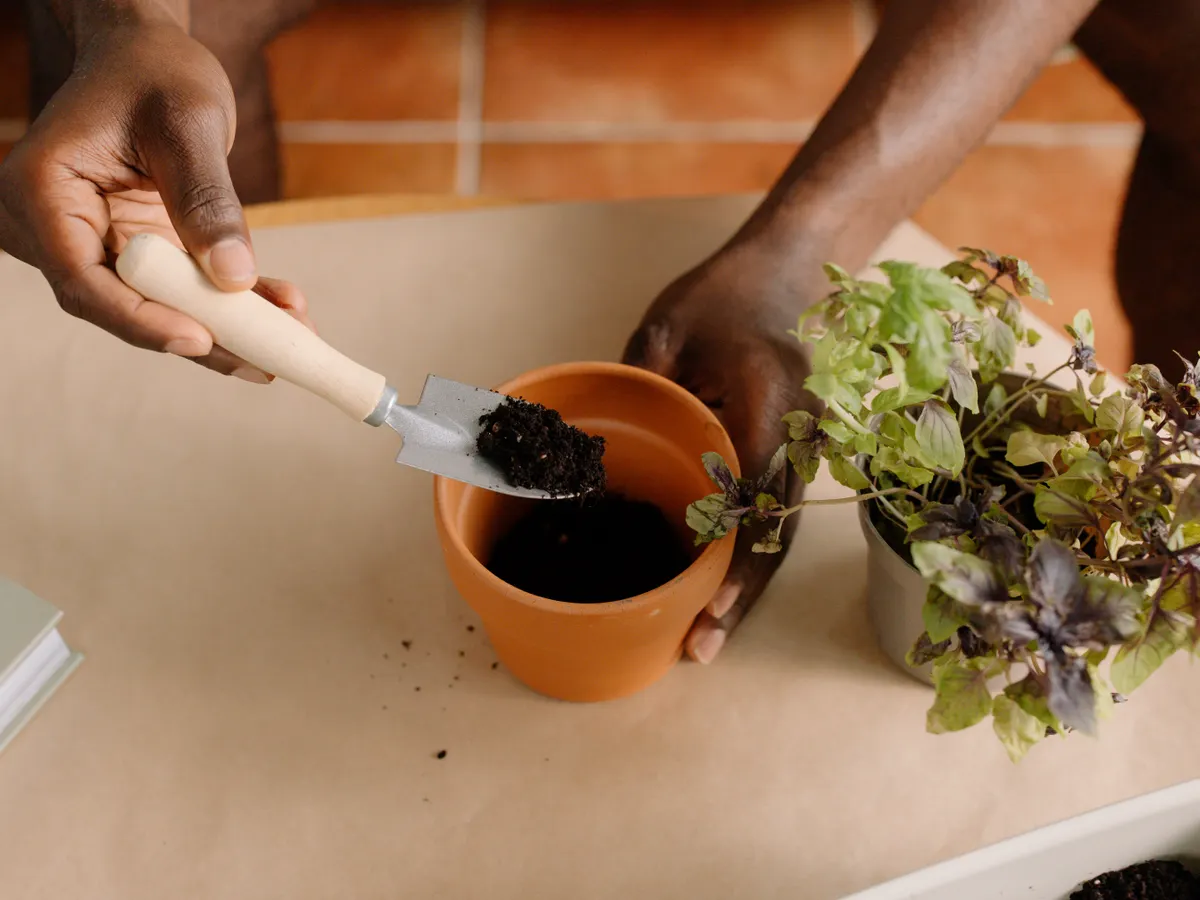
If you don’t compost, you can still use coffee grounds safely, as long as you use a small amount and follow a few rules. The general idea: a little, dry and never in a thick layer.
- Prefer composted grounds: they are the safest way to bring coffee into a pot.
- Use a little: about one tablespoon of coffee-rich compost per medium pot, mixed into the top layer, is plenty.
- Never in a thick layer: Washington State explains that grounds are fine and pack down easily, so a thick layer blocks water and air.
- Thin and covered: as a mulch, use no more than half an inch of composted grounds, covered with a thicker layer of coarse mulch such as bark.
- Away from seeds and seedlings: grounds can reduce germination.
- Check if the plant needs it: if the soil is rich and the plant is thriving, there is no reason to add anything.
In pots, mold is another common problem. Damp grounds sitting on the surface are a perfect home for fungi and the tiny flies that live in potting soil. If that happens, scrape off the top layer and let the soil dry between waterings. See our guides to white mold on soil and fungus gnats.
What about coffee ground “tea”?
Another popular tip is to soak coffee grounds in water and use that liquid to water plants. We found no research showing a real benefit of this practice in pots. Since the nutrients in grounds only become available as they decompose, the liquid tends to carry little fertilizer.
If you want to try it, dilute it well, use it only occasionally and only on healthy, established plants. For real feeding, there are better options, like worm castings and finished compost. See what works in our guide to homemade fertilizer for herbs.
Which plants benefit most from composted grounds
Because composted coffee grounds mainly add nitrogen and potassium, they help leafy, fast-growing plants the most. Washington State also notes that coffee grounds can increase the availability of iron and zinc, especially in more alkaline soils.
| Plant type | Examples | How to use |
|---|---|---|
| Leafy herbs | Basil, parsley, green onions, mint | Coffee-rich compost once a month in the growing season |
| Fruiting plants in pots | Meyer lemon, peppers, cherry tomatoes | Coffee-rich compost alongside regular fertilizer |
| Acid-loving plants | Azaleas, blueberries, blue hydrangeas | Don’t use to acidify: it doesn’t work |
| Seeds and young seedlings | Seed trays, microgreens | Don’t use |
| Succulents and cacti | Aloe vera, cacti | Avoid: they prefer lean, dry soil |
For fruiting plants, composted grounds are only a supplement. A Meyer lemon tree indoors, for example, needs a proper citrus fertilizer with nitrogen and micronutrients at the right time of year.
Keep coffee grounds away from pets
Coffee and caffeine are harmful to animals. The ASPCA includes coffee on its list of people foods pets should avoid. Since grounds can hold some caffeine, don’t leave piles of them where curious dogs and cats can reach, or in pots they like to dig in.
Common mistakes with coffee grounds
- Adding fresh grounds straight to pots: this can slow plant growth.
- Spreading a thick layer: grounds pack down and block water and air.
- Using them to acidify soil: spent grounds are nearly neutral.
- Overloading the compost: stay at or under 20% of the volume.
- Using them near seeds: germination can drop.
- Counting on them against pests: there is no proof they work.
- Leaving damp grounds to mold in pots: this invites fungi and gnats.
Coffee grounds are a great example of kitchen recycling, along with vegetables you can regrow from scraps. And if you are starting an indoor garden from scratch, begin with our kitchen herb garden guide.
- Coffee grounds contain nitrogen, potassium and other minerals, but they need to break down first.
- Fresh grounds added straight to soil can reduce growth and germination.
- Spent grounds have a pH near 6.8: they don’t make soil acidic.
- There is no proof they repel slugs or other pests.
- The best use is in compost, at no more than 20% of the volume.
- In pots, use a little, ideally composted, and never in a thick layer.
- Keep grounds away from seeds, young seedlings and pets.
Instead of throwing them away, send your coffee grounds to the compost: in a few months, they come back to your pots as real fertilizer.
Coffee grounds for plants: FAQ
Are coffee grounds good for plants?
Yes, once they are composted. Fresh and in large amounts, they can reduce plant growth.
Can I put coffee grounds directly in potted plants?
It isn’t ideal. If you do, use a very small amount, dry and mixed into the top layer, never as a thick layer on the surface.
Do coffee grounds make soil acidic?
No. Spent grounds have a pH near 6.8, which is almost neutral. They won’t acidify your soil.
How much coffee grounds can I add to compost?
No more than 20% of the pile’s total volume. Above 30%, they often harm the compost.
Do coffee grounds repel ants and slugs?
There is no published evidence that coffee grounds repel or kill slugs, ants or other pests.
Do coffee grounds attract fungus gnats?
Damp grounds sitting on top of the soil can encourage fungi and the gnats that breed in potting mix. Use a little and let it dry.
Can I use coffee grounds on succulents?
It is better not to. Succulents and cacti prefer lean, dry soil, and coffee grounds hold moisture.
Are coffee grounds dangerous for dogs and cats?
They can be. Coffee and caffeine are harmful to pets, and grounds may still contain some caffeine. Keep them out of reach.